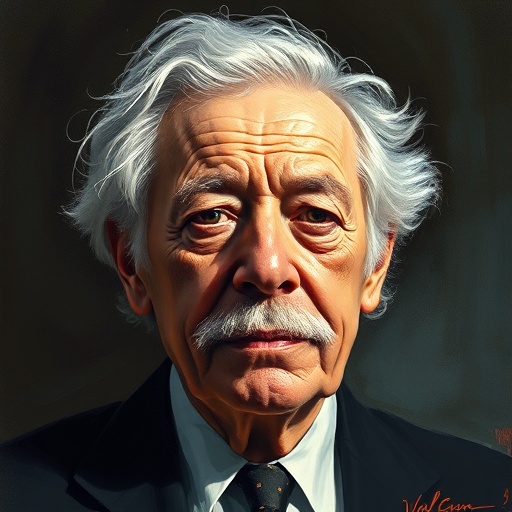
Linus Pauling — "I believe that the proper dose of vitamin C is 10 grams per day, and that it sho…"
I believe that the proper dose of vitamin C is 10 grams per day, and that it should be taken in divided doses throughout the day.
I believe that the proper dose of vitamin C is 10 grams per day, and that it should be taken in divided doses throughout the day.
Click any product to generate a realistic preview. Up to 3 at a time.
* Initial load can take up to 90 seconds — revising the preview in another color is nearly instant.
"I am an optimist. I believe that the human race will solve its problems."
"I am not afraid of death. I am afraid of not living."
"The most important thing in life is to be happy, and to make others happy."
"I think that the future of medicine is in prevention, not in treatment."
"I am not a believer in the idea that you have to be sick to take vitamins."
Found in 1 providers: grok
1 source checked
Daily vitamin C in very high doses—far above standard dietary guidelines—can sustain good health, and spacing it throughout the day keeps blood levels consistently elevated. The statement reflects a conviction that the body benefits from amounts far exceeding what prevents deficiency alone, treating the optimal dose as a therapeutic quantity rather than a minimum requirement. This megadose philosophy challenged conventional nutrition science's reliance on recommended daily allowances.
Pauling won two solo Nobel Prizes—Chemistry in 1954 and Peace in 1962—making him one of the most decorated scientists in history, and his late-career pivot to orthomolecular medicine stunned colleagues. He published 'Vitamin C and the Common Cold' in 1970, reportedly took megadoses himself, and lived to 93. His scientific stature gave these claims wide credibility even as controlled trials repeatedly failed to confirm his specific predictions.
Pauling's vitamin C advocacy emerged in the 1970s alongside a broader counterculture skepticism toward mainstream medicine and the pharmaceutical industry. The natural health and self-care movement was gaining momentum, Watergate had eroded institutional trust, and supplement sales were booming. Scientific debates about optimal nutrition versus minimum adequacy were genuinely unsettled. His claims energized the orthomolecular medicine movement and prompted large-scale clinical trials that ultimately did not support his specific megadose predictions.
AI-generated insights based on extensive research and information for context. Factual errors? Email [email protected].
Your cart is empty