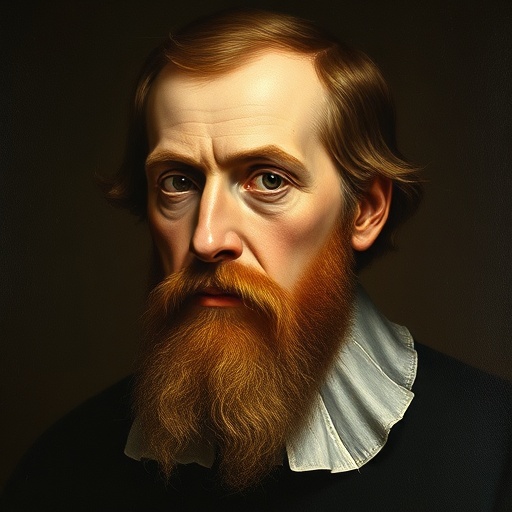
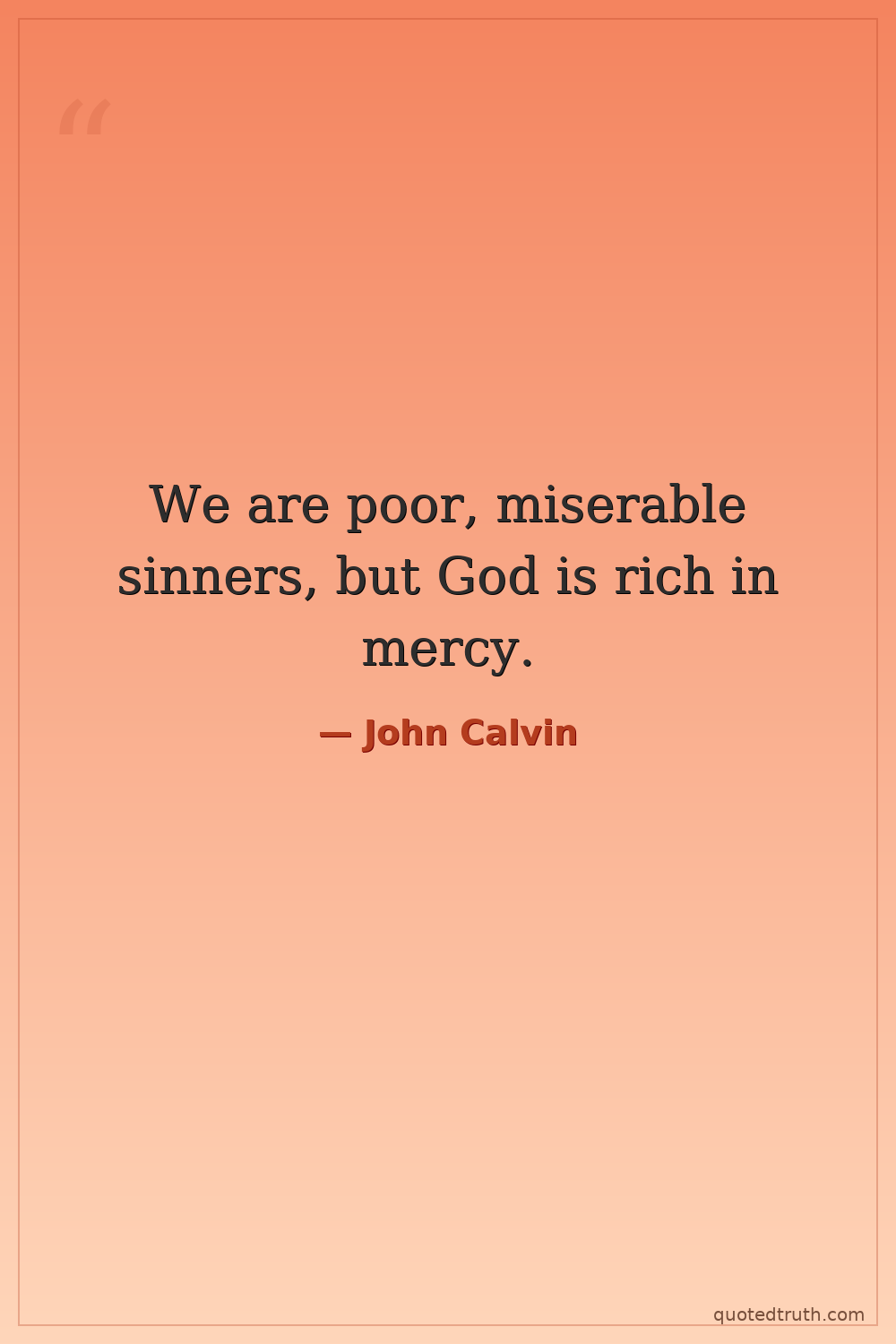
John Calvin — "We are poor, miserable sinners, but God is rich in mercy."
We are poor, miserable sinners, but God is rich in mercy.
We are poor, miserable sinners, but God is rich in mercy.
Click any product to generate a realistic preview. Up to 3 at a time.
* Initial load can take up to 90 seconds — revising the preview in another color is nearly instant.
"All good things proceed from God, and all evil things from ourselves."
"God, by a just and irreprehensible, but incomprehensible judgment, has predestinated some to eternal life, and others to eternal death."
"The true wisdom of man consists in the knowledge of God and of himself."
"The elect alone are endued with the knowledge of God, and the illumination of the Holy Spirit."
"We are debtors to God, and can never pay the debt."
French theologian whose Institutes of the Christian Religion (1536) systematized Protestant Reformed doctrine, including predestination. Closely associated with Martin Luther (Reformation founder, Calvin's predecessor). For an intellectual contrast, see Jacobus Arminius, Dutch Reformed theologian (1560-1609) — Arminius's rejection of strict double-predestination founded Arminianism — the theological tradition modern Methodism, most evangelicalism, and Pentecostalism descend from. The Calvinist-Arminian debate has divided Protestantism for 400 years.
Found in 1 providers: grok
1 source checked
Human beings exist in a state of moral poverty and spiritual wretchedness — that is the starting premise. Yet the sentence pivots sharply: God's mercy outweighs human sin entirely. Salvation is not earned through rituals, good works, or church authority, but flows from God's abundance. The stark contrast between human poorness and divine richness makes grace the only available remedy for a condition humans cannot fix themselves.
Calvin's entire theological system — articulated in his Institutes of the Christian Religion — rested on two pillars: total human depravity and God's sovereign grace. As a French exile who built a Reformed church in Geneva against fierce opposition, he lived the tension between human weakness and divine provision. His doctrine of election held that God's mercy, not human merit, determines salvation — making this saying a distillation of his life's work.
Calvin wrote during the Protestant Reformation's most turbulent decades, when Europe fractured along religious lines. The Catholic Church taught salvation required sacramental cooperation and priestly mediation; reformers insisted Scripture and grace alone sufficed. The Council of Trent convened specifically to counter Protestant claims about sin and mercy. Wars of religion were erupting across France and the Holy Roman Empire, making the question of how a sinful humanity relates to God not merely theological but existentially urgent.
AI-generated insights based on extensive research and information for context. Factual errors? Email [email protected].
Your cart is empty