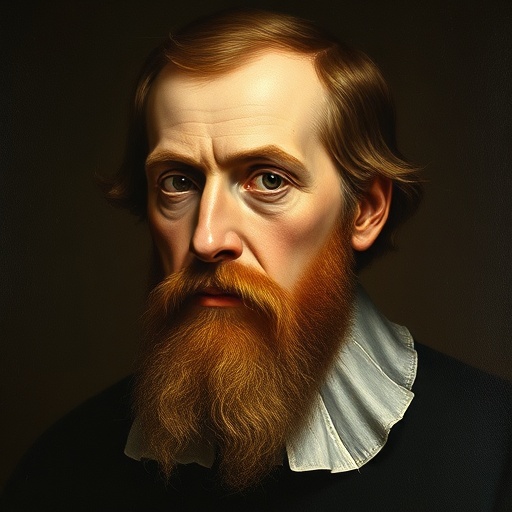
John Calvin — "All good things proceed from God, and all evil things from ourselves."
All good things proceed from God, and all evil things from ourselves.
All good things proceed from God, and all evil things from ourselves.
Click any product to generate a realistic preview. Up to 3 at a time.
* Initial load can take up to 90 seconds — revising the preview in another color is nearly instant.
"Whoever shall maintain that wrong is done to heretics and blasphemers in punishing them makes himself an accomplice in their crime."
"Let that ethical philosophy therefore of free-will be far from a Christian mind."
"The elect alone are endued with the knowledge of God, and the illumination of the Holy Spirit."
"We shall never be clearly persuaded, as we ought to be, that our salvation flows from the wellspring of God's free mercy until we come to know his eternal election, which illumines God's grace by this…"
"Faith is a firm and certain knowledge of God's benevolence toward us, founded upon the truth of the freely given promise in Christ, both revealed to our minds and sealed upon our hearts through the Ho…"
French theologian whose Institutes of the Christian Religion (1536) systematized Protestant Reformed doctrine, including predestination. Closely associated with Martin Luther (Reformation founder, Calvin's predecessor). For an intellectual contrast, see Jacobus Arminius, Dutch Reformed theologian (1560-1609) — Arminius's rejection of strict double-predestination founded Arminianism — the theological tradition modern Methodism, most evangelicalism, and Pentecostalism descend from. The Calvinist-Arminian debate has divided Protestantism for 400 years.
Found in 1 providers: grok
1 source checked
God is the sole source of all that is genuinely good; humans cannot generate goodness from within themselves. Whatever evil exists — moral failure, sin, harm — originates in human nature, not in God. The statement draws a sharp asymmetric line: divine agency produces everything worthy, while human agency, left to itself, produces only corruption. Praise and gratitude belong entirely to God; responsibility for wrongdoing belongs entirely to us.
Calvin's doctrine of total depravity — that the Fall corrupted human nature entirely — sits at the core of this claim. As Geneva's leading reformer and author of the Institutes of the Christian Religion, he built a theology where divine sovereignty governs all righteousness and human will, unaided, tends only toward sin. His austere personal character, rejection of self-promotion, and insistence that God alone receives glory for any spiritual achievement all mirror this conviction directly.
The sixteenth-century Reformation was fundamentally a dispute over human moral agency and salvation. Catholic teaching allowed that humans, cooperating with grace, could merit salvation — a position the Council of Trent codified by 1563. Calvin's statement was a direct theological counter: humans contribute nothing good; God provides everything. Religious wars, the fracturing of Western Christendom, and widespread anxiety about damnation made the question of who causes good and who causes evil existentially urgent.
AI-generated insights based on extensive research and information for context. Factual errors? Email [email protected].
Your cart is empty