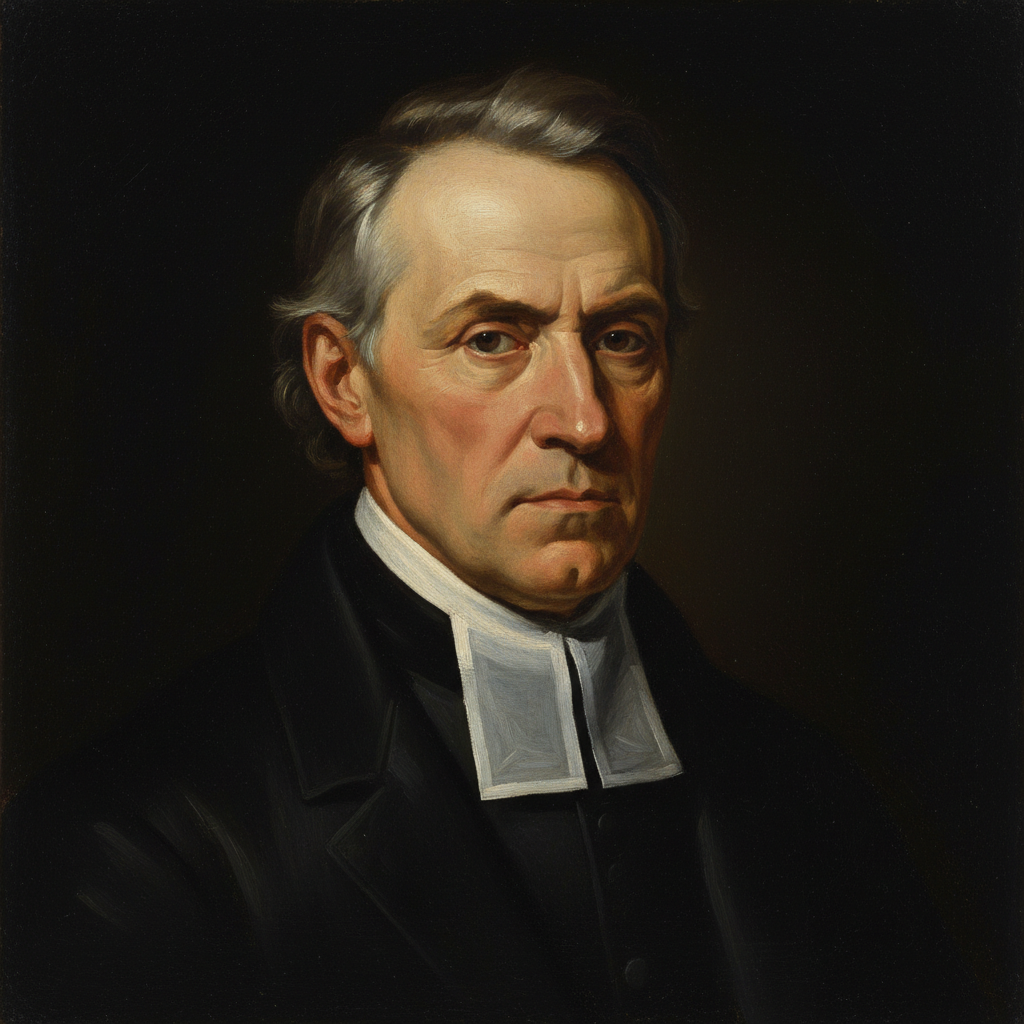
John Wesley — "Sing lustily and with a good courage. Beware of singing as if you were half dead…"
Sing lustily and with a good courage. Beware of singing as if you were half dead, or half asleep; but lift up your voice with strength.
Sing lustily and with a good courage. Beware of singing as if you were half dead, or half asleep; but lift up your voice with strength.
Click any product to generate a realistic preview. Up to 3 at a time.
* Initial load can take up to 90 seconds — revising the preview in another color is nearly instant.
"I have often thought, that if I were to choose a food to eat, it should be bread and water."
"I have often thought, that if I were to choose a text to preach from, it should be 'God is love.'"
"It is not the being in a place, but the being in a state, that makes us happy."
"I conceive slavery to be such a thing as is odious to the God of love."
"I have no time to be in a hurry."
English Anglican cleric and founder of Methodism, whose open-air preaching and class-meeting structure created the largest 18th-century evangelical revival. Closely associated with Charles Wesley (his hymn-writing brother) and George Whitefield (early co-revivalist, later doctrinal opponent). For an intellectual contrast, see George Whitefield, Calvinist evangelical revivalist — Whitefield's predestinarian Calvinism vs Wesley's free-grace Arminian theology split the early Methodist movement permanently in the 1739-41 break. The founding evangelical Calvinist-Arminian schism — the two parallel evangelical traditions American Christianity descends from.
Found in 1 providers: grok
1 source checked
Sing with full energy and genuine enthusiasm. Don't go through the motions halfheartedly or mechanically — commit your whole voice and spirit to the act. Whatever you do, do it completely and with conviction. Half-hearted participation is a kind of disrespect to both the activity and those around you. Full presence and vigor are the proper response to communal worship and shared purpose.
Wesley co-wrote over 6,500 hymns with his brother Charles and viewed congregational singing as central to Methodist worship and spiritual formation. He published detailed singing instructions because he believed music was a direct channel to God requiring full engagement. This reflects his broader emphasis on methodical, disciplined, wholehearted faith — not passive observance but active, embodied devotion from every believer.
In 18th-century England, church worship had become largely passive and rote, with congregations mumbling along or silent entirely. Wesley's Methodist movement deliberately revived participatory singing as a democratic, emotionally alive practice accessible to working-class people. Amid industrial poverty and spiritual lethargy, commanding people to sing loudly was a radical act — claiming joy and vitality as spiritual rights, not privileges reserved for choirs or clergy.
AI-generated insights based on extensive research and information for context. Factual errors? Email [email protected].
Your cart is empty