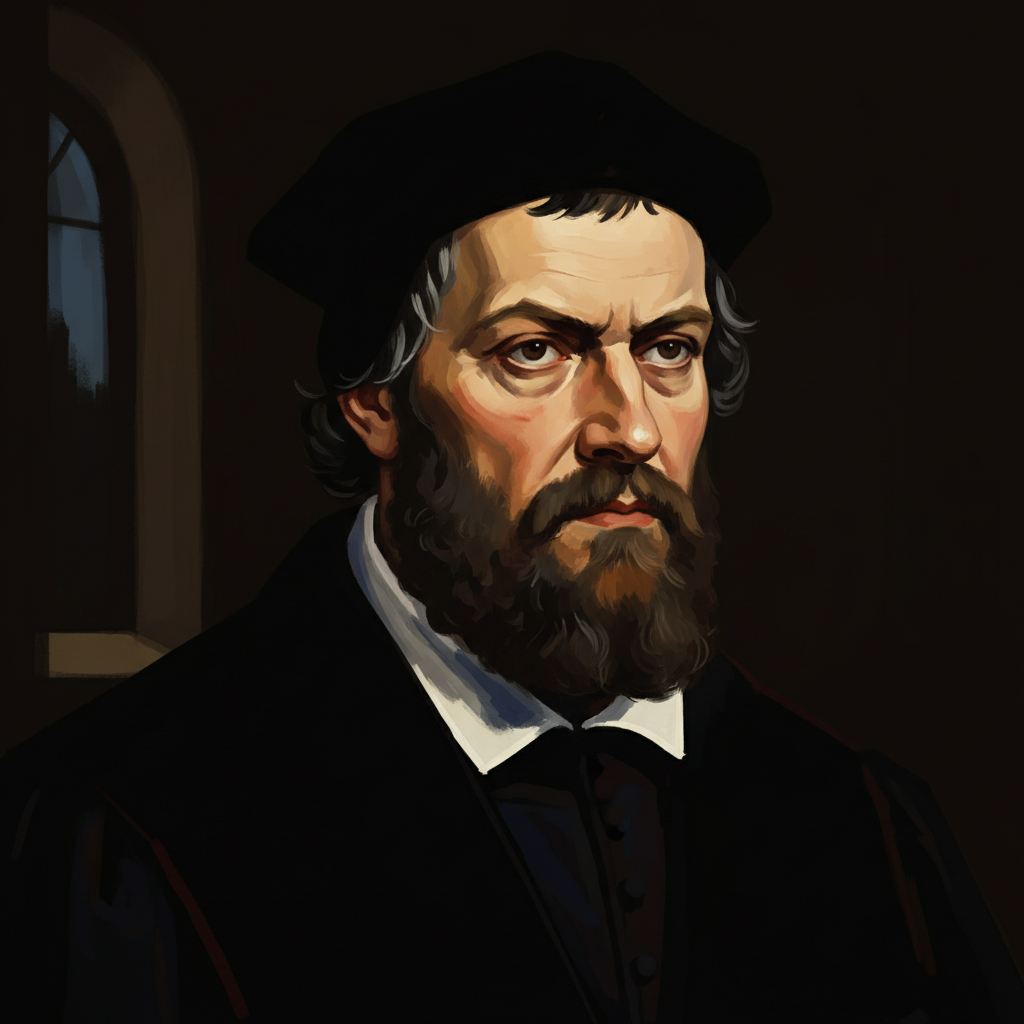
Martin Luther — "I have so much to do today, I'll need to spend another hour on my knees."
I have so much to do today, I'll need to spend another hour on my knees.
I have so much to do today, I'll need to spend another hour on my knees.
Click any product to generate a realistic preview. Up to 3 at a time.
* Initial load can take up to 90 seconds — revising the preview in another color is nearly instant.
"First, to set fire to their synagogues or schools and to bury and cover with dirt whatever will not burn, so that no man will ever again see a stone or cinder of them. This is to be done in honor of o…"
"This life therefore is not righteousness, but growth in righteousness, not health, but healing, not being but becoming, not rest but exercise. We are not yet what we shall be, but we are growing towar…"
"The woman is like a nail, driven into the wall. . . . She sits at home."
"I am a peasant's son; my father, grandfather, and great-grandfather were genuine peasants. So I am a peasant and shall remain one."
"It was I, Martin Luther, who slew all the peasants in the insurrection, for I commanded them to be slaughtered. All their blood is upon my shoulders. But I cast it on our Lord God who commanded me to …"
German theologian whose 95 Theses (1517) launched the Protestant Reformation and broke the Catholic Church's monopoly on Western Christianity. Closely associated with Philipp Melanchthon (Lutheran systematizer) and John Calvin (later Reformer who built on Luther's break). For an intellectual contrast, see Pope Leo X, Renaissance pope (1513-1521) — Leo X's indulgence sales triggered Luther's break and Leo excommunicated him in 1521 — Luther's entire Reformation is structured as a direct answer to the indulgence-funded Vatican Leo represented.
Found in 1 providers: gemini
1 source checked
When facing an overwhelming workload, the speaker responds not by cutting prayer short but by extending it. The busier the day, the more time needed in prayer beforehand. It flips conventional time management: instead of skipping spiritual practice to make room for tasks, prayer is treated as the thing that makes the tasks manageable. Pressure is a reason to pray more, not less.
Luther was a monk, priest, and theology professor who translated the Bible, wrote catechisms, preached constantly, and corresponded across Europe while dodging imperial arrest. Under that workload, daily structured prayer remained non-negotiable for him. His theology centered on direct reliance on God rather than human effort, so treating prayer as fuel for a packed day fits his conviction that grace, not striving, sustains the Christian's labor.
In early sixteenth-century Europe, monastic hours structured daily life and prayer was considered real work, not a break from it. Luther's 1517 Ninety-Five Theses ignited the Reformation, triggering decades of religious upheaval, political conflict, and personal danger for reformers. Printing presses spread his writings faster than authorities could suppress them. Amid that pressure, disciplined prayer was both spiritual practice and psychological anchor for a man permanently under threat of execution.
AI-generated insights based on extensive research and information for context. Factual errors? Email [email protected].
Your cart is empty