Martin Luther — "Reason is the Devil's greatest whore; by nature and manner of being she is a nox…"
Reason is the Devil's greatest whore; by nature and manner of being she is a noxious whore, a stinking whore, she is and must be a mischievous whore.
Reason is the Devil's greatest whore; by nature and manner of being she is a noxious whore, a stinking whore, she is and must be a mischievous whore.
Click any product to generate a realistic preview. Up to 3 at a time.
* Initial load can take up to 90 seconds — revising the preview in another color is nearly instant.
"If I had to baptize a Jew, I would take him to the bridge of the Elbe, hang a stone around his neck and push him over with the words 'I baptize thee in the name of Abraham.'"
"I have not invented a new doctrine, but have only restored the old one."
"Let us therefore beware of the Jews, and their synagogues, and let us burn their synagogues, and let us destroy their houses, and let us take away their prayer-books and Talmuds, and let us forbid the…"
"The more you read the Bible, the more you will love it; the more you love it, the more you will read it."
"I would not have believed salvation could be so easy."
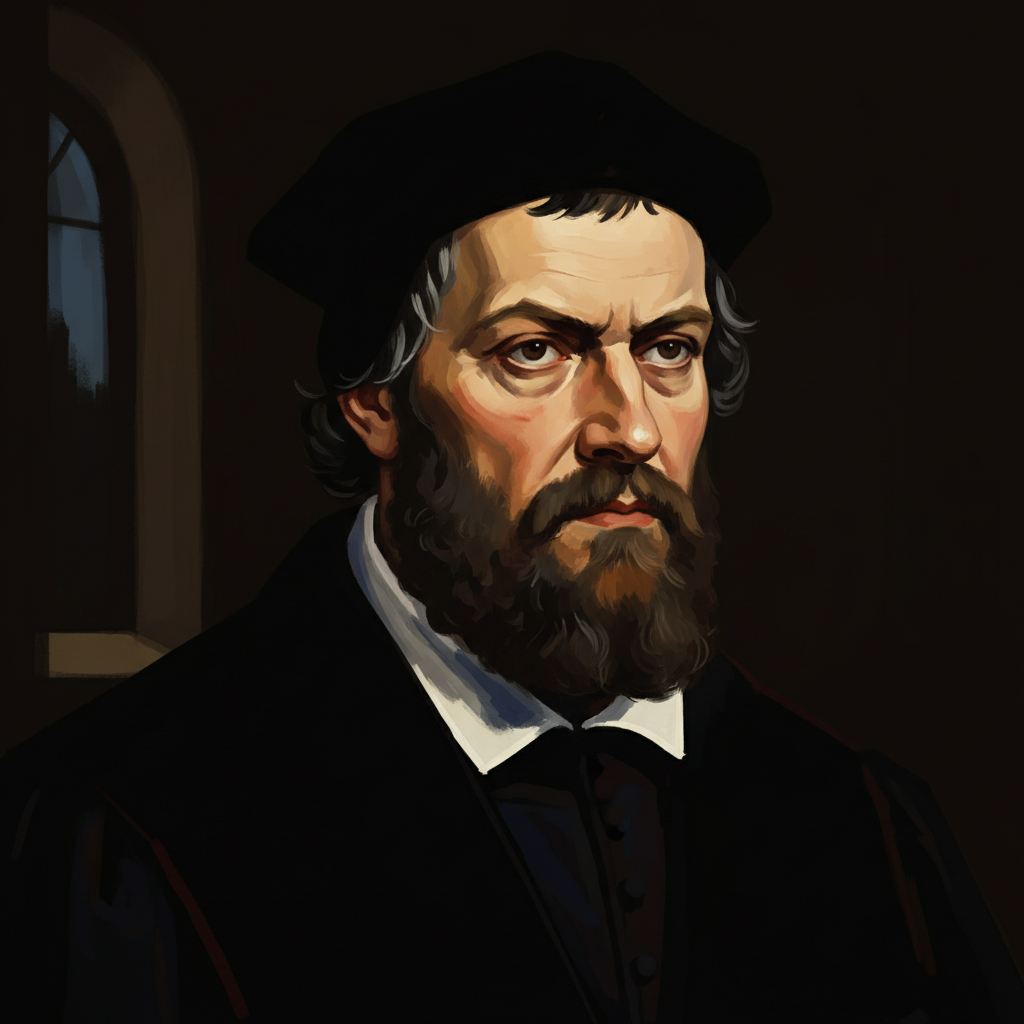
German theologian whose 95 Theses (1517) launched the Protestant Reformation and broke the Catholic Church's monopoly on Western Christianity. Closely associated with Philipp Melanchthon (Lutheran systematizer) and John Calvin (later Reformer who built on Luther's break). For an intellectual contrast, see Pope Leo X, Renaissance pope (1513-1521) — Leo X's indulgence sales triggered Luther's break and Leo excommunicated him in 1521 — Luther's entire Reformation is structured as a direct answer to the indulgence-funded Vatican Leo represented.
Found in 1 providers: grok
1 source checked
Human reasoning, when trusted above divine revelation, becomes dangerous and corrupting. Luther calls it a harlot because it seduces people into relying on their own intellect instead of God's word. Unchecked rationality leads the soul astray, promising wisdom while delivering spiritual ruin. The language is deliberately shocking to strip reason of its prestige and force listeners to subordinate cleverness to faith when the two conflict.
Luther, an Augustinian monk turned reformer, spent his life arguing that salvation comes through faith alone, not human works or logic. He clashed with scholastic theologians who elevated Aristotelian reasoning inside church doctrine. After nailing his 95 Theses in 1517 and translating the Bible into German, he insisted scripture, not philosophical argument, was the final authority. This quote captures his deep suspicion of intellect untethered from revelation.
The early modern period saw humanism and scholasticism prizing classical reason, while the Catholic Church wielded philosophical arguments to defend indulgences, papal authority, and sacramental theology. Luther's Reformation ignited in 1517 amid printing-press-fueled debate across Europe. Rulers, scholars, and peasants were choosing sides, and theological arguments carried life-or-death weight. Luther's hostility toward reason pushed back against a culture that blended Aristotle with Christianity, demanding instead a return to plain scripture.
AI-generated insights based on extensive research and information for context. Factual errors? Email [email protected].
Your cart is empty