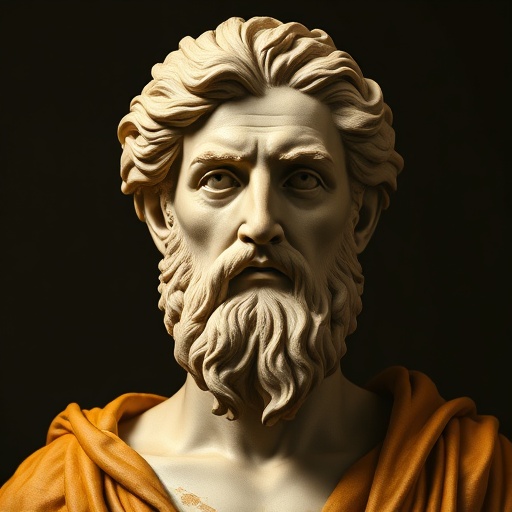
Archimedes — "The value of pi is more than 3 10/71 and less than 3 1/7."
The value of pi is more than 3 10/71 and less than 3 1/7.
The value of pi is more than 3 10/71 and less than 3 1/7.
Click any product to generate a realistic preview. Up to 3 at a time.
* Initial load can take up to 90 seconds — revising the preview in another color is nearly instant.
"The number of grains of sand is not infinite, but finite."
"Equal weights at equal distances are in equilibrium, and equal weights at unequal distances are not in equilibrium, but incline towards the weight which is at the greater distance."
"The shortest distance between two points is a straight line."
"It is easier to make a thousand discoveries than to invent a single new method."
"I will show you how to calculate the number of grains of sand that would fit into the universe."
Found in 1 providers: grok
1 source checked
Pi cannot be written as a simple fraction, so rather than guessing, this statement proves pi lives inside a tight, verifiable range — above 3.1408 and below 3.1429. It replaces speculation with geometric certainty. The approach is what modern scientists call error bounds: not claiming perfect knowledge, but establishing proven limits. Rigorous, honest, and more useful than a false exact answer.
Archimedes derived this bound by inscribing and circumscribing 96-sided polygons around a circle and computing their perimeters entirely by hand — no decimal notation, no calculators. It reflects his defining character: methodical proof over intuition. The same discipline appears across his work on sphere volumes, lever mechanics, and buoyancy. He never stated what he could not prove, only what geometry compelled him to accept.
Archimedes lived in Syracuse around 287–212 BC, when Greek mathematics was maturing under Euclid's framework of formal proof. Earlier civilizations — Babylonians and Egyptians — used rough pi estimates near 3.1 with no justification. Greek culture demanded logical rigor, yet lacked decimal notation or algebra, making tight arithmetic bounds extraordinarily laborious. Archimedes's result, accurate to two decimal places, stood as the most precise Western approximation for roughly fifteen hundred years.
AI-generated insights based on extensive research and information for context. Factual errors? Email [email protected].
Your cart is empty