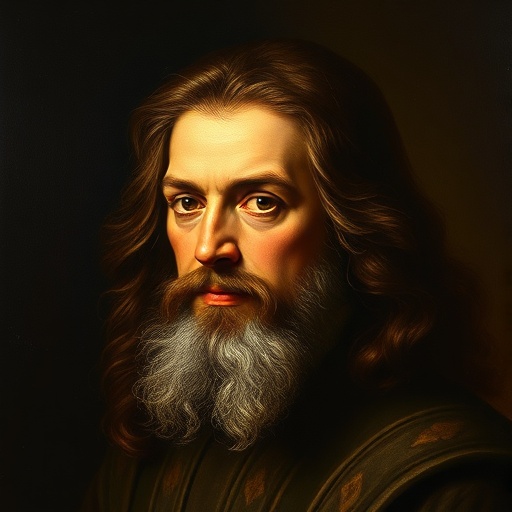
Leonardo da Vinci — "The works of nature are such that they do not exist without cause."
The works of nature are such that they do not exist without cause.
The works of nature are such that they do not exist without cause.
Click any product to generate a realistic preview. Up to 3 at a time.
* Initial load can take up to 90 seconds — revising the preview in another color is nearly instant.
"Every action needs to be prompted by a motive."
"Reprove a friend in secret, but praise him openly."
"The knowledge of all things is possible."
"It is an easy thing to praise and blame, but not so easy to know what to praise and what to blame."
"Art is never finished, only abandoned."
Found in 1 providers: grok
1 source checked
Everything in the natural world has a reason behind it — nothing occurs randomly or without cause. Nature operates through discoverable laws and mechanisms. Observe any phenomenon closely enough and an underlying principle will emerge. This is a claim about causality and the intelligibility of the universe: reality is ordered, not arbitrary, and patient investigation will always reveal the mechanism behind what we see.
Leonardo filled thousands of notebook pages observing birds in flight, water currents, human anatomy, and rock strata. His engineering designs — flying machines, hydraulic systems, war engines — depended on identifying causal mechanisms in nature. He dissected over thirty human bodies to trace muscle function to its source. This conviction that every natural effect has a discoverable cause was the engine of his scientific and artistic career, separating empirical inquiry from medieval superstition.
Leonardo lived during the Italian Renaissance (1452–1519), when medieval scholasticism — which attributed natural events to divine will or Aristotelian tradition — was giving way to direct observation. The printing press was spreading empirical knowledge; Columbus had just crossed the Atlantic; humanist scholars were challenging Church-dominated explanations. Leonardo's insistence on traceable causes helped lay groundwork for the Scientific Revolution that Galileo and Newton would complete a century later.
AI-generated insights based on extensive research and information for context. Factual errors? Email [email protected].
Your cart is empty