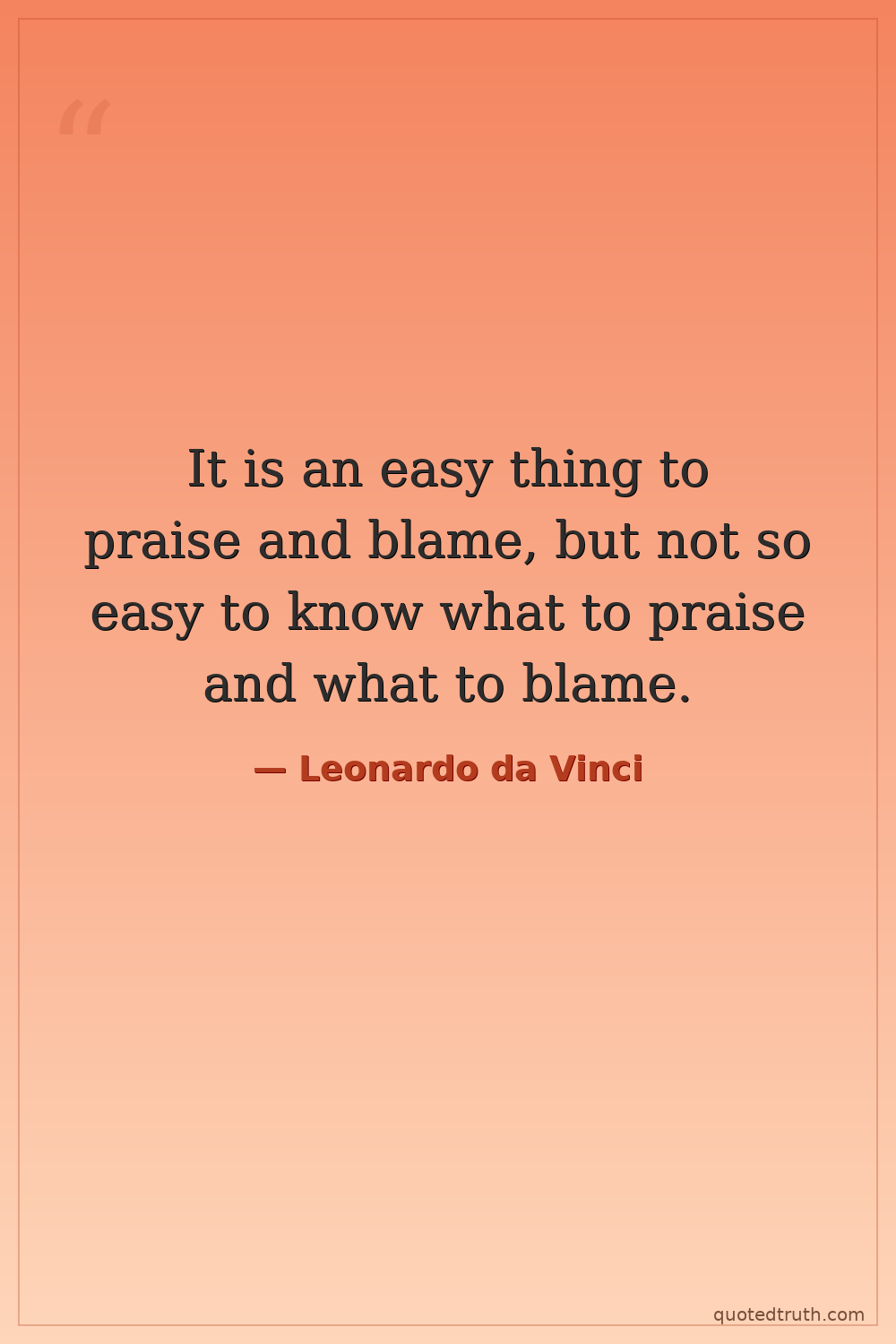
Leonardo da Vinci — "It is an easy thing to praise and blame, but not so easy to know what to praise …"
It is an easy thing to praise and blame, but not so easy to know what to praise and what to blame.
It is an easy thing to praise and blame, but not so easy to know what to praise and what to blame.
Click any product to generate a realistic preview. Up to 3 at a time.
* Initial load can take up to 90 seconds — revising the preview in another color is nearly instant.
"He who wishes to be rich in a day will be hanged in a year."
"Blinding ignorance does mislead us. O! Wretched mortals, open your eyes!"
"As every divided kingdom falls, so every mind divided between many studies confounds and saps itself."
"He who loves practice without theory is like the sailor who boards ship without a rudder and compass and never knows where he may cast."
"The painter who draws merely by practice and by eye, without any reason, is like a mirror which copies everything placed in front of it without understanding."
Found in 1 providers: grok
1 source checked
Passing judgment is effortless — anyone can applaud or condemn. The hard part is knowing which things actually deserve each response. This quote argues that real wisdom lies not in having strong opinions, but in developing the discernment to identify what truly merits praise versus criticism. It's a call for careful thinking over reflexive reaction, for earned judgment over lazy certainty.
Da Vinci filled thousands of notebook pages with meticulous observation before drawing conclusions about anatomy, mechanics, or nature. He worked across art, science, and engineering simultaneously, knowing that premature judgment corrupted genuine inquiry. His patrons and contemporaries praised or dismissed ideas on reputation or tradition alone — da Vinci rejected that. His empirical method demanded earned discernment, not reflexive opinion.
The early modern period was riven by conflicts over what deserved intellectual praise: ancient authority versus direct observation, Church doctrine versus humanist inquiry. Scholasticism praised received wisdom; the Renaissance praised nature and reason. The printing press was amplifying unchecked opinion across Europe. In Florence's competitive patron culture, praise and blame were tools of politics, not truth. Knowing which deserved which was a live, dangerous question.
AI-generated insights based on extensive research and information for context. Factual errors? Email [email protected].
Your cart is empty