What it means
When experts repeatedly fail at something, it doesn't mean the goal is impossible — it means they may be attacking it from the wrong angle. The Wright Brothers believed failure by credentialed scientists wasn't proof that flight couldn't be done, but evidence that the underlying assumptions guiding their attempts were flawed. Question the method, not the mission. Unconventional thinkers who challenge foundational premises can succeed where established experts cannot.
Relevance to Wright Brothers (Orville & Wilbur)
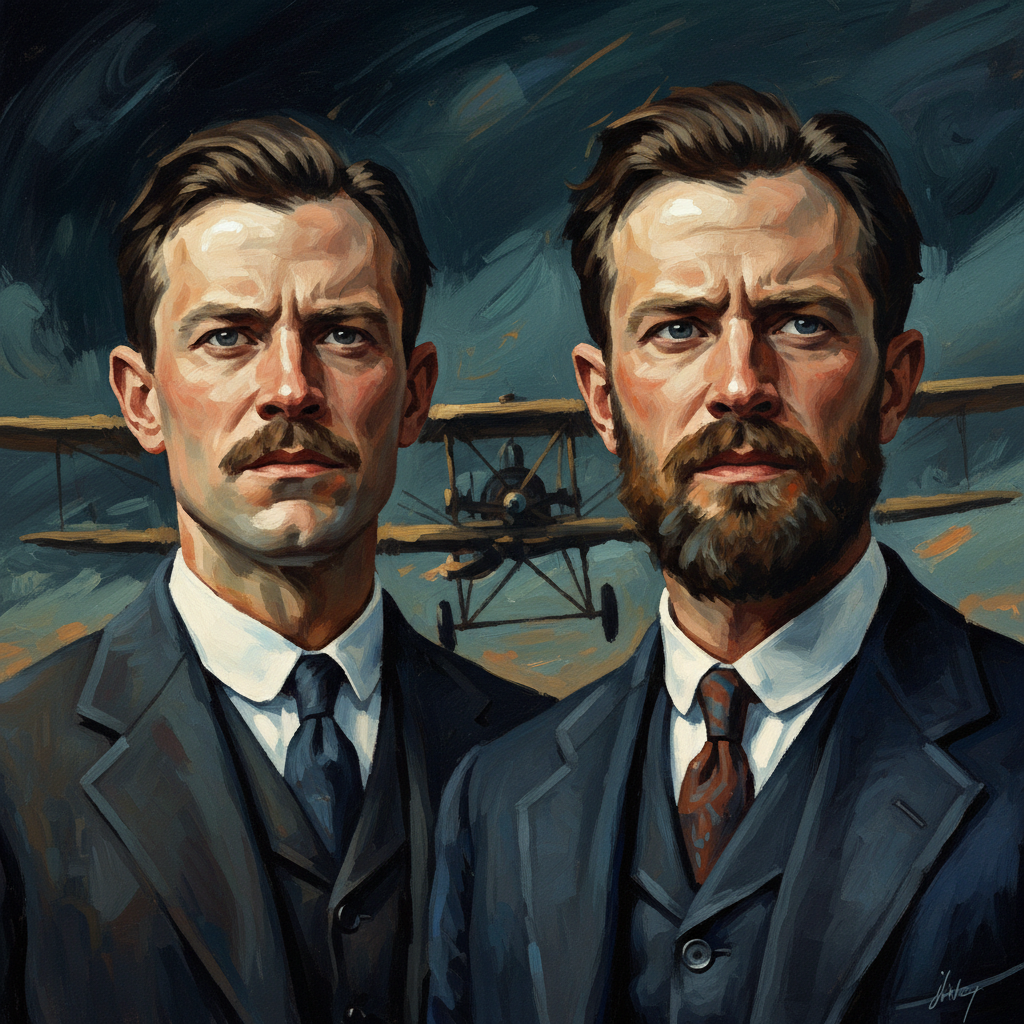
Orville and Wilbur were bicycle mechanics with no formal engineering degrees, yet they outpaced government-funded scientists like Samuel Langley. While Langley chased raw engine power, the Wrights identified control — three-axis stabilization — as the missing principle. Their hands-on, iterative approach from bicycle-building translated directly into solving the flight problem. This quote captures their core confidence: they weren't intimidated by credentials, they were puzzled why smart people chose the wrong framework.
The era
In 1903, the race for powered flight was dominated by institutional science. The Smithsonian backed Samuel Langley with $50,000 in federal funds; he failed spectacularly twice. The prevailing assumption was that flight required brute-force engine power. Meanwhile, industrialization was accelerating and the Wright Brothers' success on December 17, 1903 at Kitty Hawk — built on a $1,000 budget — shocked the world by proving outsiders with correct principles beat insiders with superior resources.
AI-generated insights based on extensive research and information for context. Factual errors? Email [email protected].