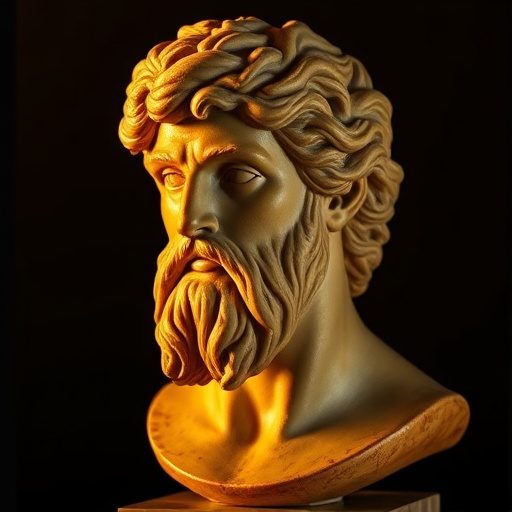
Pythagoras — "A blow from your friend is better than a kiss from your enemy."
A blow from your friend is better than a kiss from your enemy.
A blow from your friend is better than a kiss from your enemy.
Click any product to generate a realistic preview. Up to 3 at a time.
* Initial load can take up to 90 seconds — revising the preview in another color is nearly instant.
"Power is the near neighbour of necessity."
"The strangest (and sexiest) of the legends surrounding the aura of Pythagoras is that he had a golden thigh that he would show to impress people he wanted to join his cult."
"Number is the ruler of forms and ideas, and the cause of gods and daemons."
"Don't help with a burden but put it on."
"Know thyself and thou wilt know the universe."
Greek philosopher and mathematician whose school in Croton combined geometry (the Pythagorean theorem), number-mysticism, and a religious-vegetarian way of life. Closely associated with Thales of Miletus (earlier pre-Socratic and the first philosopher). For an intellectual contrast, see Heraclitus, pre-Socratic Greek philosopher of flux — Heraclitus called Pythagoras 'the chief of swindlers' — among the founding insults of the philosophical-rivalry tradition. Their 'all is flux' vs 'all is number' poles still organize the philosophy of mathematics today (Platonist vs anti-realist).
Found in 1 providers: deepseek
1 source checked
Harsh honesty from someone who genuinely cares about you is worth more than false sweetness from someone who wants to harm you. A friend's criticism — even when it stings — comes from real concern and pushes you toward growth. An enemy's kind words are likely manipulation. True loyalty tells you what you need to hear, not what feels comfortable in the moment.
Pythagoras founded a secretive philosophical brotherhood in Croton around 530 BCE where members pledged absolute loyalty, rigorous honesty, and communal self-examination. He believed truth-seeking required stripping away comfortable illusions. His followers underwent years of silent discipline before earning full membership. This quote mirrors his conviction that genuine community demands honest confrontation — that real bonds are forged through difficult truths, not flattery.
In 6th-century BCE Greece, city-states competed fiercely for power, and political flattery was weaponized by tyrants and aristocrats alike. Persian expansion threatened Greek autonomy, making reliable alliances critical. Greek culture celebrated guest-friendship but deeply feared betrayal — the Trojan War's legacy loomed as a cautionary tale about trusting deceptive words. Distinguishing genuine allies from opportunistic flatterers was a matter of political and personal survival.
AI-generated insights based on extensive research and information for context. Factual errors? Email [email protected].
Your cart is empty