What it means
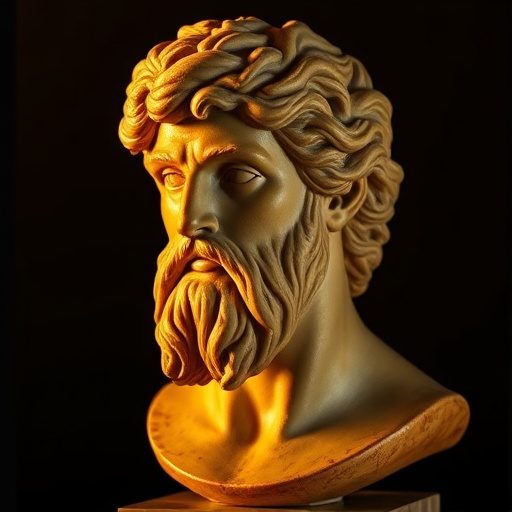
This recounts an ancient legend claiming Pythagoras possessed a golden thigh—a mark of divine origin he reportedly revealed to recruit followers. It captures how Pythagoras cultivated a supernatural mystique around himself, using apparent physical proof of divine status to attract disciples to his secretive philosophical community. It suggests charisma and self-mythologizing were as important as intellectual achievement in building influence and loyalty in the ancient world.
Relevance to Pythagoras
Pythagoras founded a strict religious-philosophical brotherhood at Croton, demanding dietary rules and secrecy from members. Ancient sources including Iamblichus and Aristotle record the golden thigh legend, suggesting he claimed descent from Apollo. This mystical self-presentation was central to his authority, not peripheral. For Pythagoras, mathematical truth and divine revelation were inseparable—making divine-body claims consistent with his worldview that numbers and the sacred were unified.
The era
Sixth-century BCE Greece was saturated with mystery cults—Orphic, Eleusinian, Dionysian—where divine-human contact was a genuine religious category. Claims of divine lineage granted authority that argument alone couldn't. In Magna Graecia, where Pythagoras settled, competing philosophical schools vied for followers. Physical signs of divine favor fit perfectly within a cultural framework that viewed holy men as authentic intermediaries between gods and mortals.
AI-generated insights based on extensive research and information for context. Factual errors? Email [email protected].