Pope Urban II — "Therefore, I pray and exhort, nay not I, but the Lord prays and exhorts you, as …"

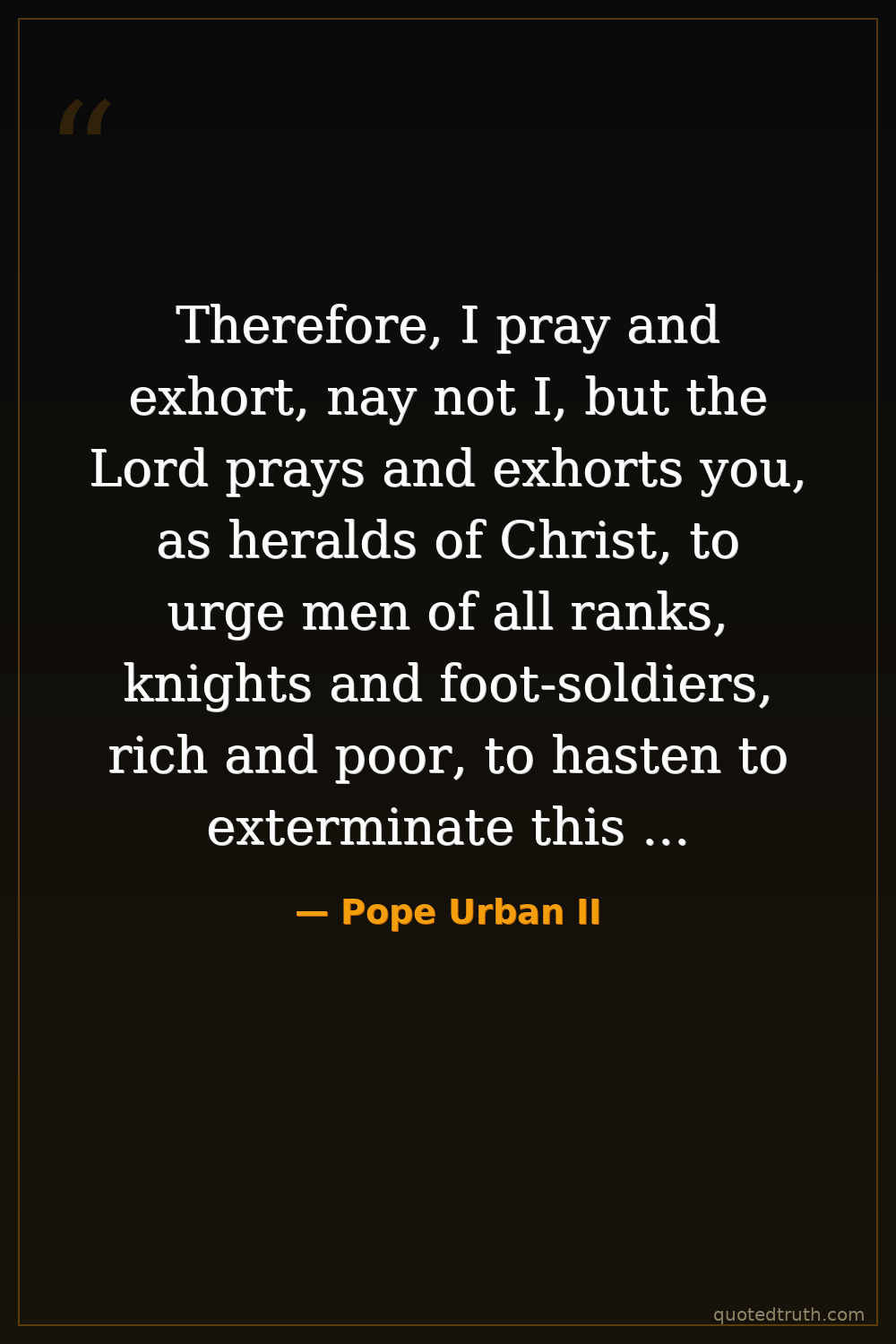
Therefore, I pray and exhort, nay not I, but the Lord prays and exhorts you, as heralds of Christ, to urge men of all ranks, knights and foot-soldiers, rich and poor, to hasten to exterminate this vile race from the lands of our brethren.
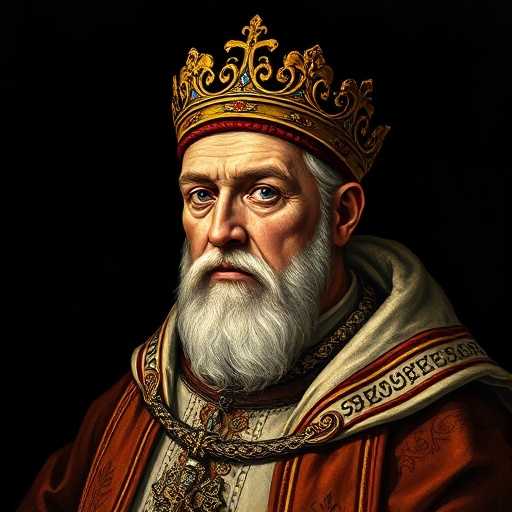
Pope Urban II — Pope Urban II Medieval · Launched the First Crusade

Get This Quote & Author's Image Illustrated On:

Click any product to generate a realistic preview. Up to 3 at a time.
* Initial load can take up to 90 seconds — revising the preview in another color is nearly instant.

Kitchen

Apparel

Other

About Pope Urban II (c. 1042-1099)

Pope (1088-1099) whose Council of Clermont speech (November 1095) launched the First Crusade — the founding event of nine centuries of Christian-Muslim military conflict. Closely associated with Pope Gregory VII (his predecessor on papal-imperial reform). For an intellectual contrast, see Saladin, Kurdish-Muslim Sultan of Egypt and Syria (1138-1193) — Saladin recaptured Jerusalem in 1187, undoing the First Crusade Urban II launched 92 years earlier. Saladin's chivalrous treatment of Christian prisoners became the canonical Muslim counter-image to Crusader brutality. The cleanest before/after pairing of the Crusades' moral arc.

Details

Speech at the Council of Clermont (as reported by Robert the Monk)

Date: 1095

Shocking

Verification

Unverifiable

Found in 1 providers: grok

1 source checked

Understanding this quote

What it means

A religious leader calls on all people regardless of social class to join a military campaign against a group he labels enemies of Christianity. He frames the command as coming from God himself, not merely from human authority, urging both nobles and common soldiers to take up arms and drive out those he considers threats from Christian-held lands.

Relevance to Pope Urban II

Urban II delivered this exact speech at the Council of Clermont in 1095, launching the First Crusade. As pope, he wielded both spiritual and political authority, and invoking divine voice rather than personal command was deliberate strategy. His pontificate centered on church reform and reasserting papal supremacy over secular rulers, making this call to holy war a defining expression of his vision of papal power.

The era

In 1095, the Seljuk Turks had seized Jerusalem and much of Anatolia, alarming Byzantine Emperor Alexios I, who appealed to Rome for aid. Western Europe was feudally fragmented, with knightly violence a constant problem. Urban channeled that martial energy outward. The concept of holy war merged Christian piety with feudal duty, and the crowd at Clermont reportedly responded with 'Deus vult' — God wills it.

AI-generated insights based on extensive research and information for context. Factual errors? Email [email protected].
Your Cart

Your cart is empty