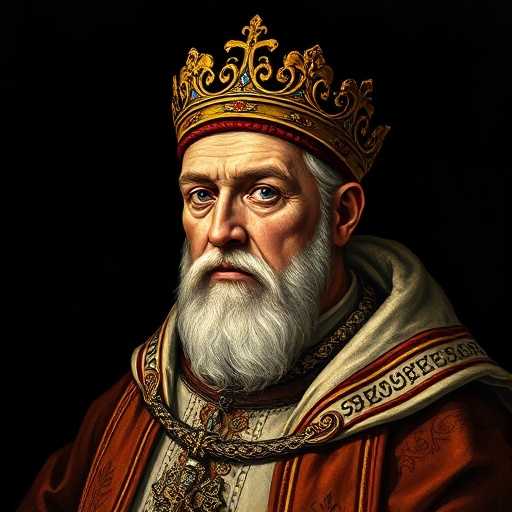
Pope Urban II — "Let those who have been hired for a few pieces of silver now receive an eternal …"
Let those who have been hired for a few pieces of silver now receive an eternal reward.
Let those who have been hired for a few pieces of silver now receive an eternal reward.
Click any product to generate a realistic preview. Up to 3 at a time.
* Initial load can take up to 90 seconds — revising the preview in another color is nearly instant.
"Let those who have been fighting against their brothers and relatives now fight in a proper way against the barbarians."
"Of holy Jerusalem, brethren, we dare not speak, for we are exceedingly afraid and ashamed to speak of it. This very city, in which, as you all know, Christ Himself suffered for us, because our sins de…"
"Let those who have been accustomed unjustly to wage private warfare against the faithful now go against the infidels and end with victory this war which should have been begun long ago."
"Let those who have been for a long time plunderers, now become Christian knights."
"God wills it! God wills it!"
Pope (1088-1099) whose Council of Clermont speech (November 1095) launched the First Crusade — the founding event of nine centuries of Christian-Muslim military conflict. Closely associated with Pope Gregory VII (his predecessor on papal-imperial reform). For an intellectual contrast, see Saladin, Kurdish-Muslim Sultan of Egypt and Syria (1138-1193) — Saladin recaptured Jerusalem in 1187, undoing the First Crusade Urban II launched 92 years earlier. Saladin's chivalrous treatment of Christian prisoners became the canonical Muslim counter-image to Crusader brutality. The cleanest before/after pairing of the Crusades' moral arc.
Found in 1 providers: grok
1 source checked
Those who formerly served for small material wages or fleeting earthly gain should now act in service of God, trading temporal compensation for everlasting spiritual reward. The call reframes mercenary or self-interested action into sacred duty, urging people to prioritize divine salvation and eternal life over coins, comfort, or worldly standing.
Urban II, a Cluniac monk turned pope, believed deeply in reforming the church from corruption and simony—clergy selling offices for silver. His entire papacy centered on elevating spiritual over material motivation. Launching the First Crusade at Clermont in 1095, he promised plenary indulgence to crusaders, making eternal reward the explicit transaction replacing earthly payment.
Medieval Europe ran on feudal wages and mercenary warfare—knights literally fought for silver. Simony corrupted the church, with positions bought and sold. Urban spoke at a moment when Europe's landless younger sons, veteran soldiers, and spiritually restless sought purpose. Reframing their service as earning heaven rather than coin was a revolutionary motivational shift that mobilized tens of thousands toward Jerusalem.
AI-generated insights based on extensive research and information for context. Factual errors? Email [email protected].
Your cart is empty