Siddhartha Gautama (Buddha) — "When watching after yourself, you watch after others. When watching after others…"
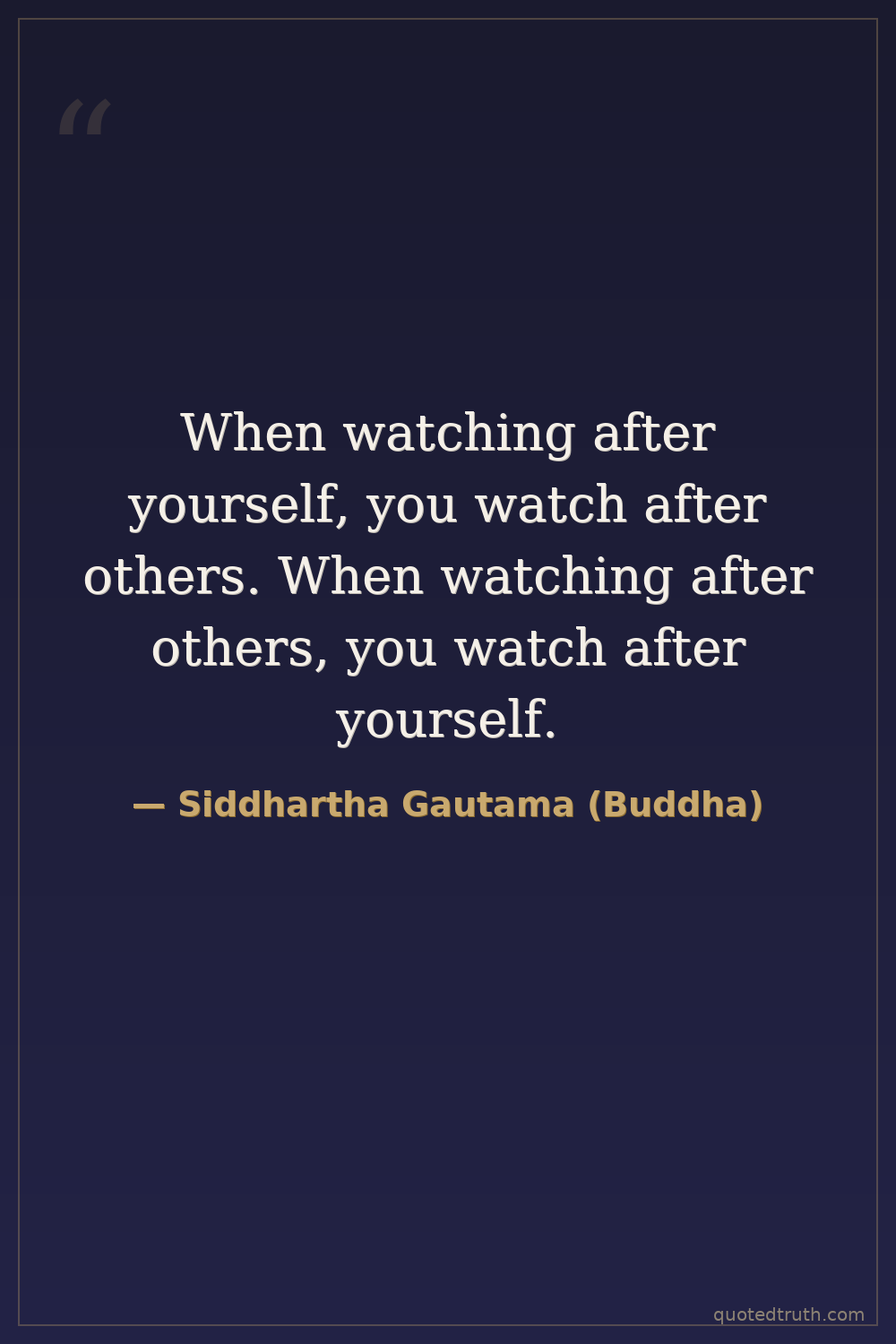
When watching after yourself, you watch after others. When watching after others, you watch after yourself.
When watching after yourself, you watch after others. When watching after others, you watch after yourself.
Click any product to generate a realistic preview. Up to 3 at a time.
* Initial load can take up to 90 seconds — revising the preview in another color is nearly instant.
"Give, even if you only have a little."
"The only real failure in life is not to be true to the best one knows."
"An idea that is developed and put into action is more important than an idea that exists only as an idea."
"Much though he recites the sacred texts, but acts not accordingly, that heedless man is like a cowherd who only counts the cows of others."
"What we think, we become."
Found in 1 providers: gemini
1 source checked
Caring for yourself and caring for others are not separate acts but two sides of the same practice. When you cultivate your own mindfulness, discipline, and well-being, you naturally become a better presence for those around you. And when you genuinely look out for others, that outward attention sharpens your own awareness and character. Self-care and compassion reinforce each other rather than compete.
Buddha built his teaching around the middle path between self-denial and self-indulgence, having rejected extreme asceticism after nearly starving himself. This saying reflects his conviction that inner cultivation and outer compassion are inseparable, a foundation of the Eightfold Path. As a teacher who spent forty-five years guiding disciples, he embodied the idea that personal mindfulness and service to others strengthen each other.
In 5th-century BCE northern India, rival shramana movements debated whether liberation came through severe self-mortification or ritual purity serving caste hierarchies. Brahmanical religion emphasized external sacrifice, while Jain ascetics pushed extreme bodily denial. Buddha's teaching cut between these by locating ethics in mutual cultivation rather than isolation or ritual. Against a backdrop of urbanizing kingdoms and social upheaval, his message that self and others rise together challenged both priestly exclusivity and hermit withdrawal.
AI-generated insights based on extensive research and information for context. Factual errors? Email [email protected].
Your cart is empty