Confucius — "To be wronged is nothing, unless you continue to remember it."
To be wronged is nothing, unless you continue to remember it.
To be wronged is nothing, unless you continue to remember it.
Click any product to generate a realistic preview. Up to 3 at a time.
* Initial load can take up to 90 seconds — revising the preview in another color is nearly instant.
"Be strict with yourself but least reproachful of others and complaint is kept afar."
"Is it not a pleasure, having learned something, to try it out at due intervals?"
"If I am walking with two other men, each of them will serve as my teacher. I will pick out the good points of the one and imitate them, and the bad points of the other and correct them in myself."
"The Master said, 'It is not easy to find a man who has learned for three years without having his thoughts bent on learning.'"
"The Master said, 'To see what is right, and not to do it, is want of courage.'"
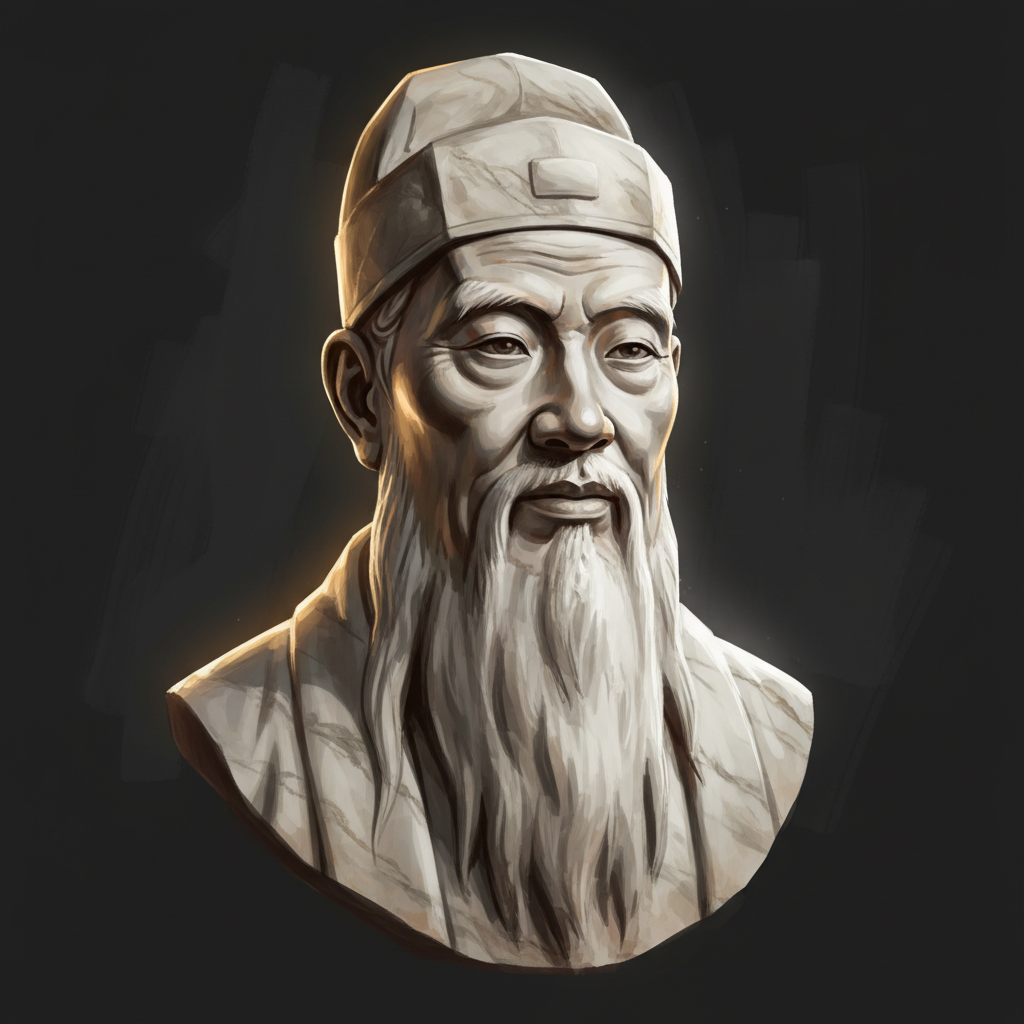
Chinese philosopher and teacher whose teachings (compiled by his students in the Analects) became the foundational ethical framework of East Asian civilization for 2,500 years. Closely associated with Mencius (his most-influential follower a century later). For an intellectual contrast, see Laozi, near-contemporary Chinese sage and Tao Te Ching author — Confucius systematized social order through ritual and family hierarchy; Laozi's Taoist effortless-action philosophy argued such systems were the disease, not the cure. The two founding poles of Chinese moral philosophy — every East Asian moral tradition since has positioned itself between them.
The standard scholarly entry points to Confucius's work: Philip J. Ivanhoe (Georgetown, Chinese philosophy) — Confucian Moral Self Cultivation (2000); Edward Slingerland (UBC, Asian Studies) — Effortless Action: Wu-wei as Conceptual Metaphor (2003); Tu Weiming (Harvard, Confucian scholar) — Confucian Thought: Selfhood as Creative Transformation (1985). These are the works graduate seminars cite when teaching Confucius.
Found in 1 providers: gemini
1 source checked
Being hurt or treated unfairly by others is only a temporary event, but dwelling on it gives the injury lasting power over you. The original harm passes quickly; the suffering comes from replaying the offense in your mind. By refusing to hold onto grievances, you free yourself from resentment and the emotional weight that would otherwise shape your future actions and well-being.
Confucius taught that moral cultivation and inner harmony were central to becoming a junzi, or superior person. He valued ren (benevolence) and forgiveness, believing a virtuous individual rises above petty grievances. Having faced political setbacks, exile, and rejection by rulers he advised, Confucius personally practiced emotional restraint, channeling disappointment into teaching disciples rather than nursing resentment toward those who dismissed him.
During the Spring and Autumn period (roughly 771-476 BCE), China was fractured into warring states where betrayal, court intrigue, and violent feuds were routine. Personal vengeance cycles destabilized kingdoms and families alike. Confucius lived amid this collapse of Zhou dynasty order, and his teachings offered a moral alternative to endless retaliation, emphasizing self-governance and harmony as the foundation for rebuilding a broken social world.
AI-generated insights based on extensive research and information for context. Factual errors? Email [email protected].
Your cart is empty