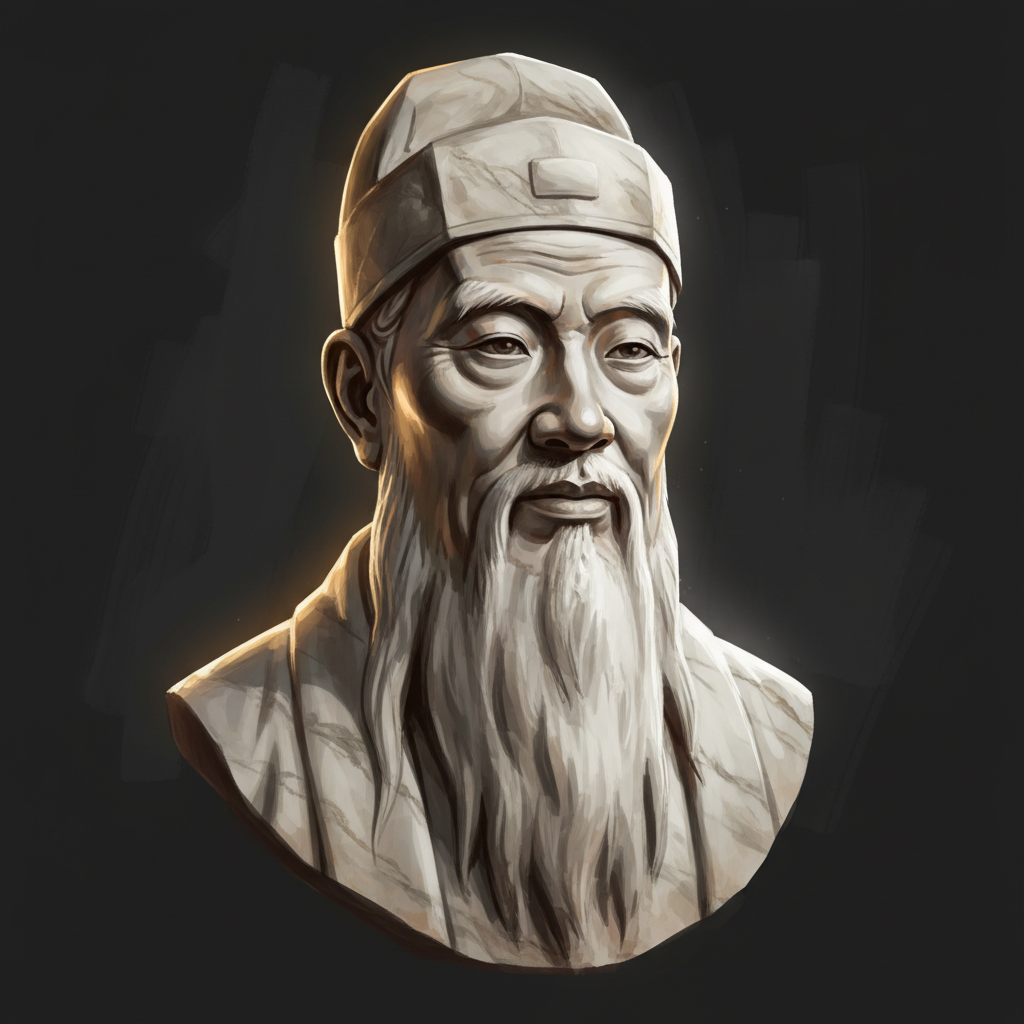
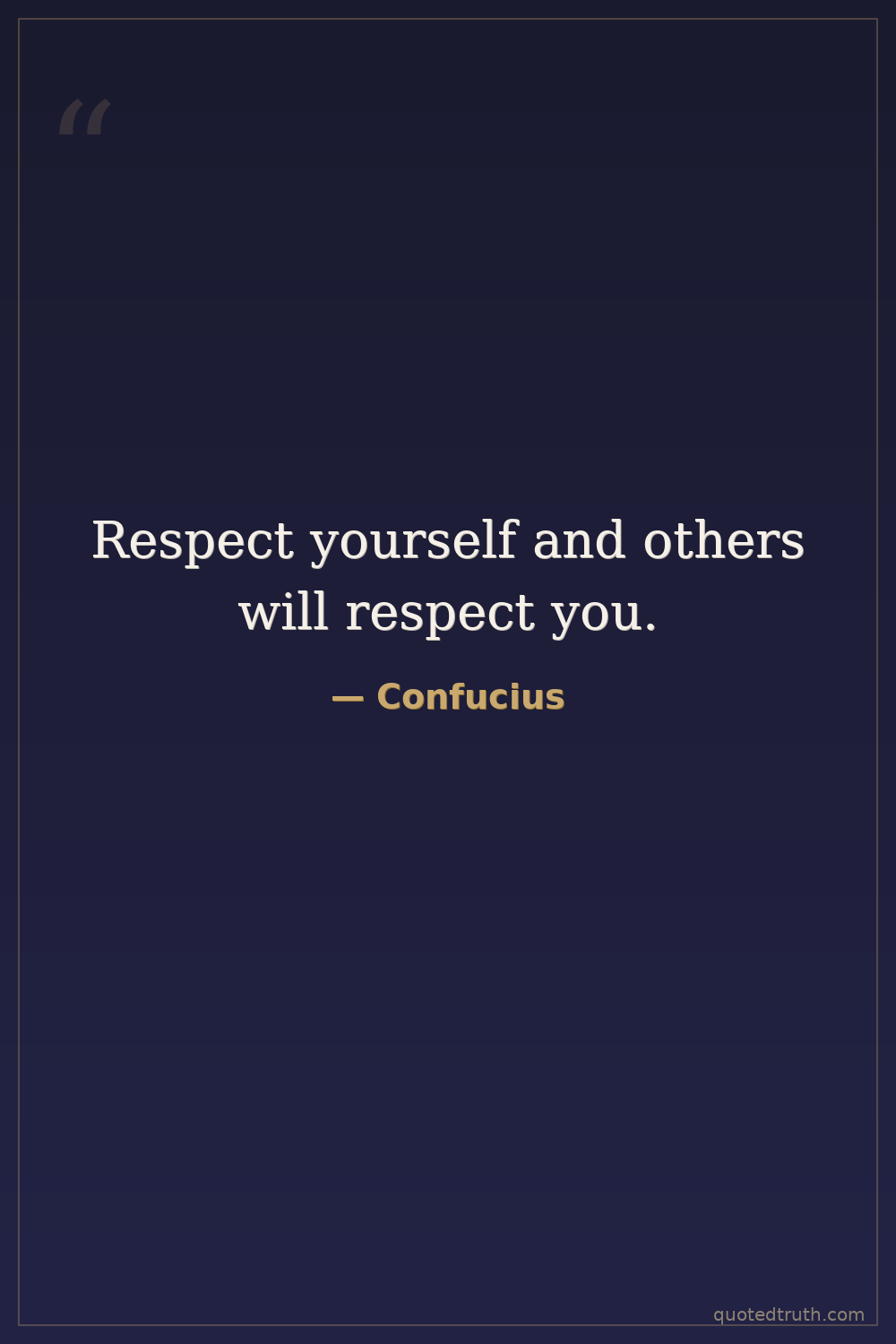
Confucius — "Respect yourself and others will respect you."
Respect yourself and others will respect you.
Respect yourself and others will respect you.
Click any product to generate a realistic preview. Up to 3 at a time.
* Initial load can take up to 90 seconds — revising the preview in another color is nearly instant.
"To worship ancestors whom one does not know is to be presumptuous."
"The superior man is modest in his speech, but exceeds in his actions."
"Is humanity far away? Whenever I want the virtue of humanity, it comes at once."
"The gentleman understands integrity; the petty person knows about profit."
"The funniest thing is that I am often asked to arbitrate disputes, but I am no judge. I just make people agree to disagree. It works surprisingly often."
Chinese philosopher and teacher whose teachings (compiled by his students in the Analects) became the foundational ethical framework of East Asian civilization for 2,500 years. Closely associated with Mencius (his most-influential follower a century later). For an intellectual contrast, see Laozi, near-contemporary Chinese sage and Tao Te Ching author — Confucius systematized social order through ritual and family hierarchy; Laozi's Taoist effortless-action philosophy argued such systems were the disease, not the cure. The two founding poles of Chinese moral philosophy — every East Asian moral tradition since has positioned itself between them.
The standard scholarly entry points to Confucius's work: Philip J. Ivanhoe (Georgetown, Chinese philosophy) — Confucian Moral Self Cultivation (2000); Edward Slingerland (UBC, Asian Studies) — Effortless Action: Wu-wei as Conceptual Metaphor (2003); Tu Weiming (Harvard, Confucian scholar) — Confucian Thought: Selfhood as Creative Transformation (1985). These are the works graduate seminars cite when teaching Confucius.
Found in 1 providers: gemini
1 source checked
Self-respect is the foundation of how others treat you. When you carry yourself with dignity, hold yourself to high standards, and value your own worth, people naturally respond in kind. You cannot demand respect from others while neglecting to give it to yourself. How you regard yourself sets the baseline for every relationship, signaling to the world the treatment you consider acceptable.
Confucius built his entire ethical system around self-cultivation as the starting point for social harmony. A lifelong teacher who served briefly as a government minister in the state of Lu, he taught that the junzi, or exemplary person, must first perfect inner virtue before influencing family, state, or society. This saying captures his conviction that moral authority radiates outward from disciplined character, not titles.
Confucius lived during the Spring and Autumn period, roughly 551 to 479 BCE, when the Zhou dynasty was fracturing into warring states and traditional rituals were collapsing. Nobles abandoned ceremonial propriety, and rulers gained power through force rather than virtue. Against this chaos, Confucius preached a return to li, ritual propriety, and ren, humaneness, arguing that orderly society begins with individuals who cultivate personal dignity and treat themselves as moral agents worthy of respect.
AI-generated insights based on extensive research and information for context. Factual errors? Email [email protected].
Your cart is empty