What it means
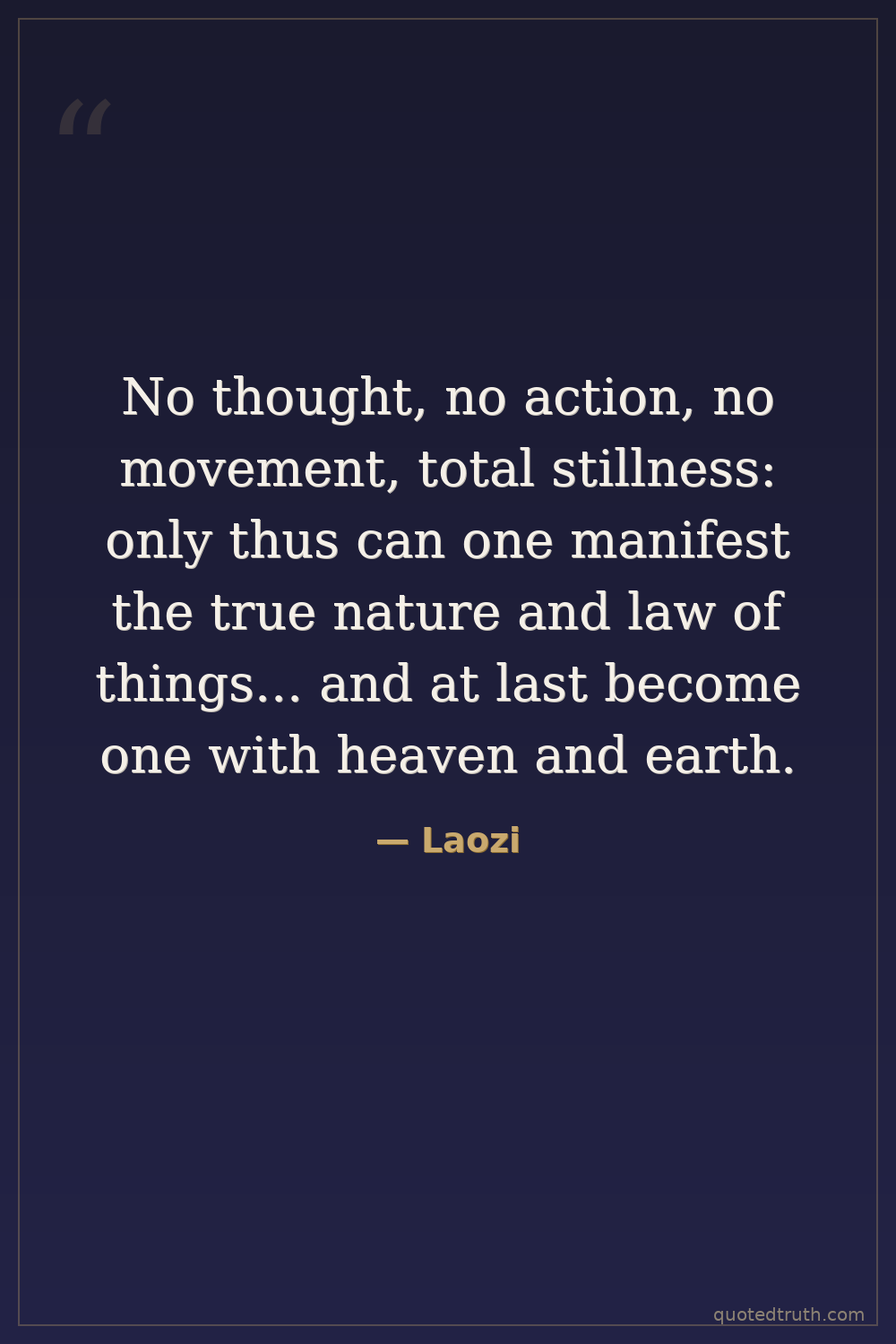
True understanding and alignment with reality come not from striving, analyzing, or acting, but from complete inner quiet. When you stop forcing thoughts and movements, you perceive how things actually are and naturally fit into the larger order of existence. Stillness is not passivity but a receptive state where the underlying patterns of life reveal themselves, allowing a person to act in harmony with the world rather than against it.
Relevance to Laozi
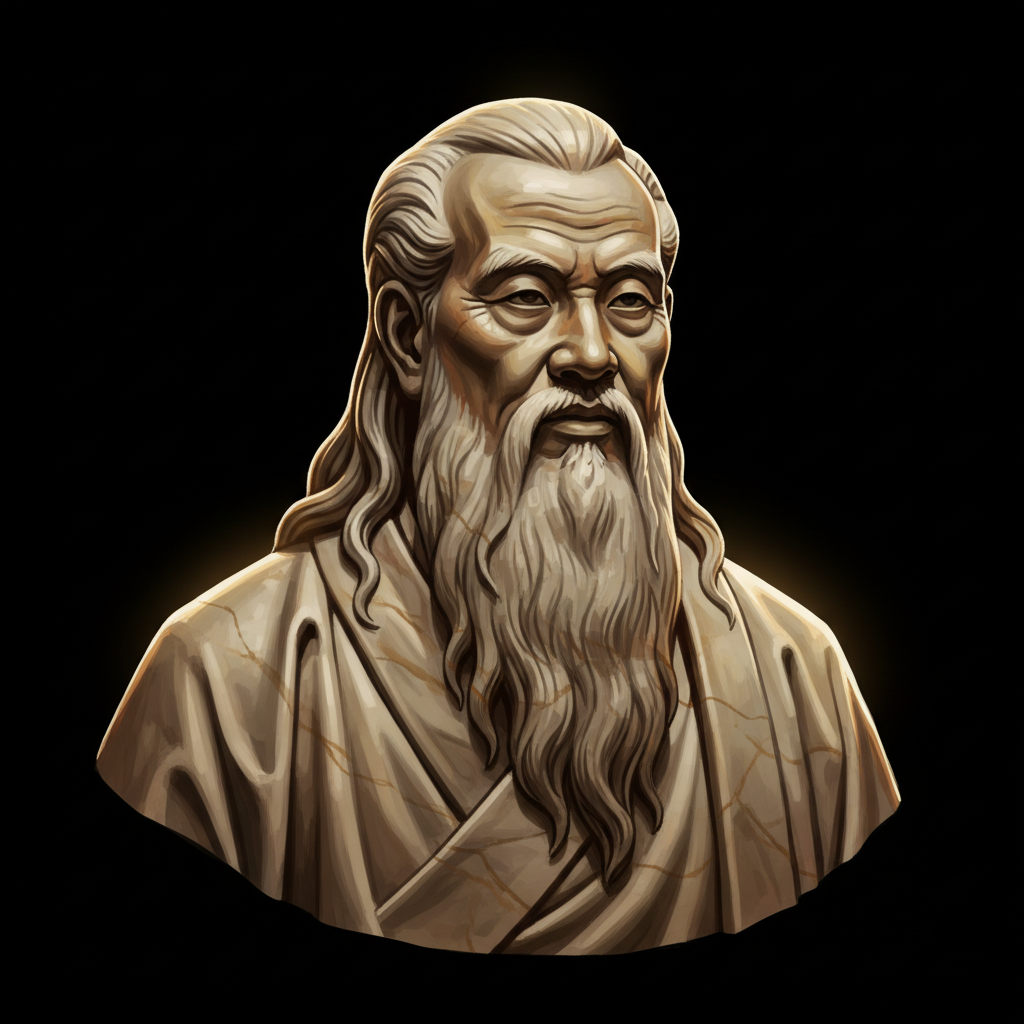
Laozi, the legendary founder of Taoism and traditional author of the Tao Te Ching, taught wu wei, effortless non-action, and returning to simplicity. Legend says he served as an archivist in the Zhou royal court before retreating westward, disillusioned with political turmoil. This saying captures his central teaching that the Tao is grasped through emptying the mind, not filling it, and that the sage aligns with nature rather than imposing human will.
The era
Laozi lived during the late Zhou dynasty, roughly the 6th century BCE, amid the Spring and Autumn period's warfare, collapsing feudal order, and competing philosophical schools. Confucians stressed ritual, duty, and active moral reform, while Legalists pushed harsh state control. Against this noisy backdrop of ambitious rulers and rival reformers, Laozi's call for stillness, humility, and yielding was a radical counter-proposal, urging people to trust nature's rhythms rather than engineer society through force.
AI-generated insights based on extensive research and information for context. Factual errors? Email [email protected].