Zoroaster — "The inner fire of wisdom and truth must be kindled in every heart."
The inner fire of wisdom and truth must be kindled in every heart.
The inner fire of wisdom and truth must be kindled in every heart.
Click any product to generate a realistic preview. Up to 3 at a time.
* Initial load can take up to 90 seconds — revising the preview in another color is nearly instant.
"The soul is immortal and will be judged according to its choices."
"Between these two, the demons have not chosen aright, for delusion came upon them as they consulted, so that they chose the worst thought."
"Turn yourself not away from three best things: Good Thought, Good Word, and Good Deed."
"Show me, O Mazda, through Good Mind, how to fulfill this teaching, for which I ask Thee, and through Thy Righteousness, to approach Thee, O Ahura, and to offer praise to Thee."
"And when these two spirits came together, they created life and non-life, and how at the end the worst existence shall be for the wicked, but the Best Mind for the righteous."
Iranian prophet who founded Zoroastrianism, the first major religion of cosmic dualism between good (Ahura Mazda) and evil (Angra Mainyu). Closely associated with The Buddha (near-contemporary Eastern moral-cosmological revolutionary). For an intellectual contrast, see Friedrich Nietzsche, German philosopher of 'beyond good and evil' — Nietzsche appropriated Zarathustra's name for Thus Spoke Zarathustra (1883) precisely to invert the original's moral cosmology — the historical Zoroaster founded the good-versus-evil framework Nietzsche's character announces the end of.
Found in 1 providers: gemini
1 source checked
Wisdom and truth are not handed down from outside or inherited by birth; they have to be sparked alive inside each individual person. Every human being is responsible for igniting their own moral awareness, honest thinking, and understanding of what is right. The language of fire evokes something active and self-sustaining: once lit, it gives off warmth and light, but someone has to strike the match within themselves first.
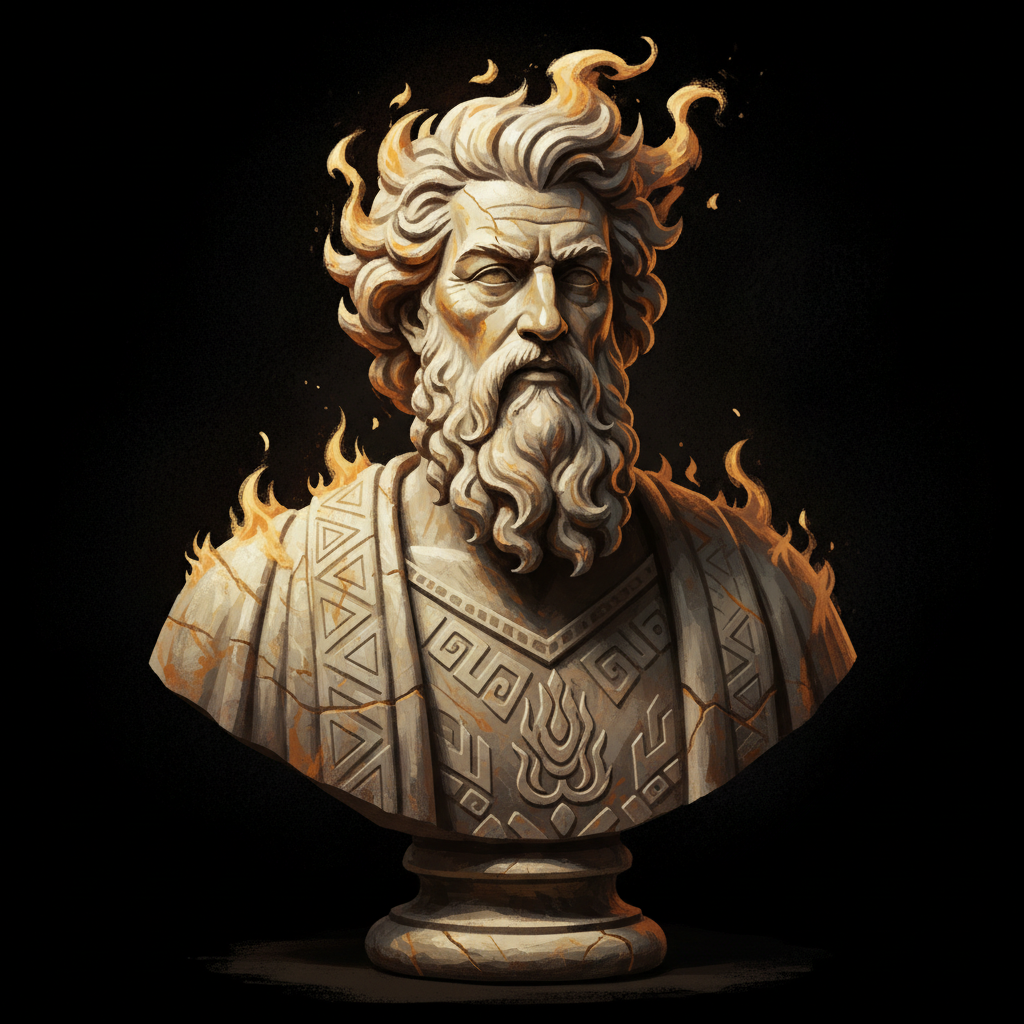
Zoroaster made fire the central emblem of his faith, treating it as the visible symbol of Asha, the cosmic order of truth. As a reformer-prophet who rejected ritual sacrifice in favor of ethical choice, he taught that each person must freely choose good thoughts, good words, and good deeds. This saying mirrors his core teaching that righteousness is an interior act of will, not an external rite performed by priests.
Zoroaster lived in the Iranian Bronze or early Iron Age, roughly 1500–1000 BCE, amid polytheistic tribal religions dominated by animal sacrifice and hereditary priestly castes. Cultures around him tied virtue to ritual correctness and clan loyalty. By insisting truth must be kindled personally in every heart, he broke with that collectivist framework and introduced a radically individual moral conscience, centuries before comparable ideas appeared in Greek philosophy or Hebrew prophecy.
AI-generated insights based on extensive research and information for context. Factual errors? Email [email protected].
Your cart is empty