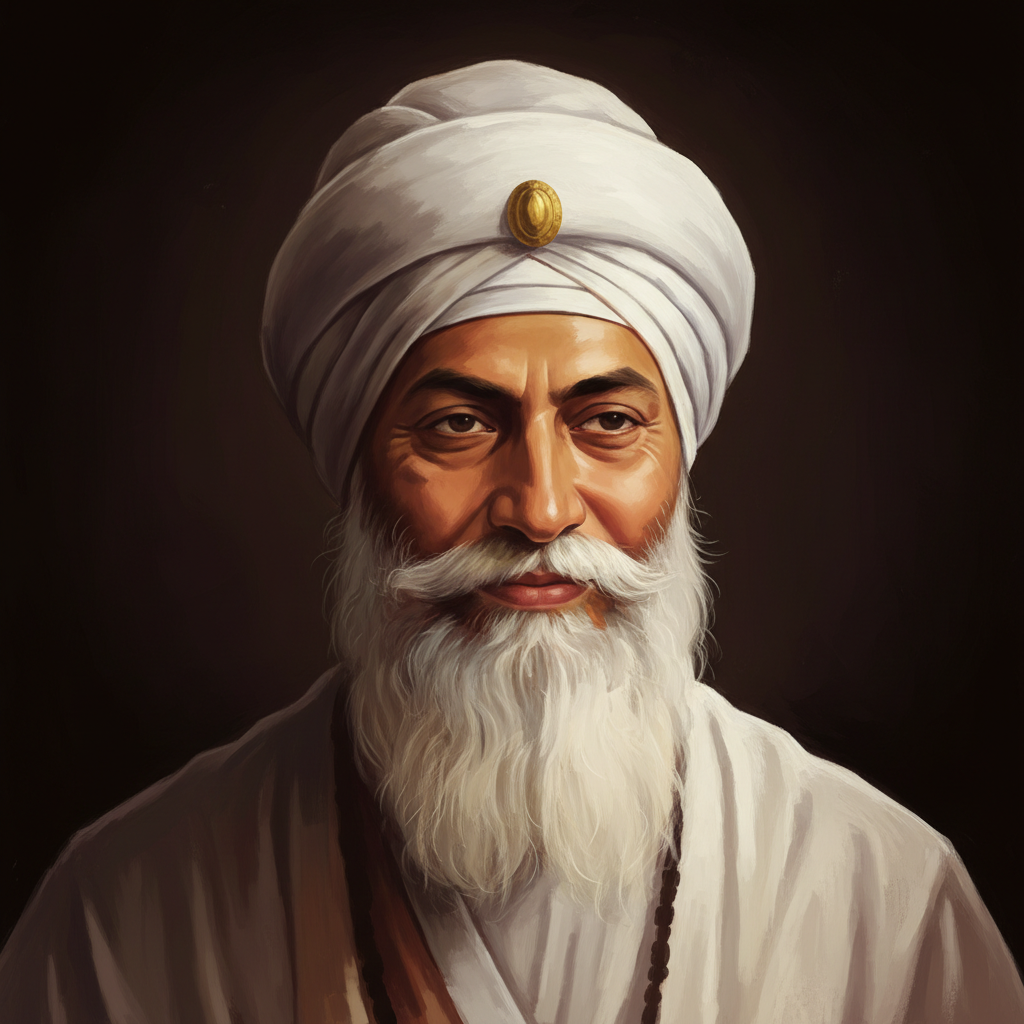
Guru Nanak — "Sing the songs of joy to the Lord, serve the Name of the Lord, and become the se…"
Sing the songs of joy to the Lord, serve the Name of the Lord, and become the servant of His servants.
Sing the songs of joy to the Lord, serve the Name of the Lord, and become the servant of His servants.
Click any product to generate a realistic preview. Up to 3 at a time.
* Initial load can take up to 90 seconds — revising the preview in another color is nearly instant.
"The blessings of God are for all, without discrimination."
"The one who eats what he earns through hard labor and shares it, he alone knows the path."
"Recognize the whole human race as one. And then try to remember everyone's name."
"Recognise the Lord's light within all and do not consider social class or status."
"Through suffering, one learns to love God."
Founder of Sikhism and the first of the Ten Sikh Gurus, whose teachings of one universal God and rejection of caste shaped Punjab. Closely associated with Kabir (mystical poet whose verses appear in the Sikh Guru Granth Sahib). For an intellectual contrast, see Brahmanical orthodoxy, the Hindu caste-and-ritual establishment of his era — Sikhism was founded as a deliberate alternative to both Hindu ritual hierarchy and Islamic exclusivism — Nanak's universalism was a structural rejection of caste and priestly mediation.
Found in 1 providers: gemini
1 source checked
Devote yourself fully to divine praise and humble service. Joy comes not from status or wealth but from singing God's glory and subordinating your ego entirely to serving others who themselves serve the divine. True spiritual fulfillment requires active participation in worship combined with radical humility—placing yourself beneath even other servants of God rather than seeking personal elevation or recognition.
Guru Nanak's entire life embodied this teaching. He composed hundreds of devotional hymns collected in the Guru Granth Sahib, literally singing God's praise across thousands of miles of travel. He famously declared 'There is no Hindu, no Muslim' and washed the feet of laborers, demonstrating servant-of-servants humility. His langar institution—communal free kitchen—institutionalized equality and service as spiritual practice.
Fifteenth-century Punjab was stratified by rigid Hindu caste hierarchy and Muslim political dominance under the Delhi Sultanate and later Mughals. Religious identity determined social worth; Brahmins monopolized sacred access while lower castes were excluded. Guru Nanak's call to joyful service for all, regardless of rank, was radical social leveling—directly challenging caste gatekeeping by declaring every sincere servant equally close to the divine.
AI-generated insights based on extensive research and information for context. Factual errors? Email [email protected].
Your cart is empty