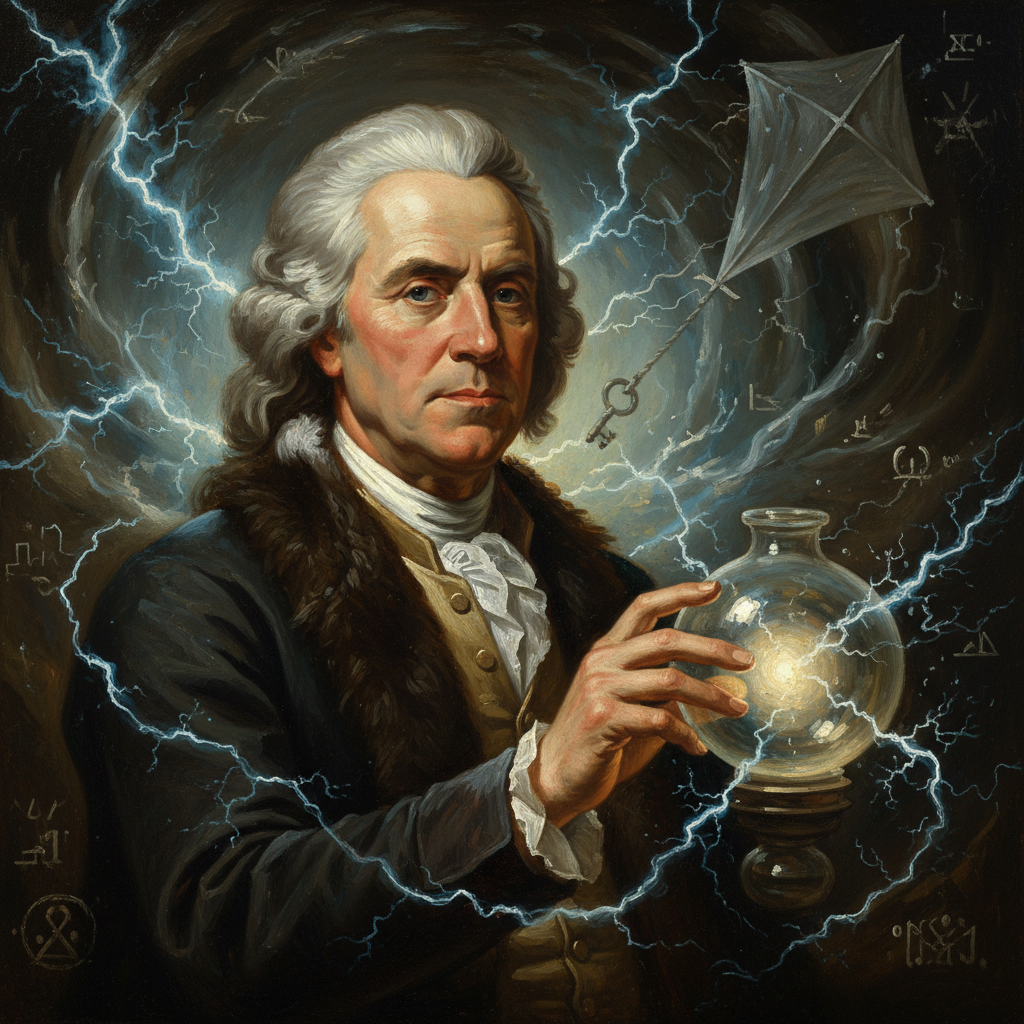
Benjamin Franklin — "Instead of cursing the darkness, light a candle."
Instead of cursing the darkness, light a candle.
Instead of cursing the darkness, light a candle.
Click any product to generate a realistic preview. Up to 3 at a time.
* Initial load can take up to 90 seconds — revising the preview in another color is nearly instant.
"He that is used to go to bed hungry, and rise early, may be a good workman, but he is a bad master."
"Who dainties love, shall beggars prove."
"He that has a Trade, has an Office of Profit and Pleasure."
"Dost thou love life? Then do not squander time, for that is the stuff life is made of."
"The way to be safe, is never to be secure."
Polymath Founding Father, diplomat, and Poor Richard's Almanack author who helped draft the Declaration of Independence and the Constitution. Closely associated with John Adams (fellow Founder, Massachusetts statesman) and Thomas Jefferson (fellow Declaration drafter). For an intellectual contrast, see Thomas Hutchinson, last royal governor of colonial Massachusetts — Franklin leaked Hutchinson's loyalist correspondence to Boston in 1772 to inflame revolutionary sentiment — Hutchinson represented the colonial-aristocrat crown-loyalty that Franklin's revolution was organized to dismantle.
Found in 1 providers: gemini
1 source checked
Rather than lamenting problems or venting frustration at bad circumstances, take constructive action. 'Darkness' represents hardship, ignorance, or adversity; 'lighting a candle' means making a concrete positive effort, however small. The quote champions personal agency over passivity — the belief that even a modest act of improvement is more valuable than any amount of complaint. It rejects helplessness and demands practical, forward-moving responses to difficulty.
Franklin embodied this ethos completely. He invented the lightning rod to neutralize storms instead of fearing them, founded Philadelphia's first public library, organized its fire brigade, and built a colonial postal system from scratch. His Poor Richard's Almanack preached self-improvement over grievance. Born into poverty and self-educated, Franklin never resigned himself to circumstances — he engineered around them, making pragmatic action the defining thread of his public and scientific life.
Colonial America offered constant hardship — disease, brutal winters, scarce resources, and British political control that colonists could not easily change. Simultaneously, Enlightenment philosophy was spreading the radical idea that human reason and effort could reshape the world. Before public institutions existed, individuals had to build solutions themselves. In that climate, fatalism was a genuine temptation; Franklin's era urgently needed the cultural message that agency and ingenuity mattered more than complaint.
AI-generated insights based on extensive research and information for context. Factual errors? Email [email protected].
Your cart is empty