Edvard Munch — "The rich man who gives, steals twice over. First he steals the money and then th…"
The rich man who gives, steals twice over. First he steals the money and then the hearts of men.
The rich man who gives, steals twice over. First he steals the money and then the hearts of men.
Click any product to generate a realistic preview. Up to 3 at a time.
* Initial load can take up to 90 seconds — revising the preview in another color is nearly instant.
"It is not the subject that is important, but the feeling it evokes."
"I felt as if there were invisible threads connecting us – I felt the invisible strands of her hair still winding around me – and thus as she disappeared completely beyond the sea – I still felt it, fe…"
"I have created a new art that will shake the world."
"The colors live a remarkable life of their own after they have been applied to the canvas."
"The disease of my soul is incurable."
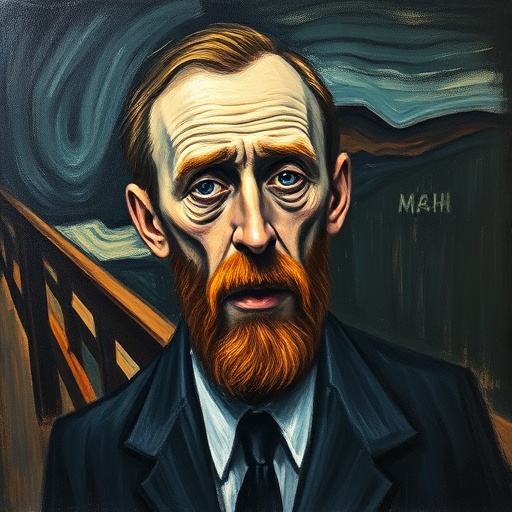
Norwegian Expressionist painter whose The Scream (1893) became the iconic image of modern existential dread. Closely associated with James Ensor (Belgian Expressionist peer) and Egon Schiele (younger Expressionist heir). For an intellectual contrast, see Pierre-Auguste Renoir, French Impressionist (1841-1919) — Munch and Renoir were exact contemporaries painting the same Belle Époque from opposite emotional poles — Renoir's dappled-light bourgeois pleasure and Munch's anxiety-soaked bourgeois terror are the late-19th-century painting's two halves. The same world; the cleanest emotional inversion.
A cynical socio-economic commentary, likely from his personal writings.
Date: Early 20th Century
Money & BusinessFound in 1 providers: gemini
1 source checked
Your cart is empty