Martin Luther — "A flail, an ax, a hoe, a spade be put into their hands so young, strong Jews and…"
A flail, an ax, a hoe, a spade be put into their hands so young, strong Jews and Jewesses could earn their bread in the sweat of their brow.
A flail, an ax, a hoe, a spade be put into their hands so young, strong Jews and Jewesses could earn their bread in the sweat of their brow.
Click any product to generate a realistic preview. Up to 3 at a time.
* Initial load can take up to 90 seconds — revising the preview in another color is nearly instant.
"These are the Scriptures which make fools of all the wise and understanding, and are open only to the small and simple, as Christ says in Matthew 11:25."
"Even if the Antichrist appears, what greater evil can he do than what you have done and do daily?"
"The world is a great privy and I am a stool."
"If you are a preacher of grace, then preach a true and not a fictitious grace; if grace is true, you must bear a true and not a fictitious sin."
"Whoever enters into marriage, enters a cloister full of struggles."
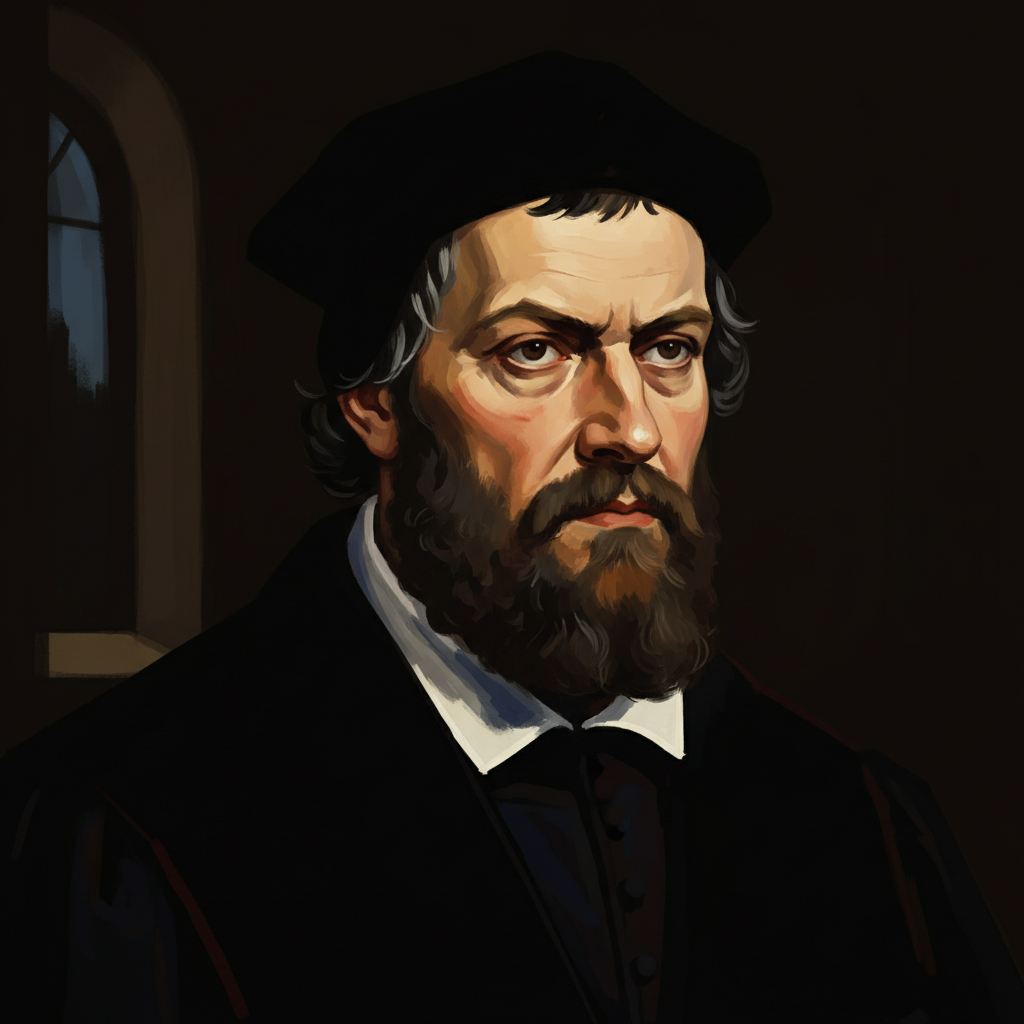
German theologian whose 95 Theses (1517) launched the Protestant Reformation and broke the Catholic Church's monopoly on Western Christianity. Closely associated with Philipp Melanchthon (Lutheran systematizer) and John Calvin (later Reformer who built on Luther's break). For an intellectual contrast, see Pope Leo X, Renaissance pope (1513-1521) — Leo X's indulgence sales triggered Luther's break and Leo excommunicated him in 1521 — Luther's entire Reformation is structured as a direct answer to the indulgence-funded Vatican Leo represented.
Found in 1 providers: gemini
1 source checked
The speaker demands that young, able-bodied Jewish men and women be forced into hard manual labor—farming and digging with basic tools—rather than allowed their existing occupations. The phrase 'earn their bread in the sweat of their brow' invokes the biblical curse on Adam to justify coerced physical work. In plain terms, it is a call to strip a religious minority of their livelihoods and compel them into servitude under the guise of moral discipline.
This comes from Luther's 1543 treatise 'On the Jews and Their Lies,' written late in his life after Jewish communities refused to convert to his reformed Christianity. Initially more tolerant, Luther turned viciously antisemitic, proposing synagogues be burned, homes destroyed, and Jews reduced to forced labor. The passage reflects his theological fury hardening into policy recommendations, a dark stain on the Reformation leader whose writings were later weaponized by Nazi propagandists.
In early-modern 16th-century Germany, Jews were already confined to restricted trades, heavily taxed, and periodically expelled from cities. The Protestant Reformation unleashed religious upheaval, and Luther's failed hope that Jews would embrace his purified Christianity curdled into scapegoating. Princes used theological writings to justify economic persecution, and pamphlets spread rapidly through the new printing press. Luther's labor-camp proposal fit a broader pattern of European states stripping Jewish civil rights and channeling minorities into controlled servitude.
AI-generated insights based on extensive research and information for context. Factual errors? Email [email protected].
Your cart is empty