What it means
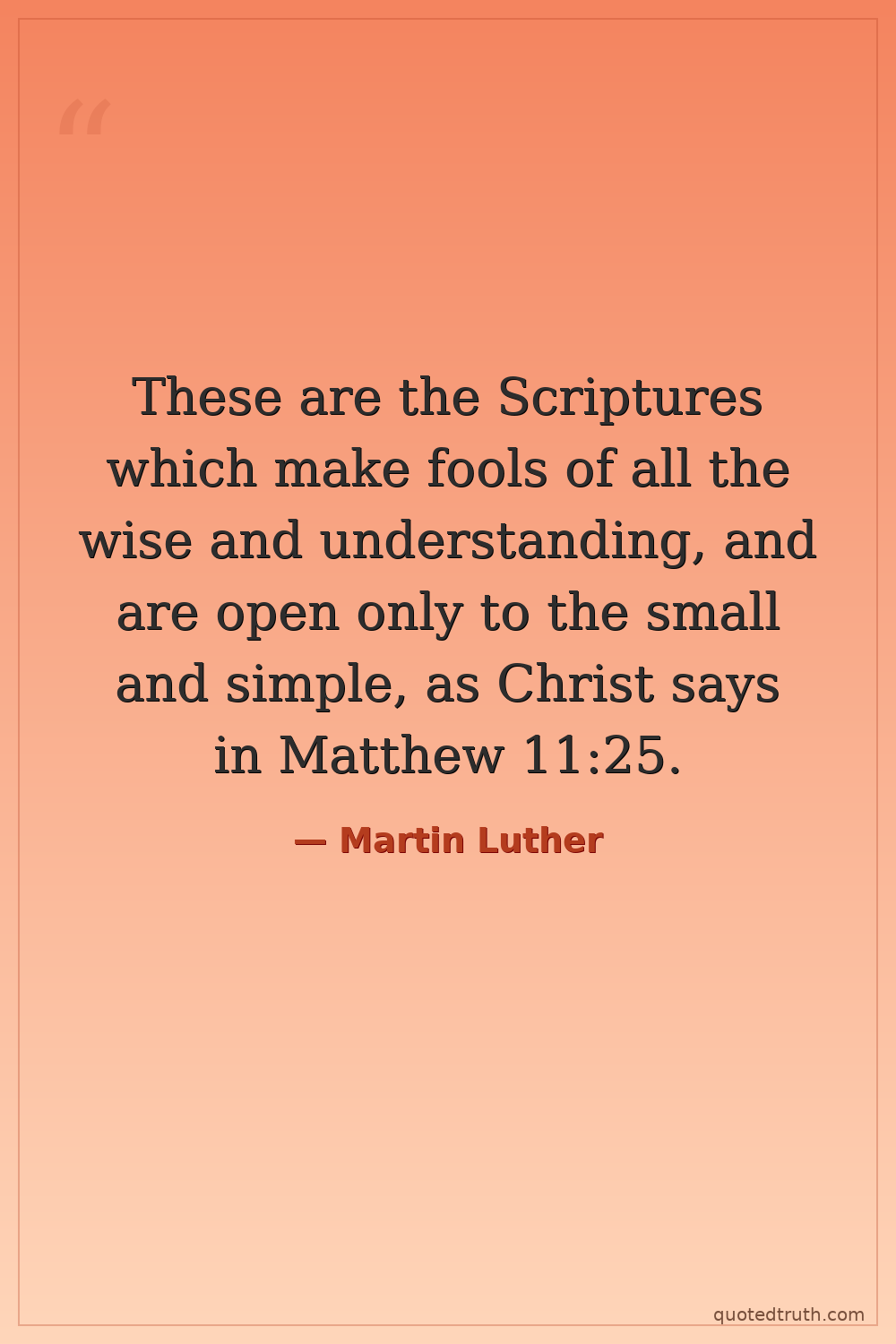
Scripture flips conventional intelligence on its head. The learned experts, with all their credentials and sophisticated reasoning, miss what the Bible is actually saying. Meanwhile ordinary people without fancy education grasp it directly. Truth in these texts isn't unlocked by academic brilliance but by humble receptiveness. The smarter you think you are, the more likely you are to overcomplicate, rationalize, or explain away the plain message that a child could understand immediately.
Relevance to Martin Luther
Luther spent years as an Augustinian monk and biblical scholar before concluding that the medieval Church's learned theologians had buried the gospel under scholastic complexity. His translation of the Bible into German was driven by this exact conviction: that plowboys and milkmaids should access Scripture directly. He repeatedly attacked Aristotle's influence on theology and trusted lay reading over papal interpretation, making this quote a compact summary of his reformational instinct.
The era
In the early 1500s, Scripture was controlled by Latin-literate clergy, and theology was dominated by scholastic commentary layered on Aristotle. The printing press was just beginning to democratize texts. Luther's 1522 German New Testament broke the clerical monopoly, letting commoners read for themselves. Rome viewed lay interpretation as dangerous chaos; Luther saw it as the gospel's natural audience. This line reflects the explosive cultural shift from guarded ecclesiastical expertise to widespread vernacular access.
AI-generated insights based on extensive research and information for context. Factual errors? Email [email protected].