Zoroaster — "A knife of the keenest steel requires the whetstone, and the wisest man needs ad…"
A knife of the keenest steel requires the whetstone, and the wisest man needs advice.
A knife of the keenest steel requires the whetstone, and the wisest man needs advice.
Click any product to generate a realistic preview. Up to 3 at a time.
* Initial load can take up to 90 seconds — revising the preview in another color is nearly instant.
"Choose the truth. And if the truth is inconvenient, choose it anyway. But maybe grumble a little."
"The wise choose the best, the unwise choose the worst."
"Do not to others what ye do not wish Done to yourself; and wish for others too. What ye desire and long for, for yourself. This is the whole of righteousness, heed it well."
"Good will triumph over evil. But sometimes, evil has better snacks."
"The Lie is the source of all evil, the Truth is the source of all good."
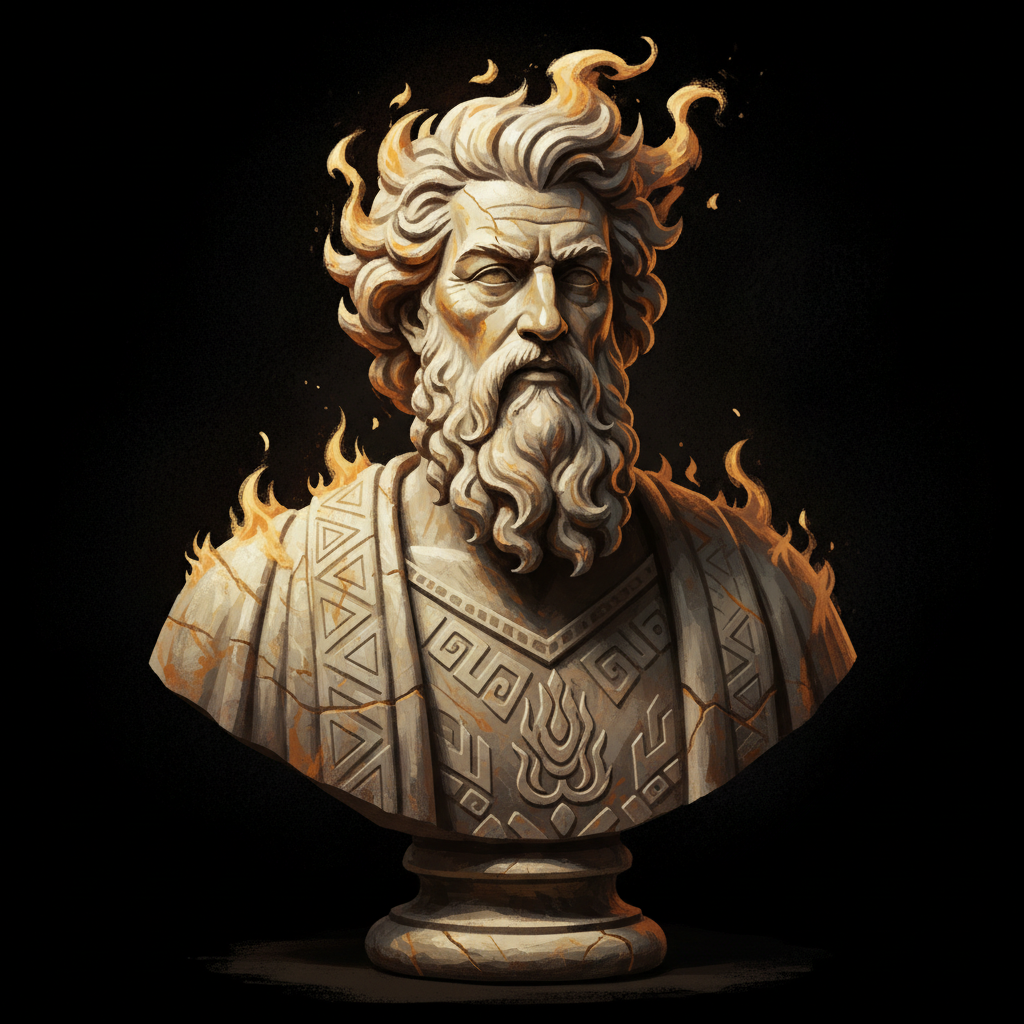
Iranian prophet who founded Zoroastrianism, the first major religion of cosmic dualism between good (Ahura Mazda) and evil (Angra Mainyu). Closely associated with The Buddha (near-contemporary Eastern moral-cosmological revolutionary). For an intellectual contrast, see Friedrich Nietzsche, German philosopher of 'beyond good and evil' — Nietzsche appropriated Zarathustra's name for Thus Spoke Zarathustra (1883) precisely to invert the original's moral cosmology — the historical Zoroaster founded the good-versus-evil framework Nietzsche's character announces the end of.
Found in 1 providers: gemini
1 source checked
Even the sharpest tool loses its edge without regular sharpening, and even the most intelligent person needs outside counsel to stay effective. Natural talent or intellect alone is not enough; both require ongoing refinement through external input. The wise recognize their own blind spots and actively seek perspectives from others, understanding that self-sufficiency is a form of arrogance. Growth depends on friction with other minds, just as a blade depends on the stone.
Zoroaster was a prophet and reformer who challenged the polytheistic priesthood of ancient Iran, teaching that humans must actively choose truth (asha) over deception. His tradition emphasized Vohu Manah, or Good Mind, achieved through reflection and dialogue with Ahura Mazda. As a teacher who gathered disciples and debated rival priests, he modeled the humility this quote describes: wisdom was cultivated through questioning, counsel, and the continual sharpening of one's moral discernment.
Zoroaster lived in Bronze Age or early Iron Age Iran, roughly between 1500 and 1000 BCE, amid tribal societies ruled by warrior aristocracies and ritual-bound Magi priests. Knowledge passed orally through hymns and council, as literacy was rare. Leaders consulted elders and sages before war, migration, or judgment. In a world without written law codes or formal schools, advice-seeking was survival, and Zoroaster's teaching elevated this communal wisdom into a spiritual discipline centered on truth.
AI-generated insights based on extensive research and information for context. Factual errors? Email [email protected].
Your cart is empty