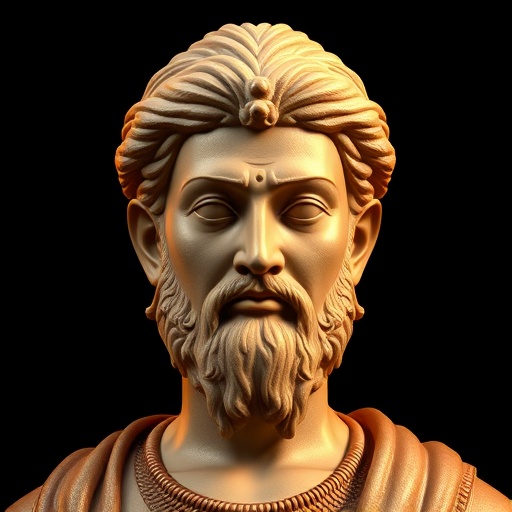
Mahavira — "A man who is averse from harming even the wind knows the sorrow of all things li…"
A man who is averse from harming even the wind knows the sorrow of all things living.
A man who is averse from harming even the wind knows the sorrow of all things living.
Click any product to generate a realistic preview. Up to 3 at a time.
* Initial load can take up to 90 seconds — revising the preview in another color is nearly instant.
"One should not be negligent even for a moment."
"The soul is the doer of its own deeds, and the enjoyer of its own fruits."
"The ignorant, who are attached to the world, suffer from misery and pain."
"The greatest mistake of a soul is non-restraint."
"Every living being, great or small, possesses a soul."
24th and last Tirthankara of Jainism, whose teachings of strict ahimsa (non-violence), aparigraha (non-attachment), and karma reshaped ancient Indian religion. Closely associated with The Buddha (near-contemporary moral revolutionary, also reacting against Vedic ritualism). For an intellectual contrast, see Vedic Brahmanical ritual sacrifice, the animal-sacrifice-centered Vedic religion of his era — Mahavira's ahimsa demanded total non-violence, including not eating root vegetables that kill the plant — a maximum-distance ethical move from the Vedic priestly tradition that ritually sacrificed cattle and horses. The two cleanest poles of ancient Indian religious ethics.
Found in 1 providers: deepseek
1 source checked
Someone who is so committed to nonviolence that they avoid disturbing even the air has developed a profound empathy with all living creatures. This person understands suffering not abstractly but viscerally, feeling the pain of every being as their own. It describes the highest form of compassionate awareness — where sensitivity to life becomes total, extending beyond obvious creatures to the subtlest forms of existence.
Mahavira, the 24th Tirthankara who systematized Jain philosophy around 599–527 BCE, made ahimsa — nonviolence — the supreme ethical principle. He renounced all possessions, walked naked, and filtered air before breathing to avoid harming insects. His monks swept the ground before stepping to protect microorganisms. This quote directly mirrors his lived practice and the Jain doctrine that every particle possesses a soul worthy of moral consideration.
In 6th-century BCE India, Vedic ritualism still sanctioned animal sacrifice and rigid caste hierarchies determined moral worth. Against this backdrop, Mahavira's radical egalitarianism — declaring even air-dwelling microbes deserving of compassion — was revolutionary. The Axial Age saw simultaneous ethical awakenings across cultures, but Jainism pushed nonviolence further than any contemporary tradition, challenging the dominant sacrificial religion and offering a path of rigorous personal restraint over priestly ritual.
AI-generated insights based on extensive research and information for context. Factual errors? Email [email protected].
Your cart is empty