Mahavira — "The ignorant, who are attached to the world, suffer from misery and pain."
The ignorant, who are attached to the world, suffer from misery and pain.
The ignorant, who are attached to the world, suffer from misery and pain.
Click any product to generate a realistic preview. Up to 3 at a time.
* Initial load can take up to 90 seconds — revising the preview in another color is nearly instant.
"Truth is the very nature of the soul."
"The soul is permanent and eternal, while the body is temporary and perishable."
"All living beings are endowed with consciousness."
"All living beings desire happiness and despise misery."
"The body is a temporary abode of the soul."
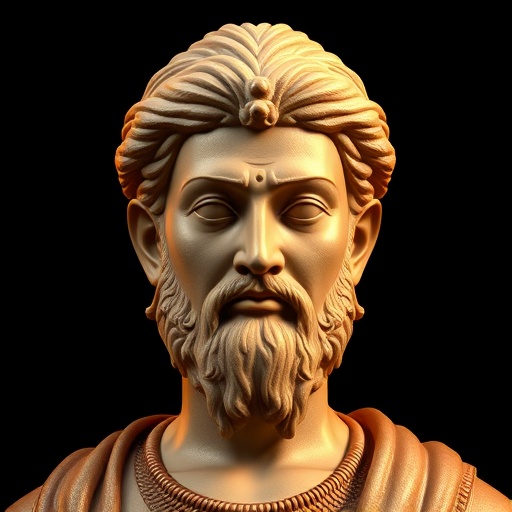
24th and last Tirthankara of Jainism, whose teachings of strict ahimsa (non-violence), aparigraha (non-attachment), and karma reshaped ancient Indian religion. Closely associated with The Buddha (near-contemporary moral revolutionary, also reacting against Vedic ritualism). For an intellectual contrast, see Vedic Brahmanical ritual sacrifice, the animal-sacrifice-centered Vedic religion of his era — Mahavira's ahimsa demanded total non-violence, including not eating root vegetables that kill the plant — a maximum-distance ethical move from the Vedic priestly tradition that ritually sacrificed cattle and horses. The two cleanest poles of ancient Indian religious ethics.
Found in 1 providers: grok
1 source checked
People who lack spiritual awareness and cling to material possessions, relationships, and worldly desires inevitably suffer. The attachment itself is the problem — when you invest your wellbeing in things that are impermanent, you guarantee disappointment. True peace requires recognizing that the physical world is transient, and releasing that grip. Ignorance isn't just lack of knowledge; it's the failure to understand that nothing external can provide lasting happiness.
Mahavira himself embodied this teaching. Born a wealthy prince, he voluntarily abandoned his royal life at 30 — family, possessions, even clothing — to pursue spiritual liberation through radical asceticism. He spent over 12 years in silent meditation and fasting. Jainism's core doctrine of aparigraha (non-possession) directly mirrors this quote: attachment binds the soul to samsara, the cycle of rebirth, perpetuating suffering. His life was living proof of his words.
Mahavira lived during the 6th–5th century BCE in the Gangetic plains of India, an era when Vedic ritualism dominated religious life — priests performed elaborate sacrifices to secure worldly prosperity, status, and better rebirth conditions. Caste hierarchy tightly linked material wealth to spiritual standing. His teaching directly challenged this framework, arguing that pursuing worldly things causes suffering rather than liberation, a radical counter-cultural message in an intensely hierarchical, materially-focused society.
AI-generated insights based on extensive research and information for context. Factual errors? Email [email protected].
Your cart is empty