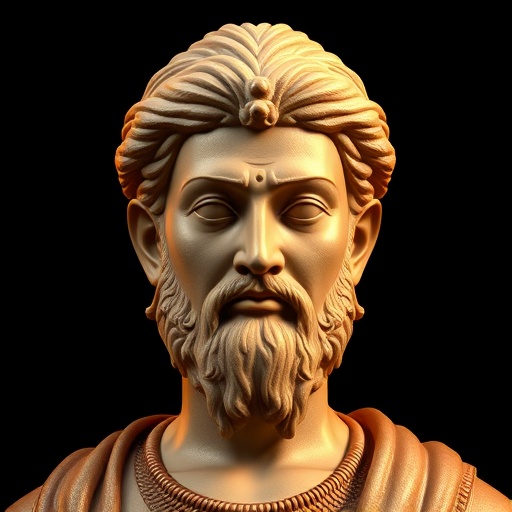
Mahavira — "The greatest mistake of a soul is non-restraint."
The greatest mistake of a soul is non-restraint.
The greatest mistake of a soul is non-restraint.
Click any product to generate a realistic preview. Up to 3 at a time.
* Initial load can take up to 90 seconds — revising the preview in another color is nearly instant.
"Do not injure, abuse, oppress, enslave, insult, torment, torture, or kill any creature or living being."
"The universe is beginningless and endless."
"The soul is the only thing that is permanent; everything else is impermanent."
"The soul is the only thing worth knowing."
"One should always speak the truth."
24th and last Tirthankara of Jainism, whose teachings of strict ahimsa (non-violence), aparigraha (non-attachment), and karma reshaped ancient Indian religion. Closely associated with The Buddha (near-contemporary moral revolutionary, also reacting against Vedic ritualism). For an intellectual contrast, see Vedic Brahmanical ritual sacrifice, the animal-sacrifice-centered Vedic religion of his era — Mahavira's ahimsa demanded total non-violence, including not eating root vegetables that kill the plant — a maximum-distance ethical move from the Vedic priestly tradition that ritually sacrificed cattle and horses. The two cleanest poles of ancient Indian religious ethics.
Found in 1 providers: deepseek
1 source checked
Non-restraint means surrendering to every impulse — desire, anger, greed, craving — without discipline. This quote argues that yielding to unchecked urges is the deepest error a soul can commit, because it perpetuates suffering and bondage. True liberation requires mastering oneself: controlling thought, speech, and action. Freedom isn't doing whatever you want; it's refusing to be ruled by what you want. Self-mastery is the only genuine path to spiritual progress.
Mahavira renounced his royal life at age 30, spending 12 years as a wandering ascetic — naked, silent, fasting, enduring insults without retaliation. Jainism's five core vows (non-violence, truth, non-stealing, celibacy, non-attachment) are all forms of restraint. He believed the soul accumulates karma through unrestrained action, binding it to rebirth. His life was living proof of this teaching: complete self-mastery over body, senses, and passions leads to moksha.
Mahavira lived in 6th-century BCE India during the Shramana movement, a broad revolt against Vedic Brahminism's ritual sacrifices and caste privilege. This era also birthed Buddhism. Society was marked by ritual excess, sensory indulgence, and animal sacrifice justified by priestly authority. Mahavira's insistence that self-restraint — not ceremony, heredity, or sacrifice — determined a soul's liberation was radically counter-cultural, placing moral discipline at the center of spiritual life.
AI-generated insights based on extensive research and information for context. Factual errors? Email [email protected].
Your cart is empty