What it means
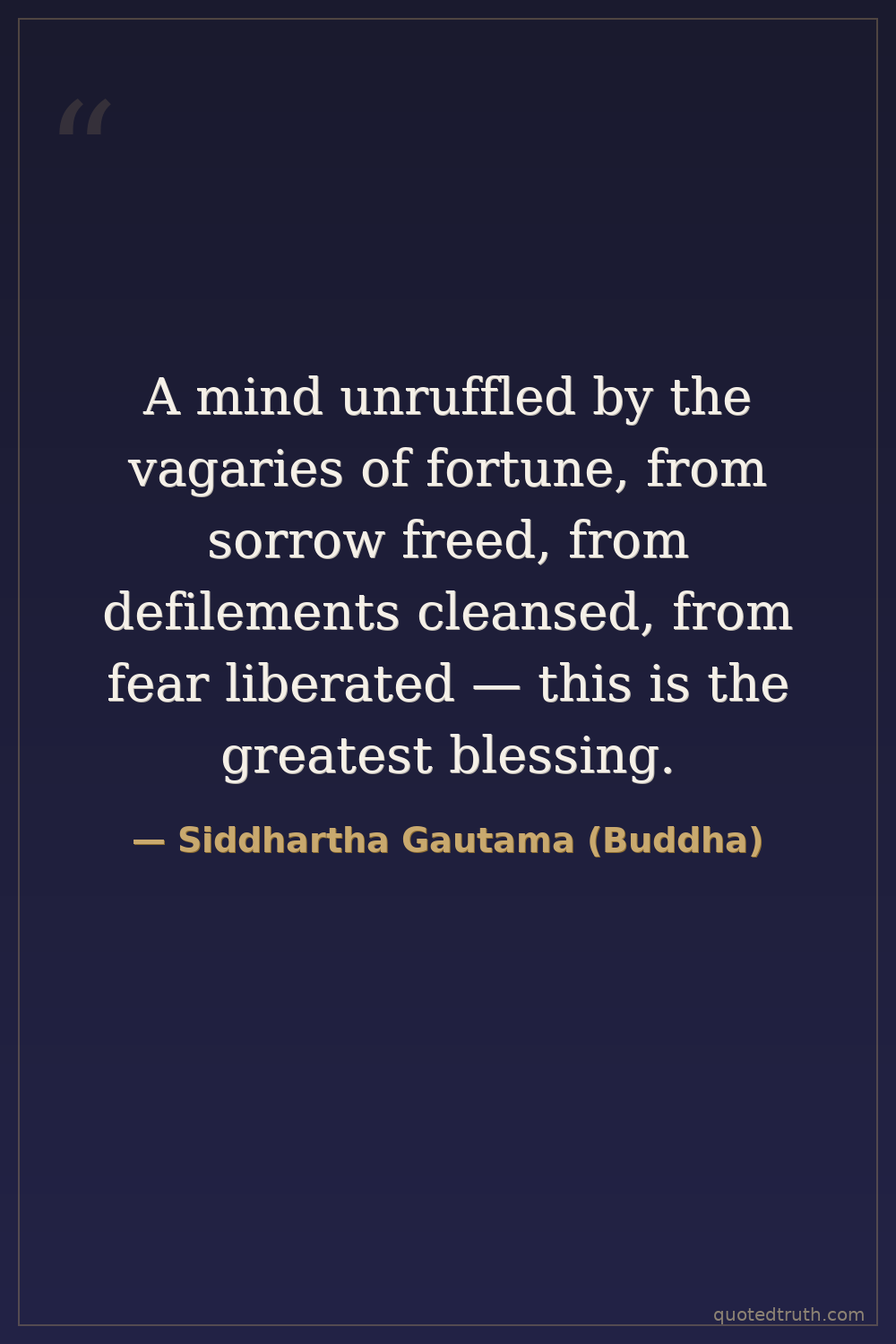
True happiness comes from inner stability rather than external circumstances. When your mind stays calm whether you win or lose, when grief no longer controls you, when mental toxins like greed and hatred are removed, and when fear has no grip on you, you have reached the highest good. It describes psychological freedom as the ultimate achievement, worth more than wealth, status, or pleasure.
Relevance to Siddhartha Gautama (Buddha)
Siddhartha left a royal palace after witnessing sickness, aging, and death, seeking release from suffering. After six years of extreme asceticism and meditation under the Bodhi tree, he articulated the Four Noble Truths and Eightfold Path. This verse comes from the Mangala Sutta, his teaching on genuine blessings, and reflects his core insight that liberation (nibbana) means extinguishing craving, aversion, and ignorance rather than accumulating external goods.
The era
In 5th-century BCE northern India, Vedic Brahmanism defined blessings through ritual sacrifice, caste status, and material prosperity granted by gods. Urbanization along the Ganges produced wandering shramana movements questioning these rituals. Siddhartha's redefinition of blessing as internal mental freedom directly challenged the priestly establishment and resonated with merchants, kings, and outcasts alike, fueling Buddhism's rapid spread across the Magadha kingdom during a period of intense philosophical ferment.
AI-generated insights based on extensive research and information for context. Factual errors? Email [email protected].