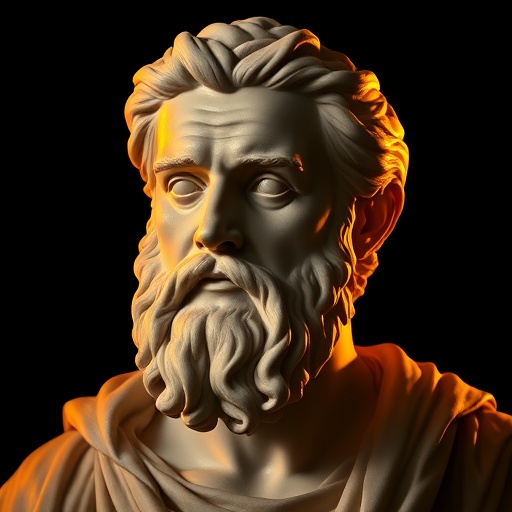
Hippocrates — "A wise man should consider that health is the greatest of human blessings."
A wise man should consider that health is the greatest of human blessings.
A wise man should consider that health is the greatest of human blessings.
Click any product to generate a realistic preview. Up to 3 at a time.
* Initial load can take up to 90 seconds — revising the preview in another color is nearly instant.
"Everything in excess is opposed to nature."
"Desperate diseases require desperate remedies."
"Those by nature overweight, die earlier than the slim."
"Some patients, though conscious that their condition is perilous, recover their health simply through their contentment with the goodness of the physician."
"A wise man should consider that health is the greatest of human blessings, and learn how by his own thought to derive benefit from his illnesses."
Found in 1 providers: deepseek
1 source checked
Health surpasses wealth, power, fame, or any other human advantage. A truly intelligent person recognizes that without a functioning body and mind, nothing else can be enjoyed or pursued. Health isn't just the absence of disease — it's the prerequisite for every other blessing in life. Prioritizing it isn't indulgence; it's wisdom. Everything else humans value depends on being healthy enough to experience it.
Hippocrates spent his career systematically separating medicine from superstition, treating the body as a natural system governed by observable causes. He founded a medical school on the island of Cos, trained generations of physicians, and wrote extensively on diet, environment, and lifestyle as foundations of health. This conviction that health is life's supreme blessing drove his lifelong mission to understand and preserve it through rational observation rather than prayer or ritual.
In 5th-century BCE Greece, illness was widely blamed on divine wrath or demonic forces, with temple priests performing rituals as treatment. Hippocrates lived through the catastrophic Plague of Athens around 430 BCE, which killed roughly a quarter of the population. Against this backdrop, asserting that health was humanity's greatest treasure — and that its preservation belonged to rational science, not religious ceremony — was a foundational challenge to the entire worldview of his time.
AI-generated insights based on extensive research and information for context. Factual errors? Email [email protected].
Your cart is empty