What it means
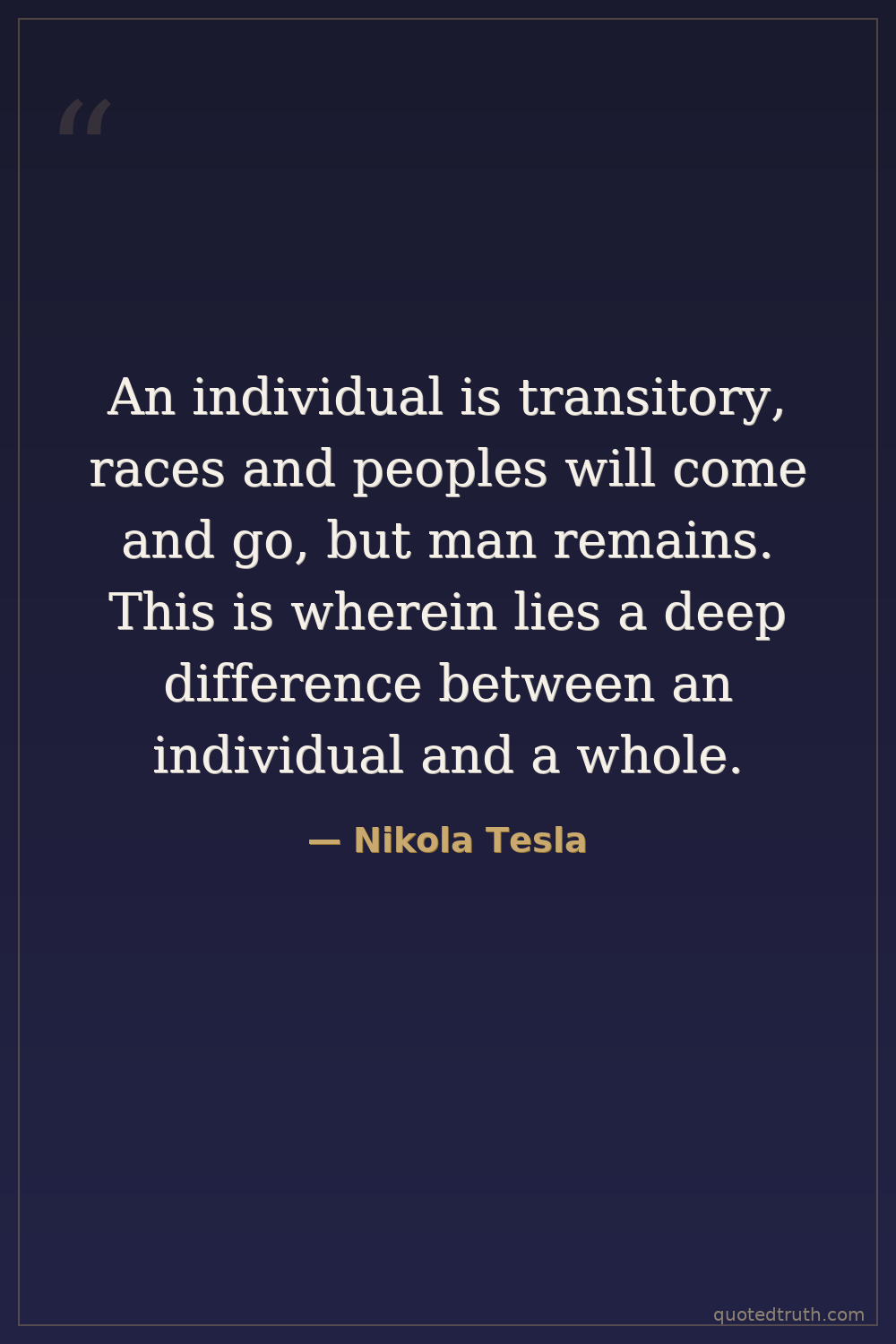
Individual lives are brief, and even entire civilizations or ethnic groups rise and fall throughout history. Yet humanity itself — the species, the broader whole — endures beyond any of its parts. Tesla draws a philosophical line between the transient (individual people, specific groups) and the permanent (mankind as a collective entity). Real significance belongs to the whole, not its temporary components.
Relevance to Nikola Tesla
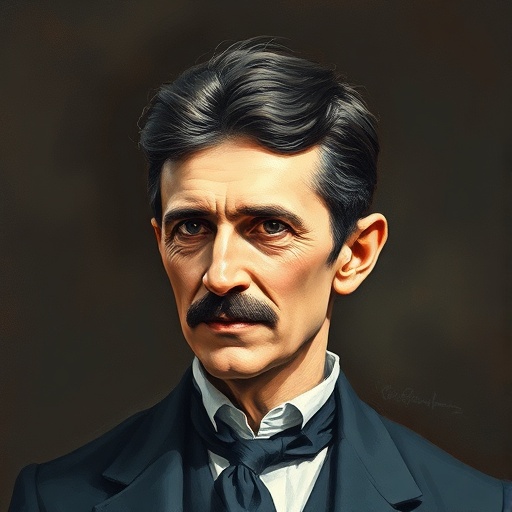
Tesla dedicated his life to inventions he believed would benefit all humanity, not himself. He signed away patent royalties, died penniless, and pursued wireless electricity intended to be free for everyone. As a Serbian immigrant who transcended national identity to become a global figure, he embodied this philosophy: the individual Tesla mattered less than what his work gave to mankind. His universalist ambition eclipsed personal or ethnic allegiance.
The era
Tesla lived through peak nationalism, colonialism, Social Darwinism, and World War I. The late 1800s and early 1900s saw fierce competition between nation-states and growing pseudo-scientific racism — the notion that certain races were superior and destined to dominate. Tesla's insistence that races and peoples are transitory while mankind as a whole endures was a direct philosophical counter to that era's tribal, zero-sum thinking about human civilization.
AI-generated insights based on extensive research and information for context. Factual errors? Email [email protected].