What it means
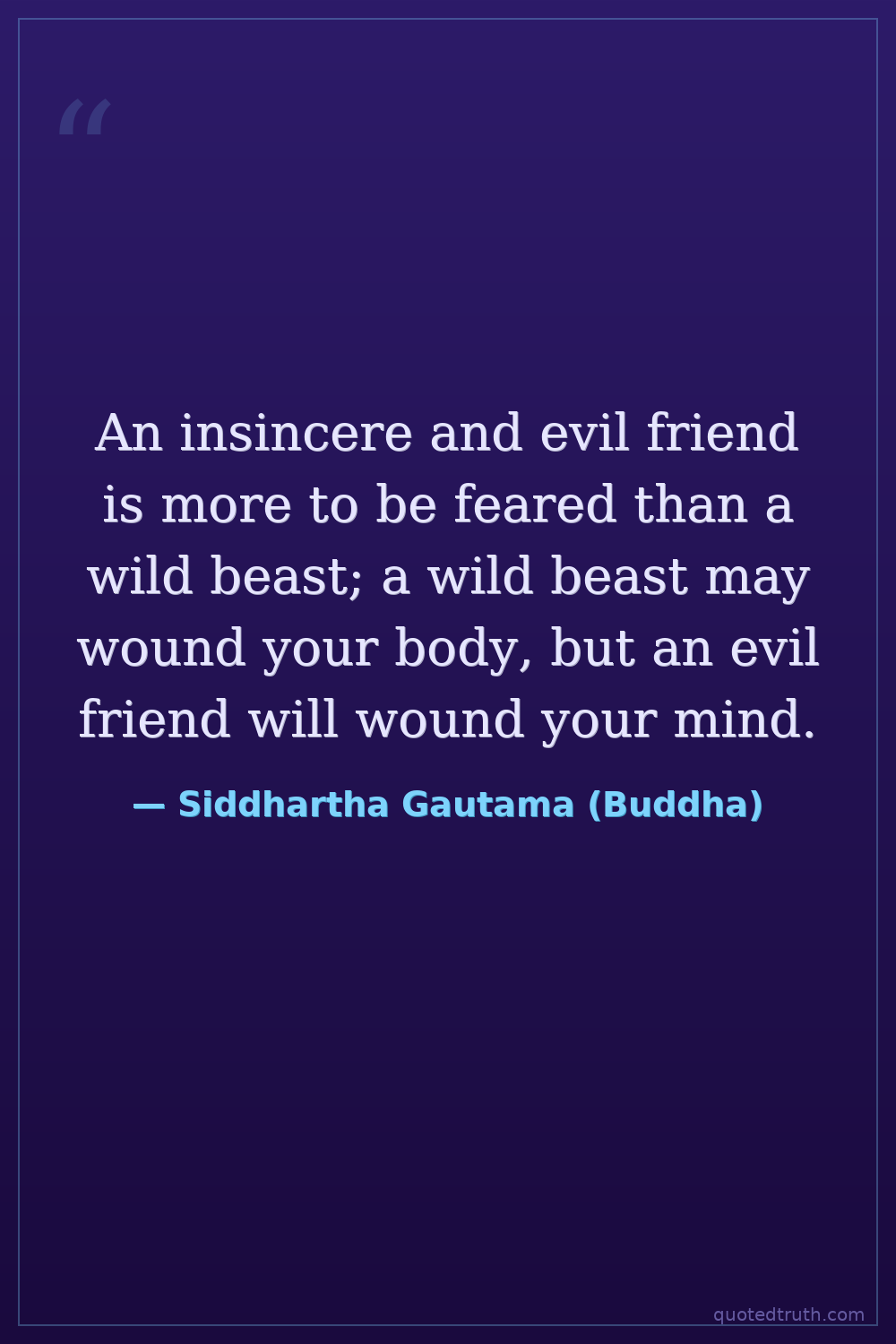
A dishonest or malicious friend poses a greater danger than a wild animal. While a beast can only harm your physical body, a deceptive companion corrupts your thinking, distorts your judgment, and damages your inner peace. Physical wounds heal, but betrayal by someone trusted leaves lasting psychological scars that shape how you view yourself and others. Choose companions carefully, because those closest to you influence your mind more deeply than any external threat ever could.
Relevance to Siddhartha Gautama (Buddha)
Buddha taught that mental suffering outweighs physical pain, a cornerstone of his Four Noble Truths. Having renounced his royal life to seek liberation from suffering, he emphasized kalyana-mitta (spiritual friendship) as essential to the path. He warned disciples repeatedly about unwholesome associations, believing the mind's purity determined one's awakening. This quote reflects his lived experience guiding the Sangha, where he stressed that companions either accelerate or obstruct one's journey toward enlightenment and freedom from dukkha.
The era
In 5th-century BCE northern India, tribal societies and emerging kingdoms relied heavily on kinship and guru-disciple bonds for survival and spiritual guidance. Wild beasts genuinely threatened travelers through forests where ascetics wandered. Buddha's era saw competing philosophical schools (Jains, Ajivikas, Brahmins) where betrayal within spiritual communities was real. With no written scriptures yet, teachers transmitted wisdom orally through trusted relationships, making the integrity of one's companions literally determine whether authentic dharma survived intact.
AI-generated insights based on extensive research and information for context. Factual errors? Email [email protected].