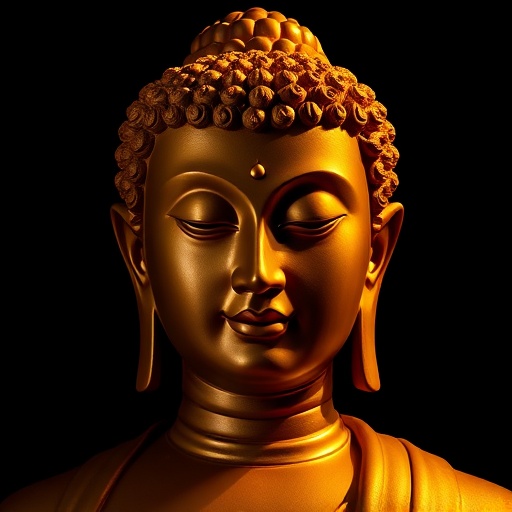
Siddhartha Gautama (Buddha) — "A man is not called wise because he talks and talks again; but if he is peaceful…"
A man is not called wise because he talks and talks again; but if he is peaceful, loving and fearless then he is in truth called wise.
A man is not called wise because he talks and talks again; but if he is peaceful, loving and fearless then he is in truth called wise.
Click any product to generate a realistic preview. Up to 3 at a time.
* Initial load can take up to 90 seconds — revising the preview in another color is nearly instant.
"To enjoy good health, to bring true happiness to one's family, to bring peace to all, one must first discipline and control one's own mind. If a man can control his mind he can find the way to Enlight…"
"Let them not do the slightest thing that the wise would later reprove."
"The pleasant and the unpleasant, the agreeable and the disagreeable, are not in things themselves, but in us."
"An insincere and evil friend is more to be feared than a wild beast; a wild beast may wound your body, but an evil friend will wound your mind."
"Your worst enemy cannot harm you as much as your own unguarded thoughts."
Found in 1 providers: grok
1 source checked
Wisdom is not measured by how much someone speaks or how eloquent their arguments sound. Real wisdom shows up in how a person lives: staying calm under pressure, treating others with genuine kindness, and facing difficulty without panic. Someone who chatters endlessly may seem clever, but a person who embodies inner peace, compassion, and courage demonstrates true understanding. Character and conduct reveal wisdom far more reliably than verbal performance does.
The Buddha spent six years testing ascetic extremes and debating rival teachers before rejecting clever argumentation as a path to liberation. After his awakening at Bodh Gaya, he taught that clinging, aversion, and fear produce suffering, while metta (loving-kindness) and equanimity mark an awakened mind. This saying reflects his core teaching that the Eightfold Path is lived, not recited, and that monks should embody dhamma rather than debate it.
In 5th-century BCE northern India, the Shramana movement produced competing teachers, Jains, Ajivikas, and Brahmin philosophers, who publicly debated karma, rebirth, and liberation. Status came from rhetorical victory in royal courts at Rajagriha and Shravasti. The Buddha pushed back against this verbal culture, insisting that reciting Vedas or winning arguments did not purify anyone. His emphasis on peaceful, loving, fearless conduct directly challenged a society that equated learned speech with spiritual attainment.
AI-generated insights based on extensive research and information for context. Factual errors? Email [email protected].
Your cart is empty