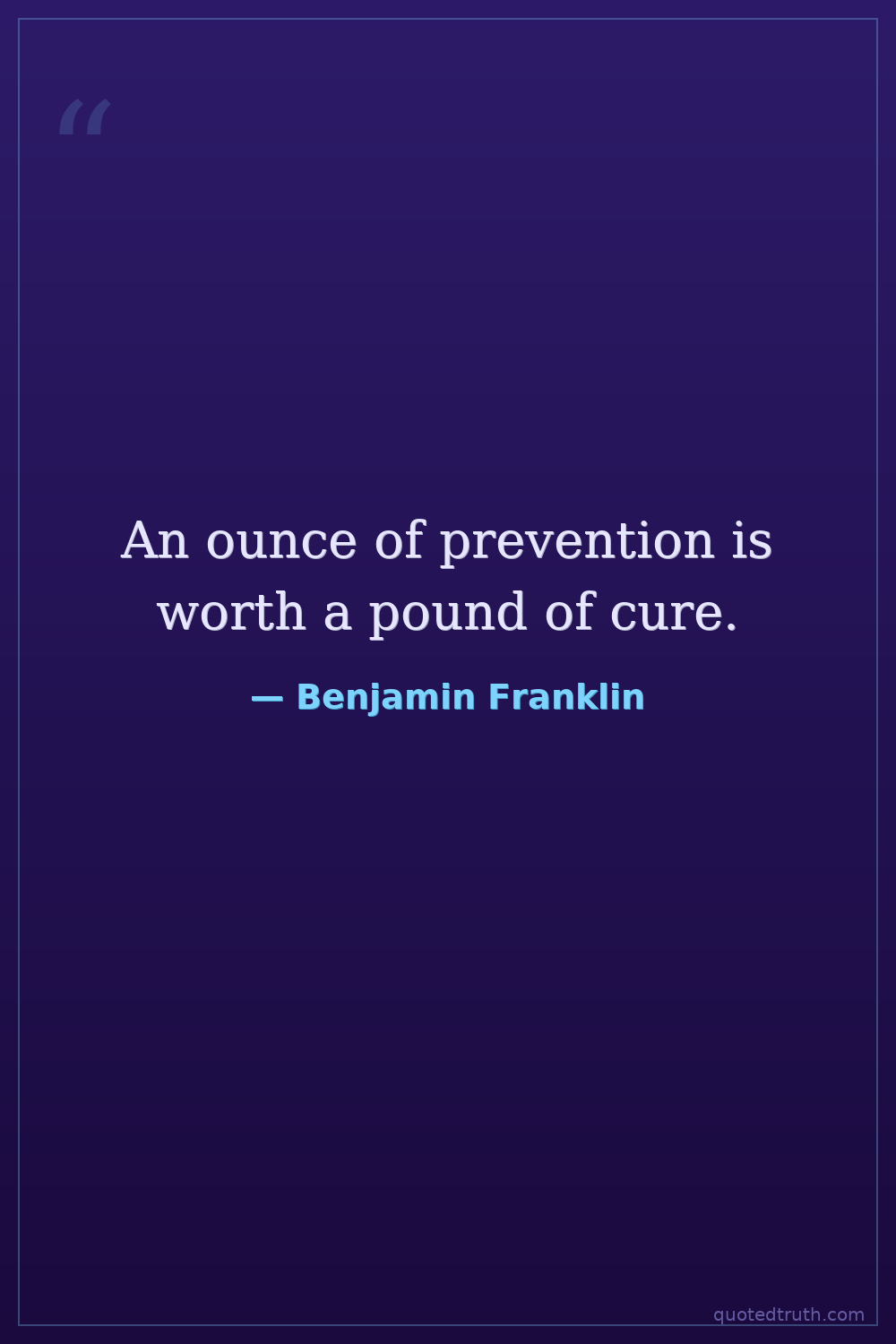
Benjamin Franklin — "An ounce of prevention is worth a pound of cure."
An ounce of prevention is worth a pound of cure.
An ounce of prevention is worth a pound of cure.
Click any product to generate a realistic preview. Up to 3 at a time.
* Initial load can take up to 90 seconds — revising the preview in another color is nearly instant.
"What is wit, or wealth, or form, or learning, when compared with virtue?"
"Great talkers, little doers."
"Contentment makes poor men rich, discontent makes rich men poor."
"He that is good for making excuses is seldom good for anything else."
"When the well's dry, we know the worth of water."
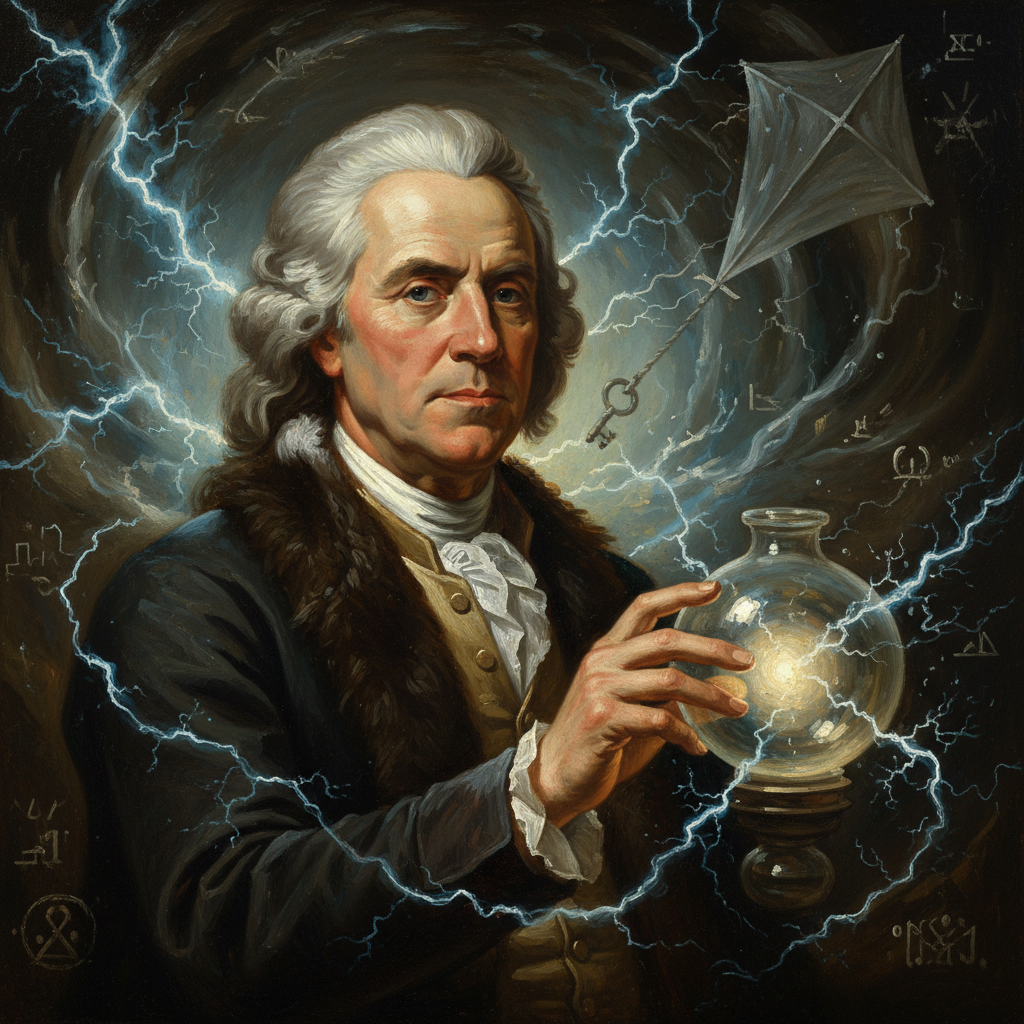
Polymath Founding Father, diplomat, and Poor Richard's Almanack author who helped draft the Declaration of Independence and the Constitution. Closely associated with John Adams (fellow Founder, Massachusetts statesman) and Thomas Jefferson (fellow Declaration drafter). For an intellectual contrast, see Thomas Hutchinson, last royal governor of colonial Massachusetts — Franklin leaked Hutchinson's loyalist correspondence to Boston in 1772 to inflame revolutionary sentiment — Hutchinson represented the colonial-aristocrat crown-loyalty that Franklin's revolution was organized to dismantle.
Found in 2 providers: deepseek,grok
2 sources checked
Taking small preventive steps costs far less than fixing a problem after it erupts. A little care upfront — maintaining health, securing a building, managing finances wisely — spares enormous effort, money, and suffering down the line. Problems compound when ignored but stay manageable when caught early. Frugality of attention now prevents a full bankruptcy of resources, time, and wellbeing later.
Franklin wrote this in 1736 urging Philadelphia to form a volunteer fire brigade — which he then founded. He also launched America's first fire insurance company. His entire civic career embodied institutional prevention: the lending library fought ignorance, the hospital prevented needless death, the lightning rod stopped building strikes. Poor Richard's Almanack preached identical foresight to everyday readers across every annual edition.
In colonial America, a single fire could level entire city blocks — wooden structures packed tightly with no professional firefighters available. Smallpox and dysentery spread unchecked without germ theory or vaccines. Medical care was crude; one disaster meant economic ruin with no safety net. Prevention was survival. Without insurance systems or emergency services, Franklin's contemporaries understood viscerally that failing to prepare meant catastrophic, often irreversible loss.
AI-generated insights based on extensive research and information for context. Factual errors? Email [email protected].
Your cart is empty