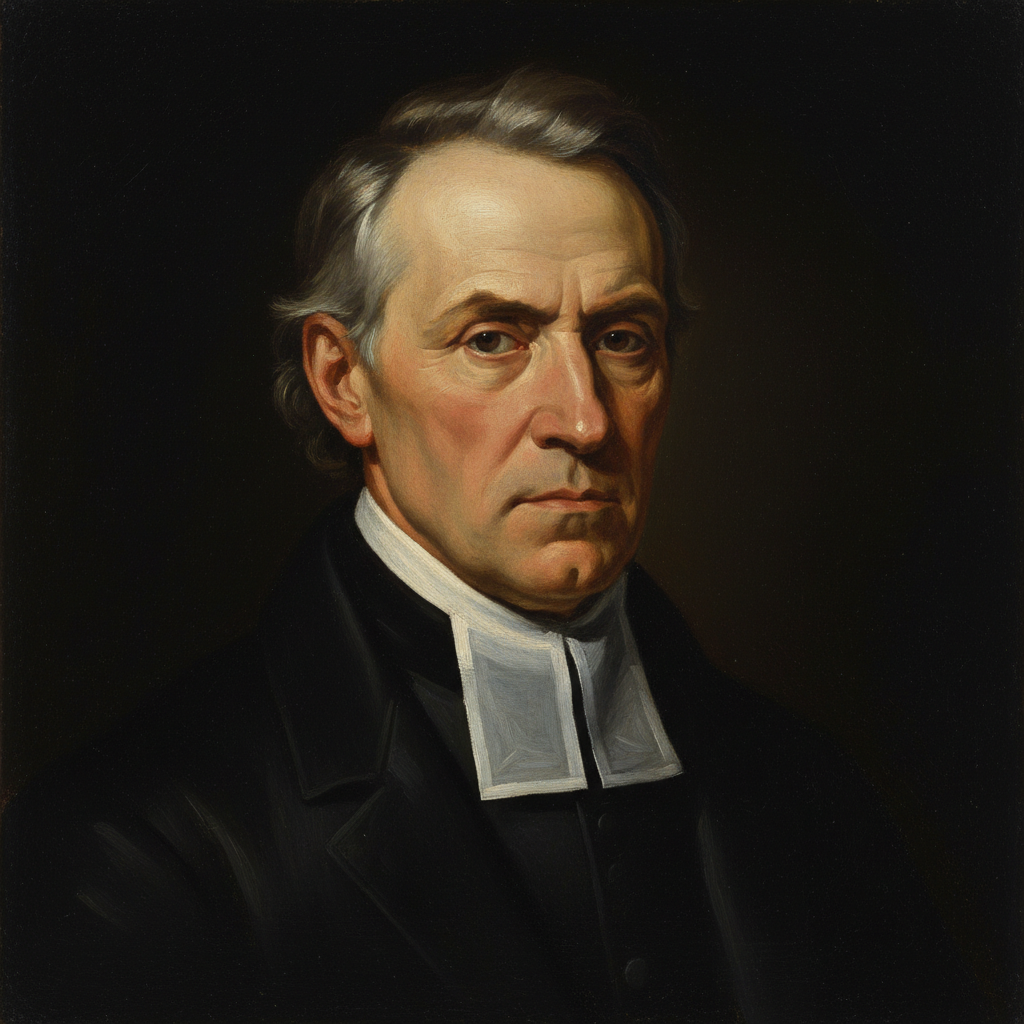
John Wesley — "Are we not a little too apt to forget that the Methodists are not the only Chris…"
Are we not a little too apt to forget that the Methodists are not the only Christians in the world?
Are we not a little too apt to forget that the Methodists are not the only Christians in the world?
Click any product to generate a realistic preview. Up to 3 at a time.
* Initial load can take up to 90 seconds — revising the preview in another color is nearly instant.
"It is not the being of sin, but the love of sin, that condemns us."
"Satan has no objection to our being religious, provided we are not too religious."
"I offered Christ to the Negroes in Antigua. I offered him to the slaves. I offered him to the very dregs of the people."
"I still find, and find it to my comfort, that I am not in the number of the rich. If I am not, I am not in the number of them that are in danger of falling into temptation and a snare, and into many f…"
"God loves a cheerful giver."
English Anglican cleric and founder of Methodism, whose open-air preaching and class-meeting structure created the largest 18th-century evangelical revival. Closely associated with Charles Wesley (his hymn-writing brother) and George Whitefield (early co-revivalist, later doctrinal opponent). For an intellectual contrast, see George Whitefield, Calvinist evangelical revivalist — Whitefield's predestinarian Calvinism vs Wesley's free-grace Arminian theology split the early Methodist movement permanently in the 1739-41 break. The founding evangelical Calvinist-Arminian schism — the two parallel evangelical traditions American Christianity descends from.
Found in 1 providers: grok
1 source checked
Wesley cautions his own followers against spiritual arrogance. Even as founder of a growing movement, he warns Methodists not to treat their denomination as the sole true expression of Christianity. The question — framed as a gentle rebuke — asks whether they have grown too insular, too quick to dismiss other believers. Don't confuse belonging to a successful religious group with holding a monopoly on genuine Christian faith.
Wesley was an Anglican priest who never formally left the Church of England. He preached across denominational lines, worked alongside Moravians, and maintained respectful correspondence with Calvinist rival George Whitefield. Methodism began as a renewal effort within existing Christianity, not a replacement for it. This quote reflects his lifelong resistance to sectarian exclusivity — a tension he navigated constantly as leader of a movement that kept attracting the very pride he warned against.
The 18th century saw explosive Protestant sectarianism — dozens of new denominations formed, each claiming superior access to divine truth. England's religious landscape was fractured between Anglicans, Nonconformists, Quakers, Moravians, and Calvinists. Denominational rivalry was fierce and openly contemptuous. Wesley's warning against Methodist exclusivity was countercultural: new movements typically defined themselves by rejecting all others as spiritually deficient, making his call for humility notably unusual for the era.
AI-generated insights based on extensive research and information for context. Factual errors? Email [email protected].
Your cart is empty