John Wesley — "Satan has no objection to our being religious, provided we are not too religious…"
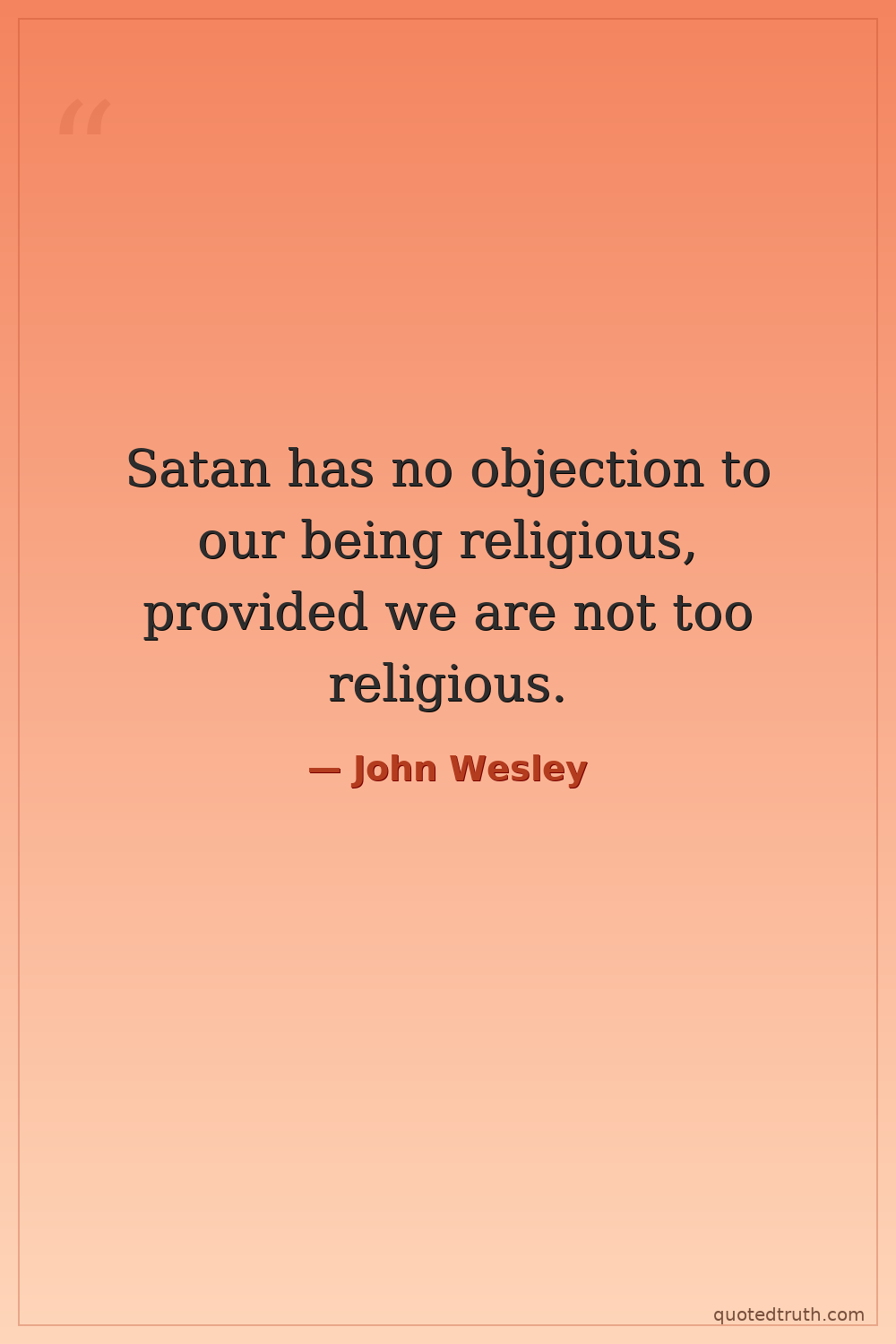
Satan has no objection to our being religious, provided we are not too religious.
Satan has no objection to our being religious, provided we are not too religious.
Click any product to generate a realistic preview. Up to 3 at a time.
* Initial load can take up to 90 seconds — revising the preview in another color is nearly instant.
"Catch on fire with enthusiasm and people will come for miles to watch you burn."
"I am not an enemy to pleasure; but I am an enemy to sin."
"I had rather have a thousand common people to hear me, than a thousand fine gentlemen."
"I have but one point in view, to promote, as far as I am able, vital, practical religion."
"God grant that I may never live to be useless!"
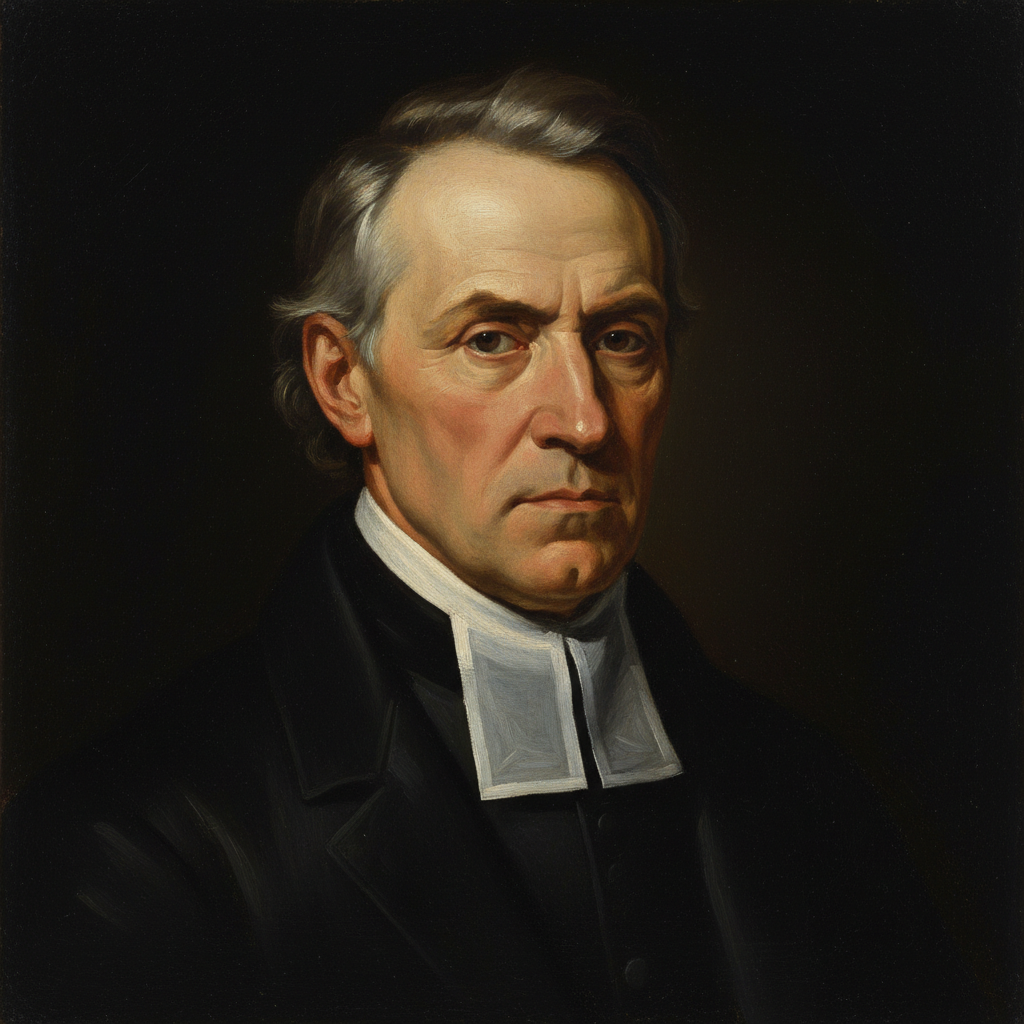
English Anglican cleric and founder of Methodism, whose open-air preaching and class-meeting structure created the largest 18th-century evangelical revival. Closely associated with Charles Wesley (his hymn-writing brother) and George Whitefield (early co-revivalist, later doctrinal opponent). For an intellectual contrast, see George Whitefield, Calvinist evangelical revivalist — Whitefield's predestinarian Calvinism vs Wesley's free-grace Arminian theology split the early Methodist movement permanently in the 1739-41 break. The founding evangelical Calvinist-Arminian schism — the two parallel evangelical traditions American Christianity descends from.
Found in 1 providers: grok
1 source checked
Superficial religiosity poses no real threat to evil. Going through the motions of faith—attending church, observing rituals, maintaining a respectable appearance of piety—costs nothing and changes nothing. The danger lies in comfortable, uncommitted religion that never demands sacrifice or genuine transformation. True devotion—the kind that radically alters behavior, compels costly action, and challenges the self—is what evil actually fears. Lukewarm faith leaves the world, and the person practicing it, fundamentally unchanged.
Wesley's ministry centered on 'entire sanctification'—the belief that genuine Christians must pursue complete inner transformation, not nominal piety. He rode over 250,000 miles on horseback preaching to coal miners and the urban poor, enduring violent mobs opposed to his intense zeal. He founded Methodism specifically because the Church of England had grown institutionally comfortable and spiritually cold. His life was a direct embodiment of the religiosity evil actually fears.
Wesley preached in 18th-century England, when Christianity permeated social and civic life yet was widely practiced as mere respectability. The Church of England had grown institutionalized and indifferent to suffering amid rapid industrialization, enclosures, and mass urban poverty. Being 'religious' meant attending services and observing social norms—nothing more. Wesley's Methodist revival challenged this comfortable nominal faith at a moment when the gap between Christian profession and Christian action had never felt wider.
AI-generated insights based on extensive research and information for context. Factual errors? Email [email protected].
Your cart is empty