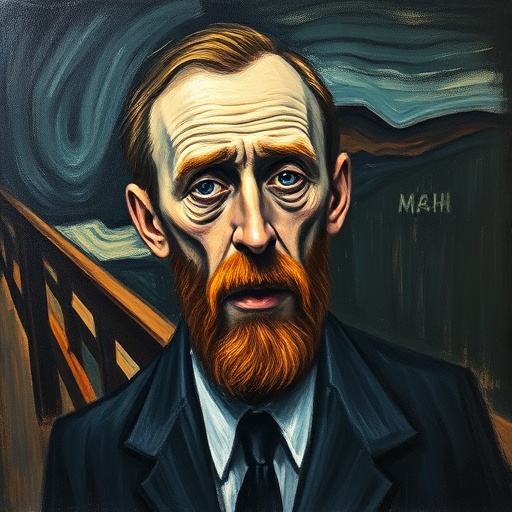
Edvard Munch — "Art comes from joy and pain, but mostly from pain."
Art comes from joy and pain, but mostly from pain.
Art comes from joy and pain, but mostly from pain.
Click any product to generate a realistic preview. Up to 3 at a time.
* Initial load can take up to 90 seconds — revising the preview in another color is nearly instant.
"Art comes from the inside. When a person is very sad, he can paint a beautiful picture."
"I paint the states of the soul."
"It is not the eye that sees, but the soul."
"I felt as if there were invisible threads connecting us – I felt the invisible strands of her hair still winding around me – and thus as she disappeared completely beyond the sea – I still felt it, fe…"
"I am a wanderer, always searching for something I cannot find."
Norwegian Expressionist painter whose The Scream (1893) became the iconic image of modern existential dread. Closely associated with James Ensor (Belgian Expressionist peer) and Egon Schiele (younger Expressionist heir). For an intellectual contrast, see Pierre-Auguste Renoir, French Impressionist (1841-1919) — Munch and Renoir were exact contemporaries painting the same Belle Époque from opposite emotional poles — Renoir's dappled-light bourgeois pleasure and Munch's anxiety-soaked bourgeois terror are the late-19th-century painting's two halves. The same world; the cleanest emotional inversion.
A concise summary of the emotional wellspring of his art.
Date: Late 19th - Early 20th Century
Art & CreativityFound in 1 providers: gemini
1 source checked
Your cart is empty