What it means
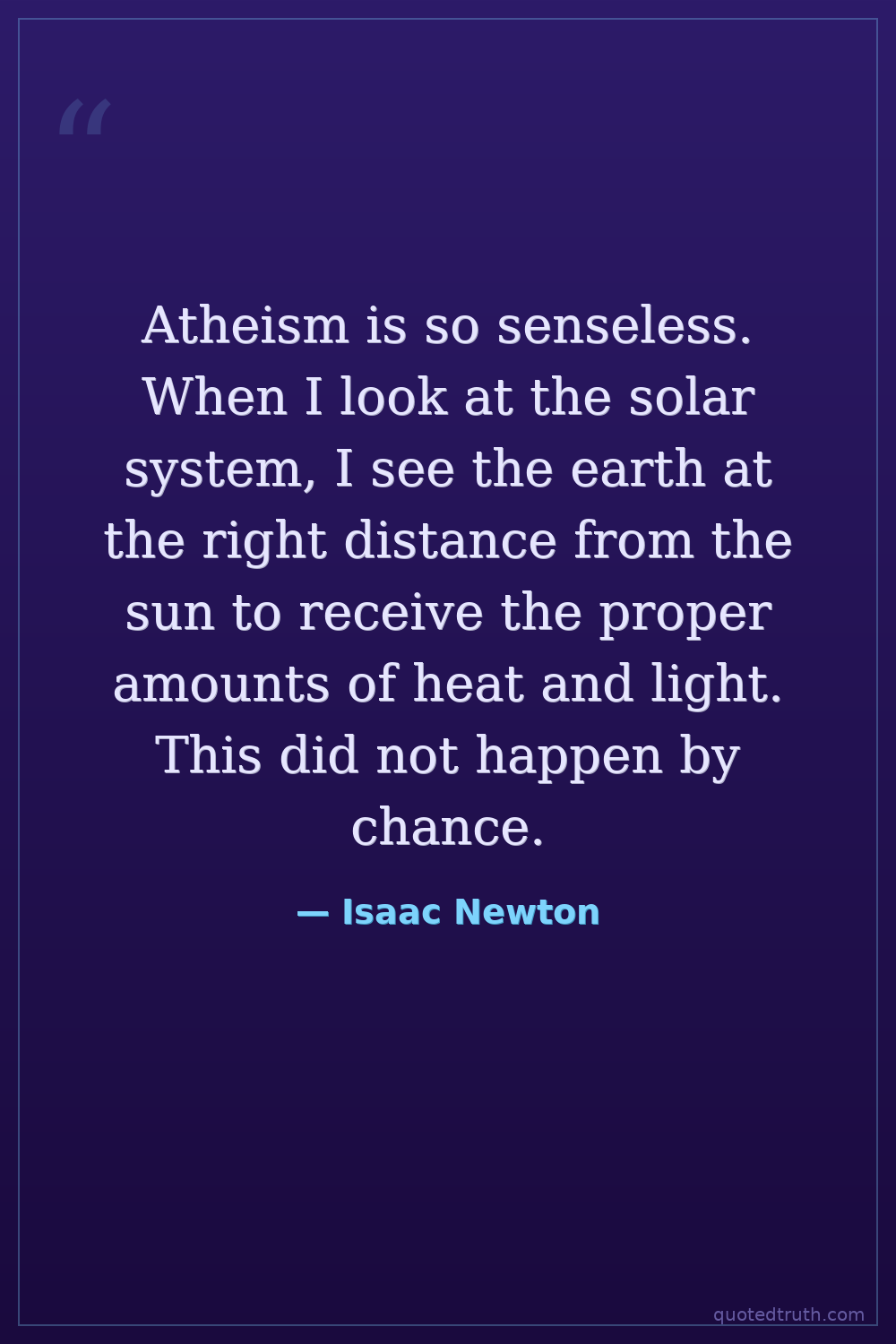
Newton argues that Earth's precise position in the solar system — receiving exactly the right heat and light to sustain life — is too perfect to be accidental. He uses this as direct evidence against atheism, making what modern thinkers call a fine-tuning argument: the universe's parameters are so precisely calibrated for life that random chance is insufficient; intentional design by a creator is the only logical conclusion.
Relevance to Isaac Newton
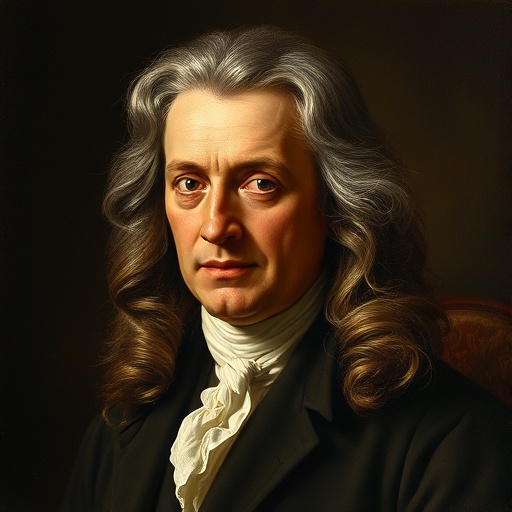
Newton wrote more on theology than physics or mathematics combined. A private Arian who rejected the Trinity, he spent decades studying biblical prophecy and saw natural philosophy as deciphering God's design. His mathematical description of planetary orbits — a precise, law-governed cosmos — deepened his conviction that the universe required a rational author. He explicitly stated that gravity's laws implied a divine Architect who set the planets in motion.
The era
The early modern period saw the Scientific Revolution overturn geocentrism and reveal a mathematically ordered cosmos. By Newton's day, deism was emerging — a clockmaker God who designed but no longer intervened — while open atheism remained intellectually rare and socially dangerous. Natural theology, the project of inferring God's existence from nature, was mainstream scholarship. Newton's discoveries made the design argument more compelling and scientifically grounded than ever before.
AI-generated insights based on extensive research and information for context. Factual errors? Email [email protected].