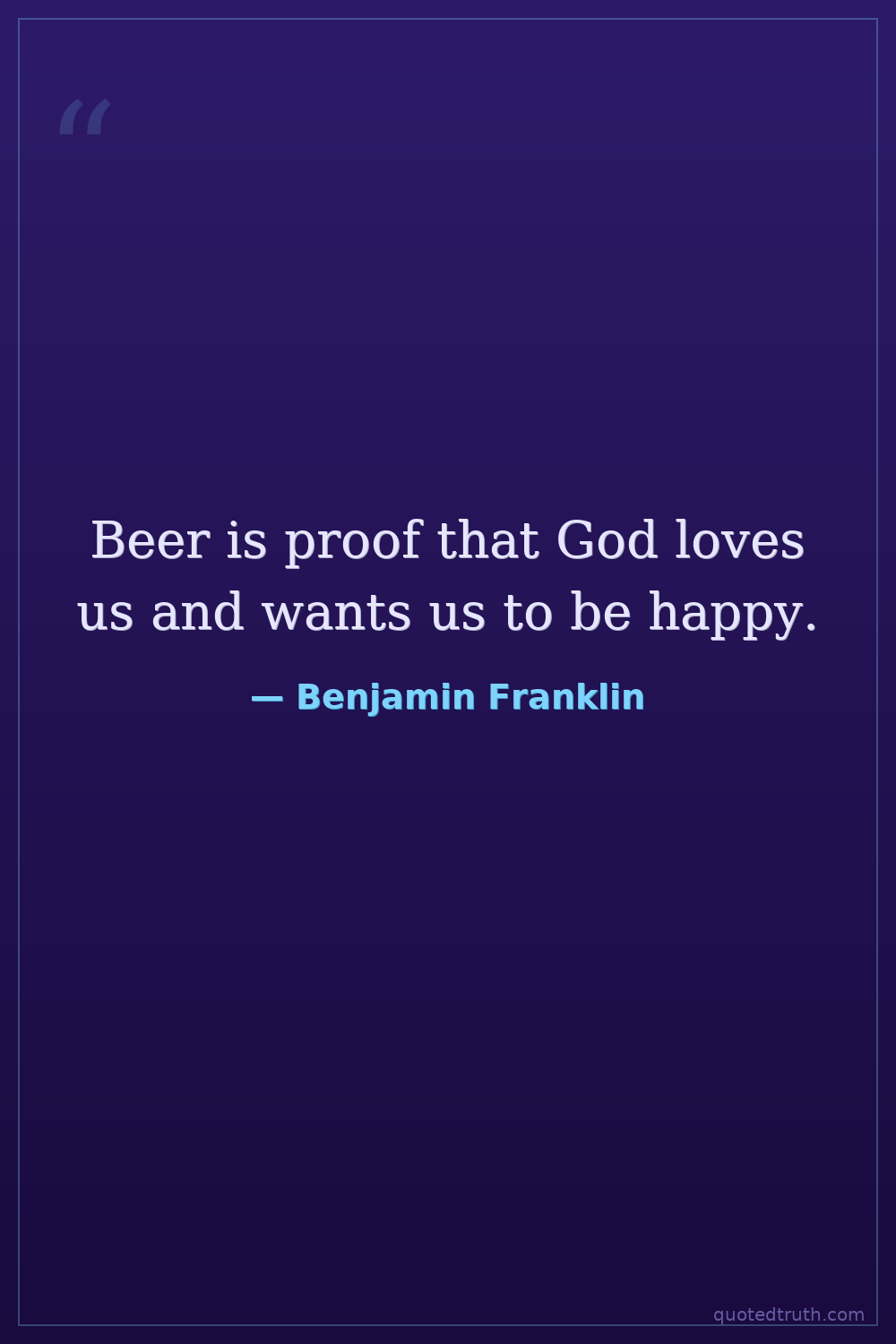
Benjamin Franklin — "Beer is proof that God loves us and wants us to be happy."
Beer is proof that God loves us and wants us to be happy.
Beer is proof that God loves us and wants us to be happy.
Click any product to generate a realistic preview. Up to 3 at a time.
* Initial load can take up to 90 seconds — revising the preview in another color is nearly instant.
"When you incline to have new clothes, look first well over the old ones, and see if you cannot shift with them another year, either by scouring, mending, or even patching if necessary. Remember, a pat…"
"What's a sundial in the shade?"
"If you would be revenged of your enemy, govern yourself."
"The great secret of succeeding in conversation, is to have the address to introduce your own favorite subject, without appearing to take it from others."
"Never leave that till tomorrow which you can do today."
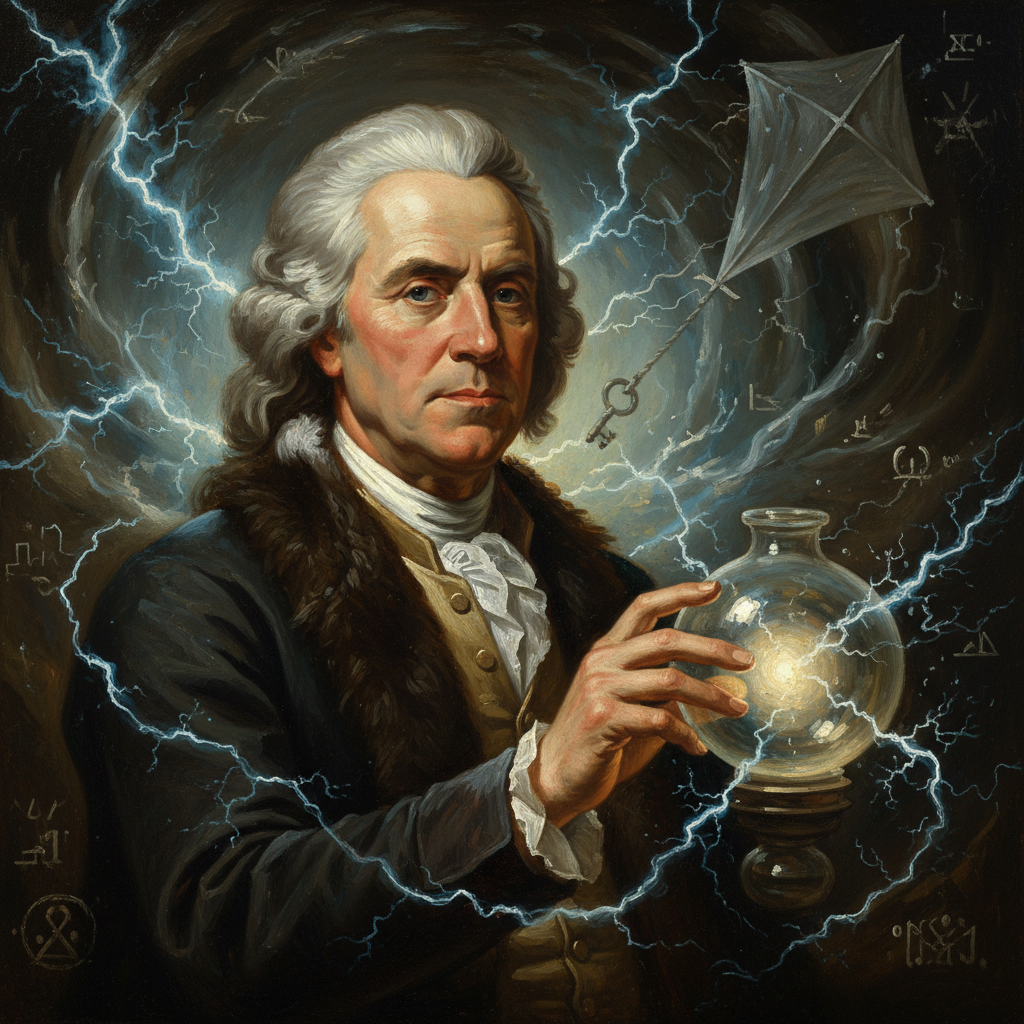
Polymath Founding Father, diplomat, and Poor Richard's Almanack author who helped draft the Declaration of Independence and the Constitution. Closely associated with John Adams (fellow Founder, Massachusetts statesman) and Thomas Jefferson (fellow Declaration drafter). For an intellectual contrast, see Thomas Hutchinson, last royal governor of colonial Massachusetts — Franklin leaked Hutchinson's loyalist correspondence to Boston in 1772 to inflame revolutionary sentiment — Hutchinson represented the colonial-aristocrat crown-loyalty that Franklin's revolution was organized to dismantle.
Often misquoted; actual variant: 'Behold the rain which descends from heaven upon our vineyards, there it enters the roots of the vines, to be changed into wine, a constant proof that God loves us, and loves to see us happy.'
Date: 1779
BiblicalFound in 2 providers: deepseek,gemini
2 sources checked
The quote playfully argues that something as delightful as beer couldn't exist by chance — it must be evidence of a loving God who wants people to enjoy life. It rejects the idea that pleasure is inherently sinful, framing happiness as divinely intended. In modern terms: if life has good things in it, that's not an accident; it's a signal that joy and contentment are meant to be embraced.
Franklin was a Deist who believed God created a rational, benevolent universe. He was famously sociable — a fixture in Philadelphia taverns and Parisian salons — and never pretended earthly pleasures were beneath a principled man. His Poor Richard's Almanack balanced moral maxims with earthy wit. Historians note the original quote referenced wine, not beer, but the sentiment is quintessentially Franklin: finding theology in life's small joys.
In colonial America, beer and ale were daily staples — safer to drink than often-contaminated water, consumed by adults and children alike. Taverns served as political hubs where revolution was debated. Meanwhile, the Enlightenment reframed God as a rational architect of a pleasure-compatible universe — Franklin's Deism fit perfectly. Puritanical voices still condemned leisure as sin, making this quote a pointed cultural rebuttal: earthly happiness and religious faith were not contradictions.
AI-generated insights based on extensive research and information for context. Factual errors? Email [email protected].
Your cart is empty