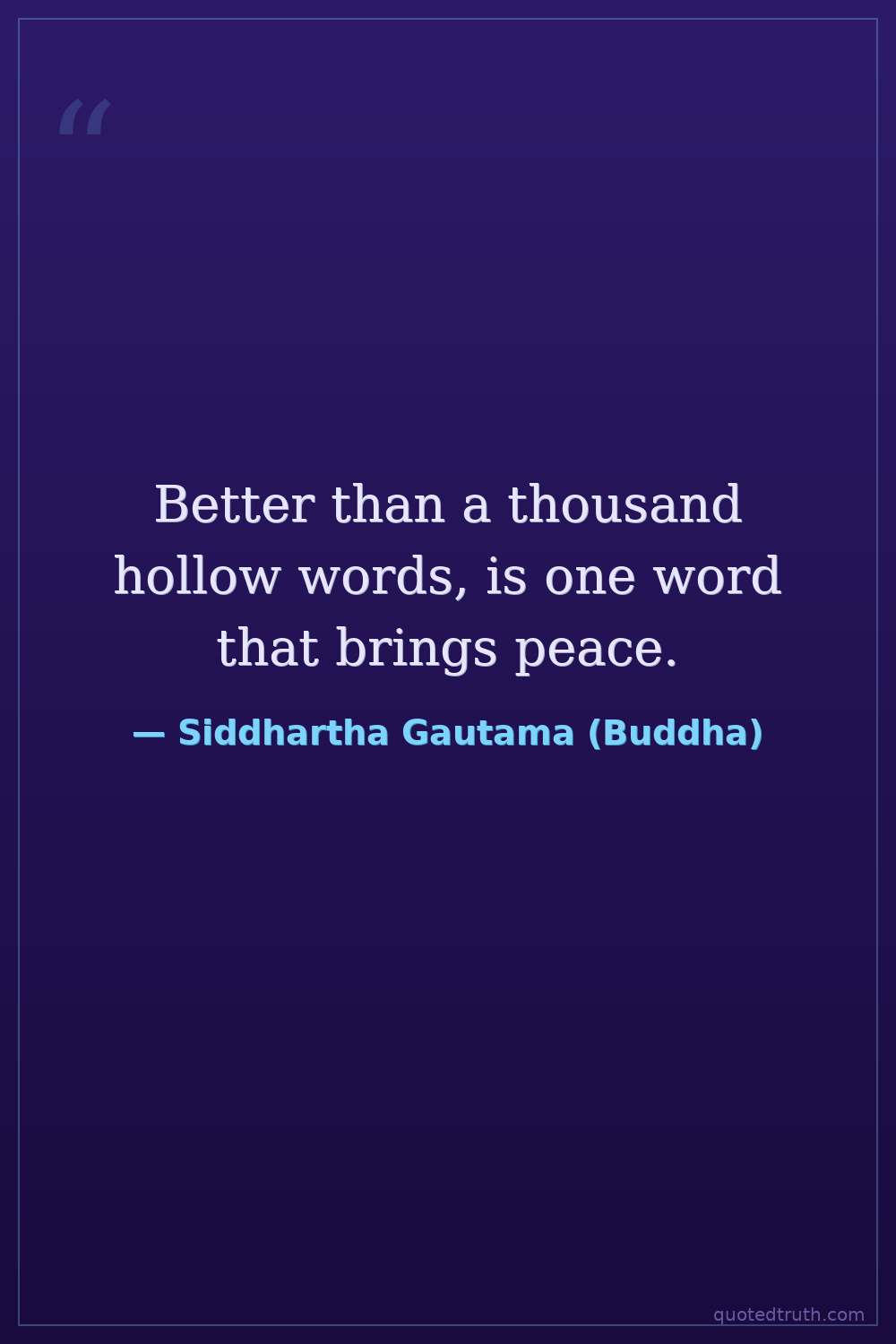
Siddhartha Gautama (Buddha) — "Better than a thousand hollow words, is one word that brings peace."
Better than a thousand hollow words, is one word that brings peace.
Better than a thousand hollow words, is one word that brings peace.
Click any product to generate a realistic preview. Up to 3 at a time.
* Initial load can take up to 90 seconds — revising the preview in another color is nearly instant.
"When you realize how perfect everything is, you will tilt your head back and laugh at the sky."
"There is nothing more dreadful than the habit of doubt. Doubt separates people. It is a poison that disintegrates friendships and breaks up pleasant relations."
"The secret of health for both mind and body is not to mourn for the past, nor to worry about the future, but to live the present moment wisely and earnestly."
"What is the world? It is a fleeting show, a transient dream. What is life? It is a momentary flash, a passing shadow."
"Virtue is persecuted more by the wicked than it is loved by the good."
Found in 3 providers: grok,deepseek,gemini
3 sources checked
Quantity of speech matters far less than quality. A thousand empty, meaningless, or harmful words accomplish nothing compared to a single utterance that calms the mind, resolves conflict, or conveys genuine truth. The value of language lies in its effect on the listener's inner state, not in its volume. One thoughtful sentence that settles a troubled heart outweighs endless chatter, flattery, or noise that leaves people agitated or confused.
The Buddha spent forty-five years teaching after his enlightenment, and his discourses consistently emphasized Right Speech as part of the Noble Eightfold Path. He rejected the elaborate ritual chanting and scholastic debate of Vedic Brahmins, favoring direct, practical words that reduced suffering. Having abandoned palace life and intellectual extremes, he distilled his insights into simple teachings aimed at liberation, making this aphorism a natural expression of his measured, purpose-driven approach to language.
In 5th-century BCE northern India, religious authority belonged to Brahmin priests who preserved power through memorized Sanskrit hymns and intricate ritual formulas most people could not understand. Competing ascetic movements debated metaphysics endlessly in the Ganges basin's growing cities. The Buddha taught in Magadhi, the common vernacular, challenging this verbal gatekeeping. His emphasis on peaceful, useful speech subverted a culture where sacred words were treated as magical and where philosophical argumentation had become a marker of spiritual status.
AI-generated insights based on extensive research and information for context. Factual errors? Email [email protected].
Your cart is empty