What it means
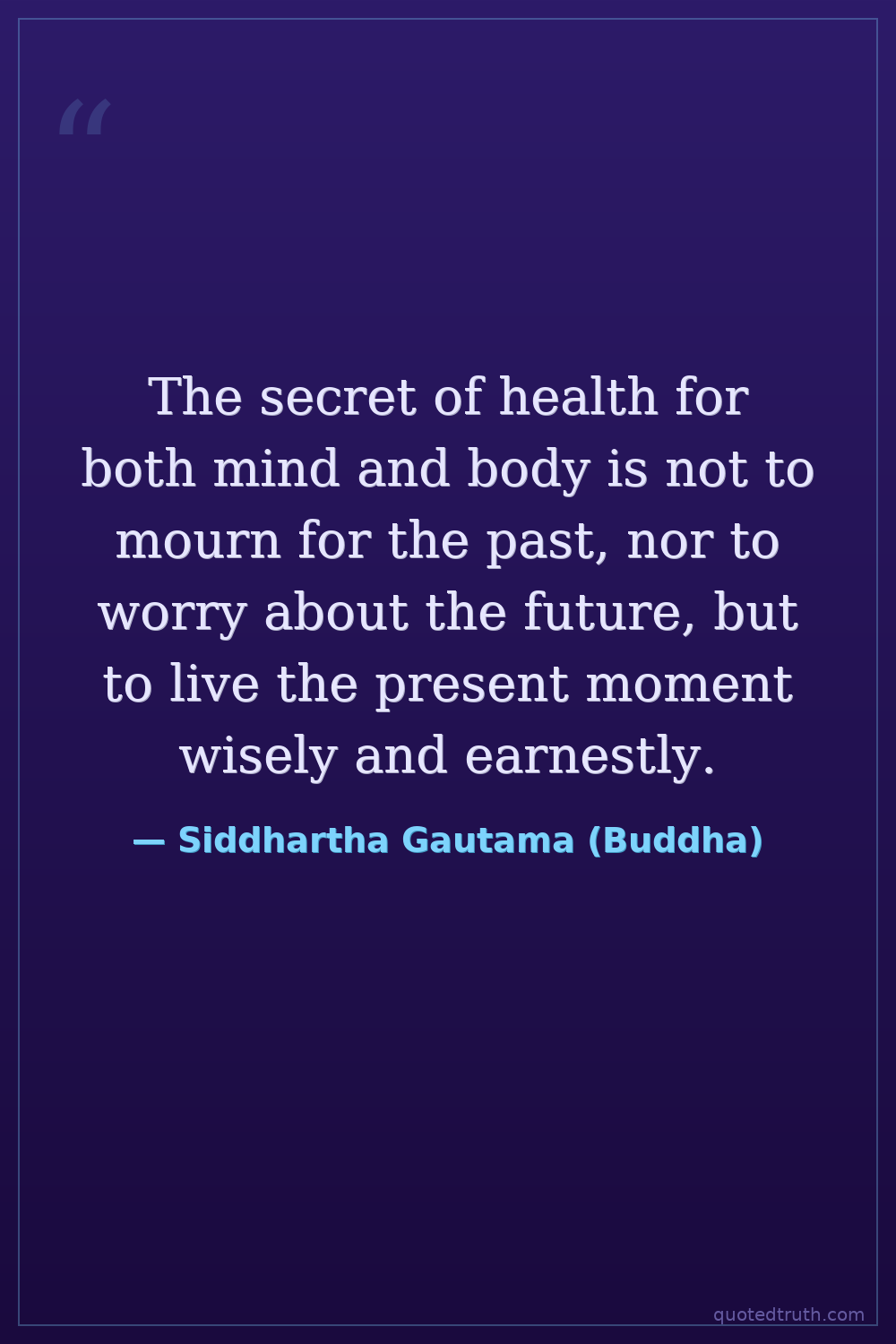
Genuine wellbeing, whether mental or physical, comes from releasing attachment to what has already happened and refusing to be consumed by anxiety about what might happen. Instead of draining your energy on regret or fear, direct your full attention to right now. Act thoughtfully and wholeheartedly in the current moment, because that is the only place life is actually occurring and the only place you have any real power.
Relevance to Siddhartha Gautama (Buddha)
This captures the core of Buddha's awakening after he abandoned palace life and years of extreme asceticism. His teaching of mindfulness, right concentration on the Eightfold Path, and the insight that suffering arises from craving and clinging all center on presence. Having realized enlightenment under the Bodhi tree through sustained attention to breath and sensation, he spent 45 years teaching that liberation is found by seeing this moment clearly, not escaping into memory or anticipation.
The era
In 5th-6th century BCE northern India, the Vedic Brahmanical order emphasized ritual sacrifice, caste duty, and securing favorable future rebirths, while competing shramana movements pursued liberation through severe self-mortification. Society was anxious about karma stretching across lifetimes. Buddha's insistence on immediate, experiential awareness cut against both priestly future-focus and ascetic body-punishment, offering a middle way that urbanizing merchants and questioning seekers in the Ganges plain found radically practical.
AI-generated insights based on extensive research and information for context. Factual errors? Email [email protected].