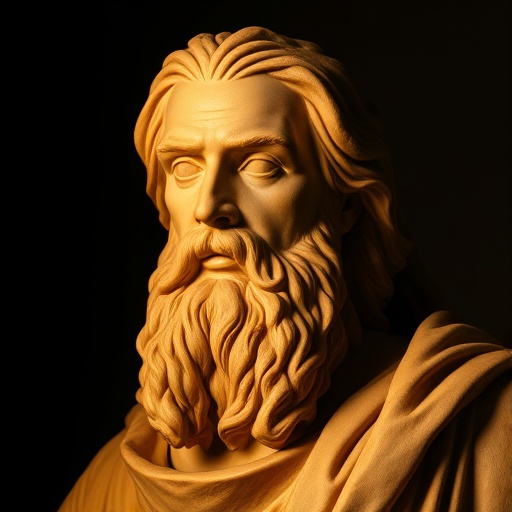
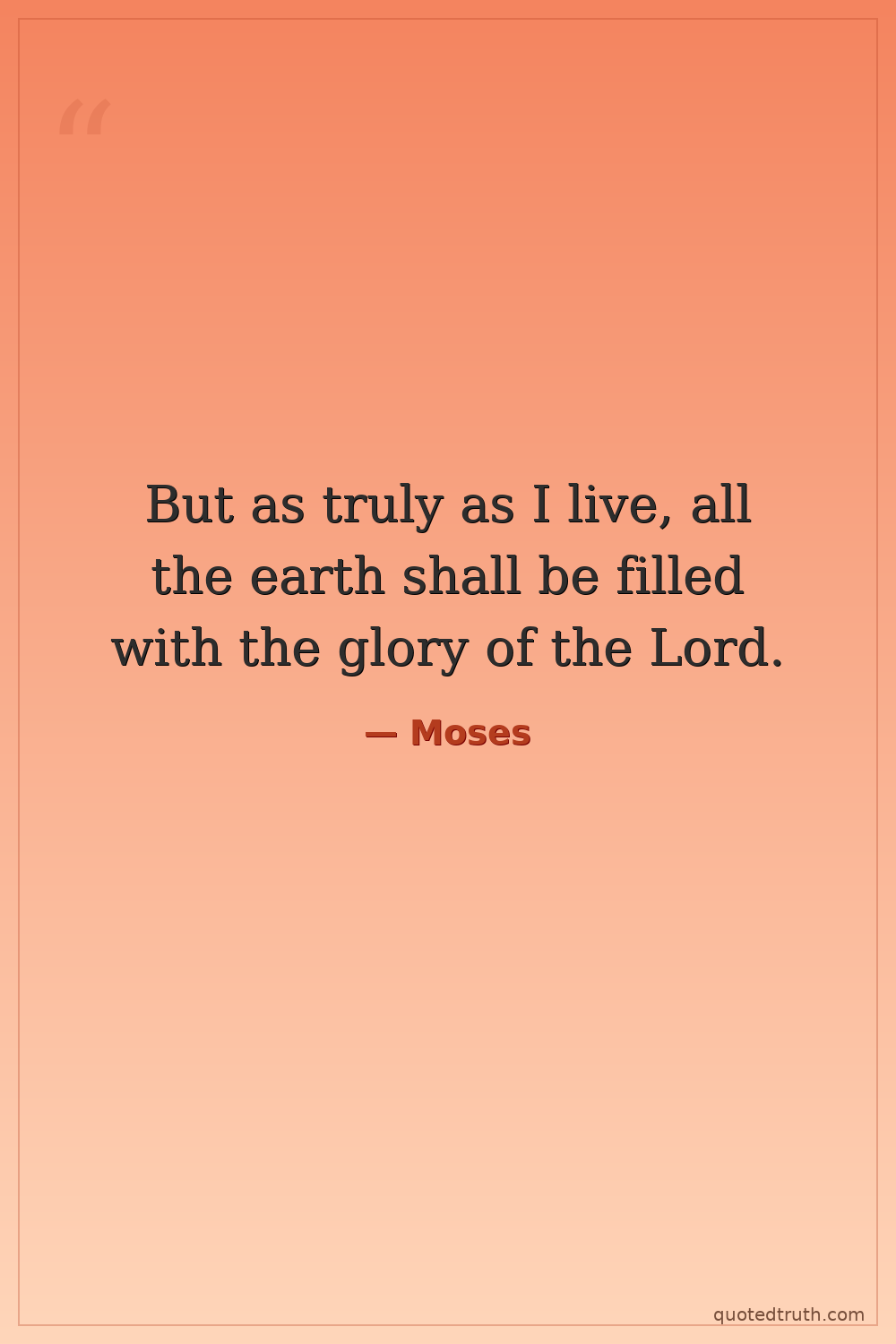
Moses — "But as truly as I live, all the earth shall be filled with the glory of the Lord…"
But as truly as I live, all the earth shall be filled with the glory of the Lord.
But as truly as I live, all the earth shall be filled with the glory of the Lord.
Click any product to generate a realistic preview. Up to 3 at a time.
* Initial load can take up to 90 seconds — revising the preview in another color is nearly instant.
"The Lord is a man of war; the Lord is his name."
"You shall have no other gods before Me."
"See, I have set before you today life and prosperity, death and destruction."
"You shall not follow a majority in wrongdoing."
"Choose life so that you and your descendants may live."
Numbers 14:21, God's declaration after pardoning Israel.
Date: c. 13th century BCE (biblical account)
GeneralFound in 1 providers: grok
1 source checked
This statement declares an absolute certainty that divine presence and splendor will eventually saturate the entire world. The speaker swears by their own living existence as a guarantee, asserting that no matter current circumstances or obstacles, the whole earth will ultimately reflect and be filled with the radiance, reputation, and majesty of God. It expresses unwavering confidence in a universal future outcome.
Moses led the Israelites out of Egyptian bondage and received the Torah at Sinai, making him the central prophet who communicated God's will directly. His life revolved around proclaiming divine sovereignty to a doubting people wandering the wilderness. Declaring that God's glory would fill all earth aligns with his role as lawgiver establishing a covenant meant to extend beyond Israel, reinforcing his conviction in divine promises despite the generation's repeated rebellion.
During the Late Bronze Age around the 13th century BCE, the ancient Near East was dominated by polytheistic empires like Egypt, Canaan, and Mesopotamia, each claiming territorial gods tied to specific lands. Moses's proclamation of one God whose glory would fill the entire earth was radically countercultural, asserting universal sovereignty rather than localized power. This monotheistic worldview emerged amid Israelite wilderness wanderings, challenging the regional deity assumptions structuring contemporary civilizations.
AI-generated insights based on extensive research and information for context. Factual errors? Email [email protected].
Your cart is empty