What it means
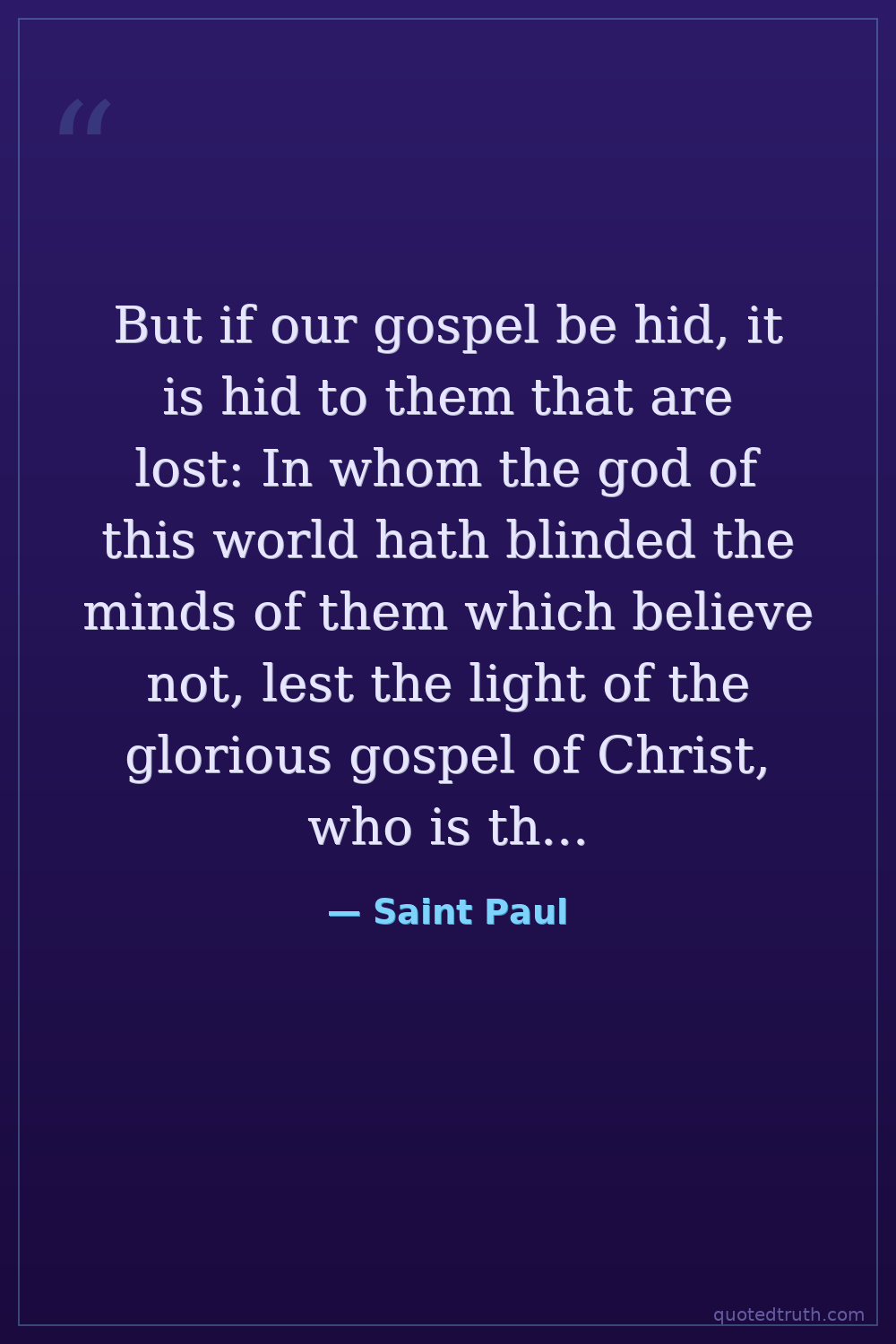
Paul says that when his message about Jesus seems unclear or rejected, the problem lies with those who are spiritually closed off. He blames a powerful evil force, which he calls the god of this age, for clouding people's thinking so they cannot perceive the beauty and truth of the Christian message. Only those heading toward ruin fail to grasp it, because their minds have been deliberately darkened against seeing Christ as the visible expression of God.
Relevance to Saint Paul
Paul wrote this defensively after critics accused him of preaching an obscure or veiled gospel. Once a Pharisee who violently persecuted Christians, he believed he himself had been spiritually blinded until his Damascus road vision restored his sight both literally and figuratively. That personal reversal shaped his conviction that unbelief is a form of imposed blindness, not intellectual failure. As a traveling apostle facing constant rejection, he needed a framework explaining why his preaching convinced some and infuriated others.
The era
Paul wrote around 55 CE to Corinth, a cosmopolitan Roman port saturated with competing mystery religions, imperial cult worship, and Greek philosophical schools. Rival teachers openly challenged his credentials and message. Dualistic thinking, pitting light against darkness and spiritual forces against fleshly ones, was widespread in both Jewish apocalyptic circles and emerging Gnostic currents. Calling Satan the god of this age was a bold rhetorical move in a world where Caesar claimed divine status and civic gods supposedly protected every city.
AI-generated insights based on extensive research and information for context. Factual errors? Email [email protected].