What it means
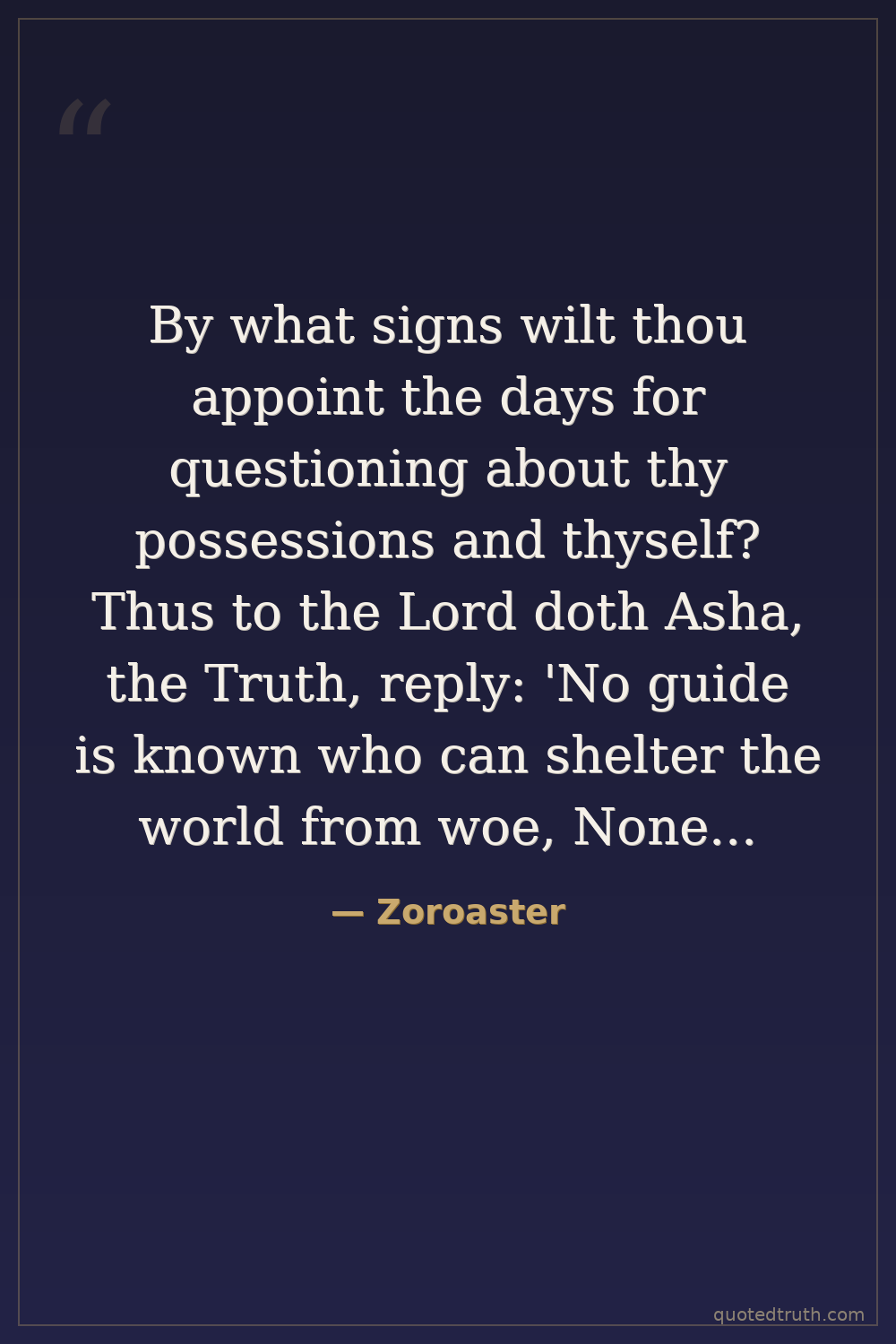
The speaker asks how one will recognize the day of accounting for possessions and conduct. Truth itself answers that no mortal guide can shield humanity from suffering or fully grasp the divine order's workings. Instead, real strength belongs to the one who responds when called for help. In modern terms: judgment is coming, no human has all the answers, and genuine power lies in showing up for those who reach out sincerely.
Relevance to Zoroaster
Zoroaster preached personal accountability before Ahura Mazda and centered his theology on Asha, cosmic truth and order. As a reforming priest who rejected the older Iranian polytheism, he taught that each soul faces judgment based on deeds, words, and thoughts. This Gatha passage reflects his signature dialogue form with the divine, his elevation of Truth as answerer, and his conviction that no intermediary priest-caste could shield believers from moral reckoning.
The era
Living around 1500-1000 BCE on the Iranian plateau, Zoroaster confronted a pastoral society dominated by ritual sacrifice, warrior raiders, and polytheistic daeva-worship administered by hereditary priests. Drought, cattle theft, and tribal violence made questions of suffering and divine justice urgent. His insistence on individual judgment and ethical dualism broke from the transactional sacrifice culture, later shaping Achaemenid Persian ideology and influencing Jewish, Christian, and Islamic concepts of heaven, hell, and final accounting.
AI-generated insights based on extensive research and information for context. Factual errors? Email [email protected].