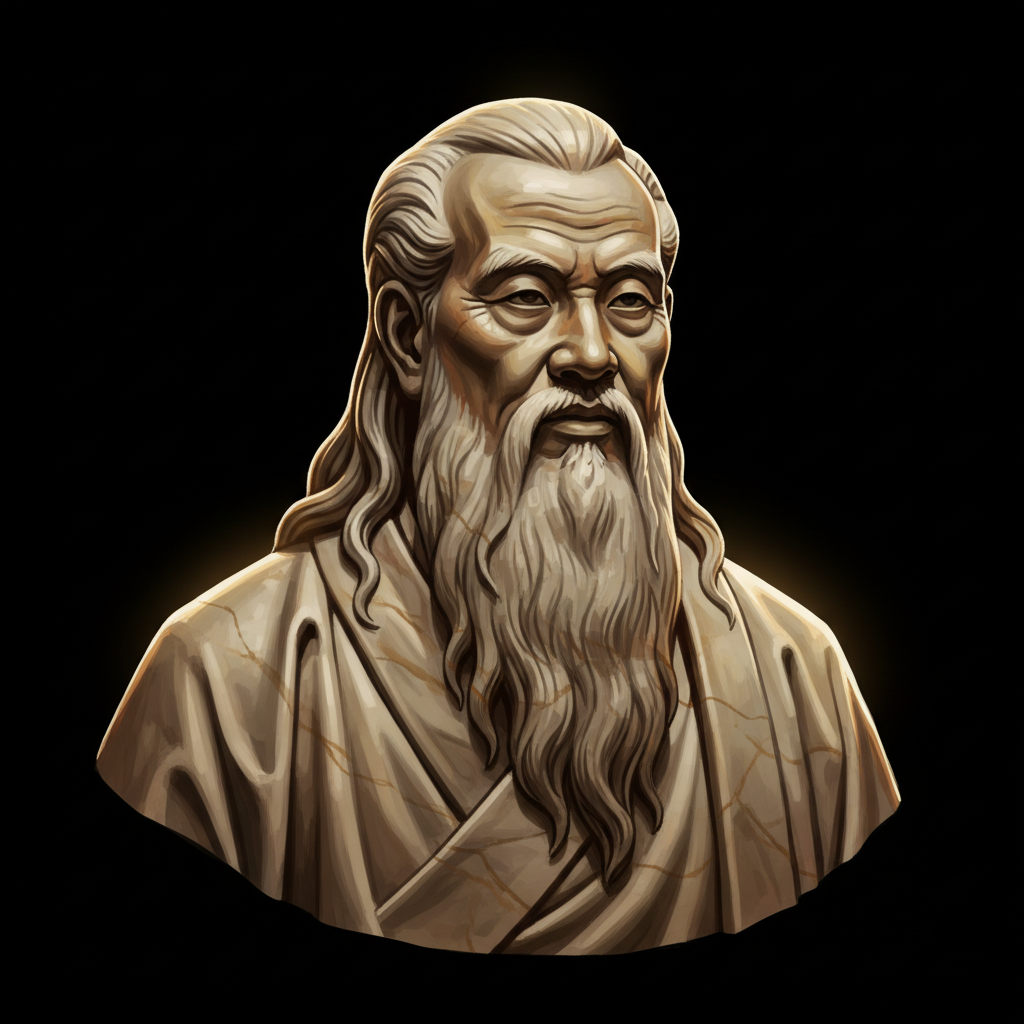
Laozi — "Careful, like crossing a river in the winter. Wary, as if surrounded by stranger…"
Careful, like crossing a river in the winter. Wary, as if surrounded by strangers.
Careful, like crossing a river in the winter. Wary, as if surrounded by strangers.
Click any product to generate a realistic preview. Up to 3 at a time.
* Initial load can take up to 90 seconds — revising the preview in another color is nearly instant.
"If a nation is to be great, it must be like a great river, it must flow freely in every direction."
"The reason why the river and the sea are able to be the lords of the hundred valleys is that they excel in taking the lower position. That is why they are able to be the lords of the hundred valleys."
"If you realize that all things change, there is nothing you will try to hold on to. If you are not afraid of dying, there is nothing you cannot achieve."
"When you are content to be simply yourself and don't compare or compete, everyone will respect you."
"The world is a sacred vessel. It cannot be controlled. Those who try to control it will ruin it. Those who try to grasp it will lose it."
Reputed founder of Taoism and author of the Tao Te Ching, whose wu wei (effortless action) shaped East Asian philosophy. Closely associated with Zhuangzi (later Taoist who extended Laozi's framework). For an intellectual contrast, see Confucius, near-contemporary Chinese sage of social ritual and duty — Confucius systematized social order through ritual and hierarchy; Laozi argued that all such systems were the disease, not the cure — the two founding poles of Chinese moral philosophy.
Found in 1 providers: gemini
1 source checked
The quote describes how a wise person moves through life with deliberate caution and alert awareness. Crossing a frozen river means every step could crack the ice, demanding full presence. Being surrounded by strangers means staying observant without paranoia, reading the situation before acting. It praises measured restraint over impulsiveness, suggesting that true skill in living lies in patience, attentiveness, and the humility to recognize that conditions can shift instantly.
Laozi, credited as the founder of Taoism and author of the Tao Te Ching, valued wu wei (effortless action), humility, and yielding over force. As a reputed archivist in the Zhou court, he observed rulers and ministers rise and fall through recklessness. This image of cautious, watchful movement embodies his teaching that sages act slowly, conserve energy, and avoid the aggressive striving he saw corrupting his era's politics and personal conduct.
Laozi lived during the late Zhou dynasty, around the 6th century BCE, as Chinese society slid toward the chaotic Warring States period. Feudal lords waged constant war, alliances shifted overnight, and court intrigue killed the careless. Ordinary people navigated famine, conscription, and untrustworthy neighbors. Counseling wariness was practical survival advice, not abstract philosophy. Against this backdrop, Taoist restraint offered an alternative to Confucian activism and Legalist harshness, teaching that stillness and watchfulness outlasted ambition.
AI-generated insights based on extensive research and information for context. Factual errors? Email [email protected].
Your cart is empty