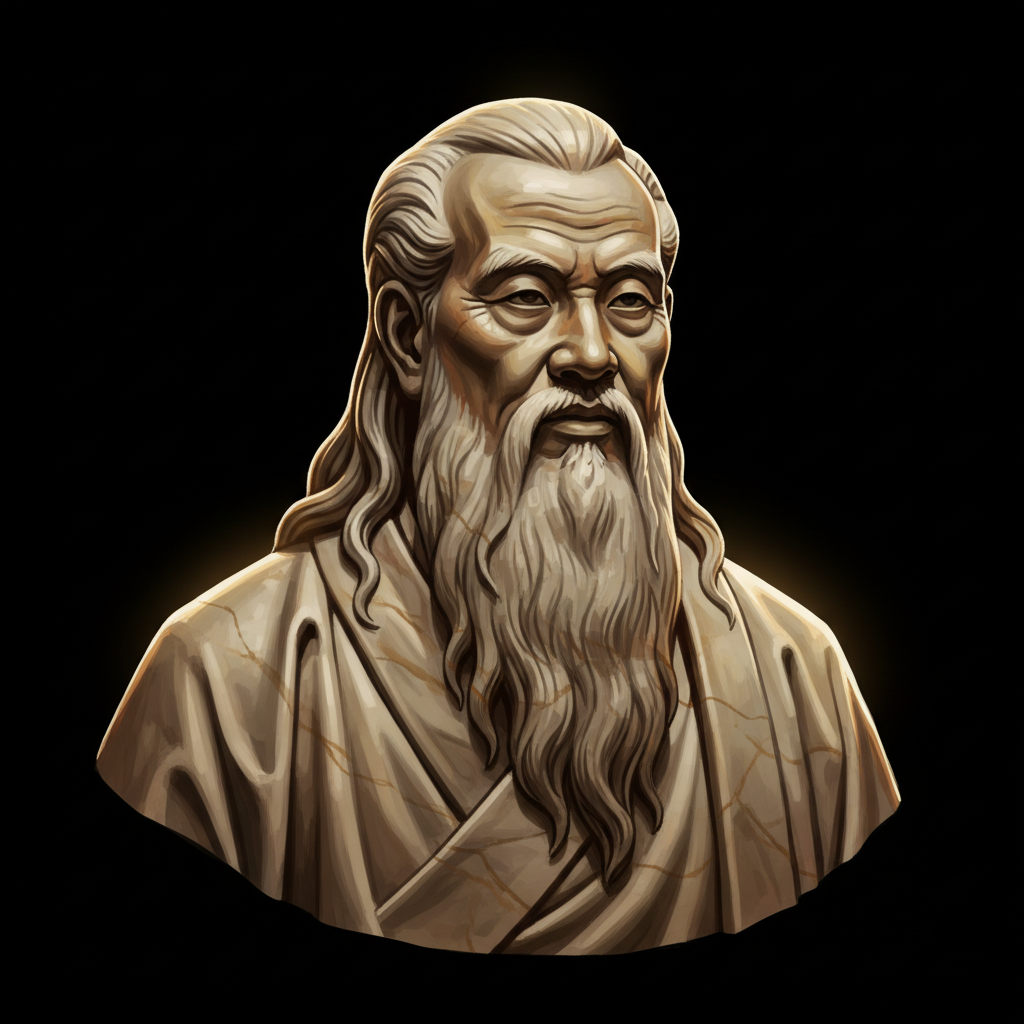
Laozi — "When you are content to be simply yourself and don't compare or compete, everyon…"
When you are content to be simply yourself and don't compare or compete, everyone will respect you.
When you are content to be simply yourself and don't compare or compete, everyone will respect you.
Click any product to generate a realistic preview. Up to 3 at a time.
* Initial load can take up to 90 seconds — revising the preview in another color is nearly instant.
"A man with outward courage dares to die; a man with inward courage dares to live."
"When the government is lazy and careless, the people are unspoiled; when the government is efficient and smart, the people are discontented."
"Make the small big and the few many; Do good to him who has done you an injury."
"He who acts destroys; he who grasps loses."
"He who knows others is wise; he who knows himself is enlightened. He who conquers others is strong; he who conquers himself is mighty. He who is content is rich. He who acts with vigor has a will. He …"
Reputed founder of Taoism and author of the Tao Te Ching, whose wu wei (effortless action) shaped East Asian philosophy. Closely associated with Zhuangzi (later Taoist who extended Laozi's framework). For an intellectual contrast, see Confucius, near-contemporary Chinese sage of social ritual and duty — Confucius systematized social order through ritual and hierarchy; Laozi argued that all such systems were the disease, not the cure — the two founding poles of Chinese moral philosophy.
Found in 1 providers: gemini
1 source checked
Respect comes naturally when you stop measuring yourself against others. Chasing status or trying to outdo people breeds resentment and reveals insecurity, while accepting who you genuinely are projects quiet confidence. When you're not competing for position, you're not a threat, and you're not performing. People sense that authenticity and respond to it. Paradoxically, the person who stops trying to earn admiration through rivalry ends up receiving it freely from those around them.
Laozi reportedly served as a royal archivist in the Zhou court before withdrawing from public life, disillusioned with political striving. His Tao Te Ching repeatedly praises wu wei (effortless action) and warns against ambition, rank, and self-promotion. This saying distills his core teaching that the sage who does not contend cannot be contended with. His legendary retreat westward on a water buffalo embodies the same refusal to compete for worldly standing.
Laozi lived during the late Zhou dynasty, likely the Spring and Autumn or Warring States period (roughly 6th-4th century BCE), when rival states waged constant war and court officials schemed for rank and favor. Confucian scholars urged ambitious self-cultivation to serve rulers, while nobles chased titles and territory. Against this backdrop of relentless competition and bloodshed, Laozi's counsel to drop comparison was a radical rebuke of an entire culture built on hierarchy and contention.
AI-generated insights based on extensive research and information for context. Factual errors? Email [email protected].
Your cart is empty