Laozi — "The world is a sacred vessel. It cannot be controlled. Those who try to control …"
The world is a sacred vessel. It cannot be controlled. Those who try to control it will ruin it. Those who try to grasp it will lose it.
The world is a sacred vessel. It cannot be controlled. Those who try to control it will ruin it. Those who try to grasp it will lose it.
Click any product to generate a realistic preview. Up to 3 at a time.
* Initial load can take up to 90 seconds — revising the preview in another color is nearly instant.
"The gentlest thing in the world can ride through the hardest thing in the world."
"To yield is to be preserved whole. To be bent is to be straightened. To be empty is to be filled. To be worn out is to be renewed. To have little is to gain. To have plenty is to be perplexed."
"One who is too insistent on his own views finds few who agree with him."
"The sage is not attached to anything, and so he loses nothing."
"When there is no desire, all things are at peace."
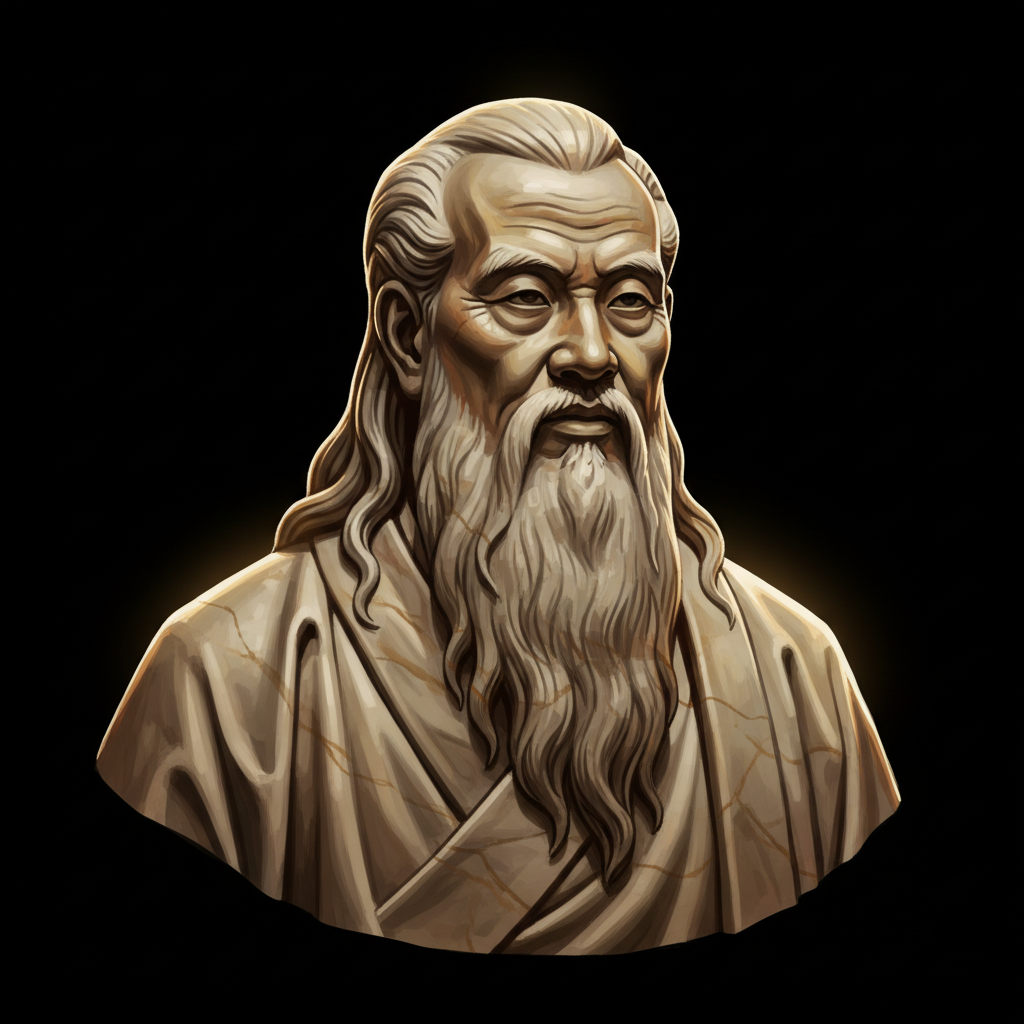
Reputed founder of Taoism and author of the Tao Te Ching, whose wu wei (effortless action) shaped East Asian philosophy. Closely associated with Zhuangzi (later Taoist who extended Laozi's framework). For an intellectual contrast, see Confucius, near-contemporary Chinese sage of social ritual and duty — Confucius systematized social order through ritual and hierarchy; Laozi argued that all such systems were the disease, not the cure — the two founding poles of Chinese moral philosophy.
Found in 1 providers: gemini
1 source checked
The world operates by its own natural rhythm and should not be forced into submission. When people try to dominate, manipulate, or impose rigid control over life, society, or others, they damage what they touch. Tight grasping backfires because reality resists coercion. The wise response is to respect the inherent order of things, let go of the need to micromanage outcomes, and allow situations to unfold organically rather than aggressively seize them.
Laozi served as a keeper of archives for the Zhou court, watching rulers rise, overreach, and fall. That vantage shaped his core teaching of wu wei, effortless non-coercive action. Legend says he abandoned the collapsing bureaucracy to live simply, embodying the rejection of forceful control this quote expresses. The image of the world as a sacred vessel matches his reverence for the Dao, the underlying current he believed humans disrupt whenever they substitute ambition for humility.
Laozi lived during the late Zhou period, around the 6th century BCE, as centralized authority crumbled into the Warring States era. Competing lords waged constant wars, heavy taxation crushed peasants, and rival philosophies like Legalism pushed strict control and harsh punishments. Against this backdrop of rulers grasping for dominance and engineering society through force, his warning that aggressive control ruins the sacred order directly confronted the power-hungry politics devouring ancient China.
AI-generated insights based on extensive research and information for context. Factual errors? Email [email protected].
Your cart is empty