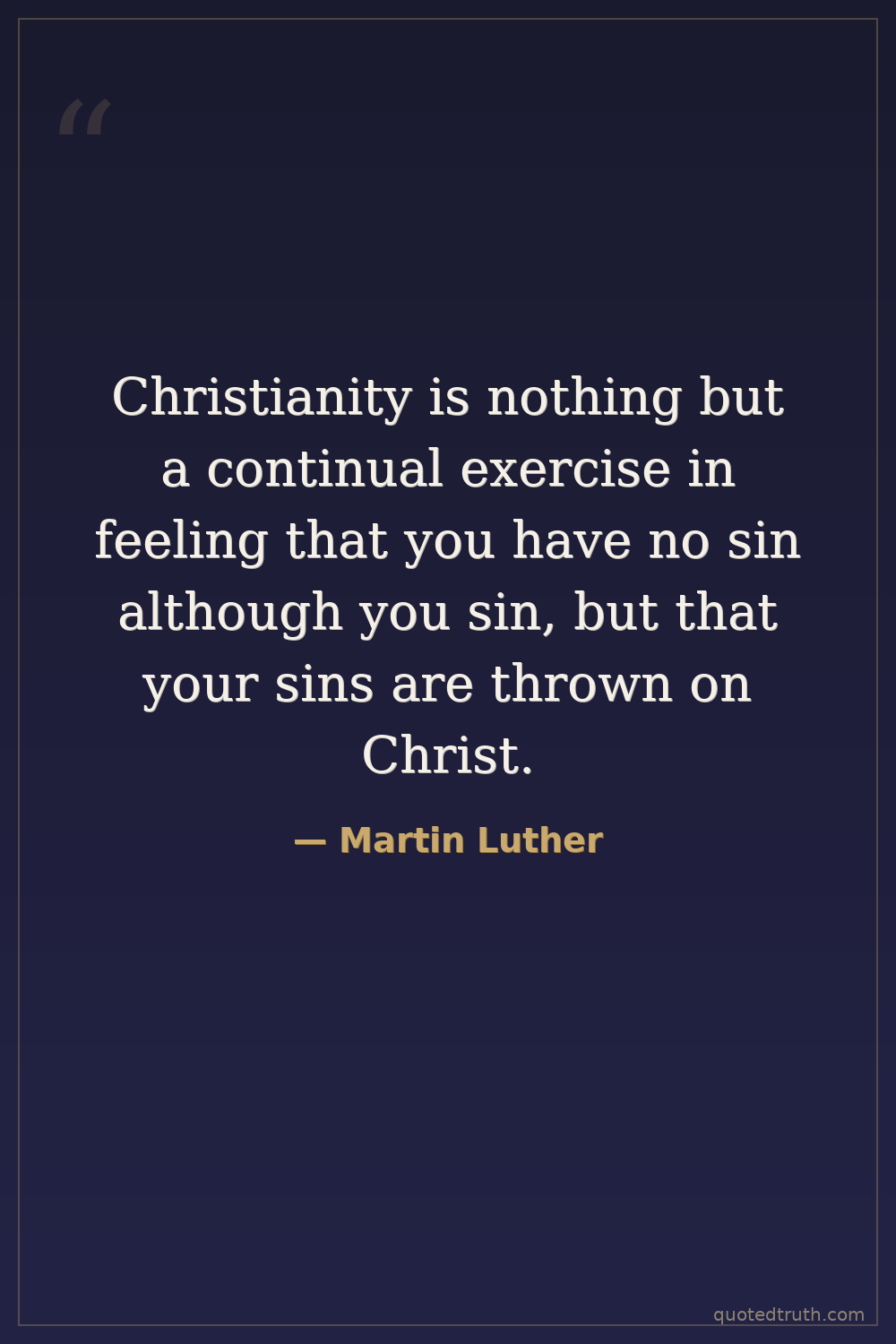
Martin Luther — "Christianity is nothing but a continual exercise in feeling that you have no sin…"
Christianity is nothing but a continual exercise in feeling that you have no sin although you sin, but that your sins are thrown on Christ.
Christianity is nothing but a continual exercise in feeling that you have no sin although you sin, but that your sins are thrown on Christ.
Click any product to generate a realistic preview. Up to 3 at a time.
* Initial load can take up to 90 seconds — revising the preview in another color is nearly instant.
"If they can bear to live among us Christians and Jews, then they should be forced to work like women in childbirth."
"I have had many struggles with the devil, and I know him well."
"Reason is the Devil's greatest whore; by nature and manner of being she is a noxious whore; she is a prostitute, the Devil's appointed whore; whore eaten by scab and leprosy who should be trodden unde…"
"God does not need our good works, but our neighbor does."
"God does many things that he does not disclose to us in his word; he also wills many things which he does not disclose himself as willing in his word. Thus he does not will the death of a sinner, acco…"
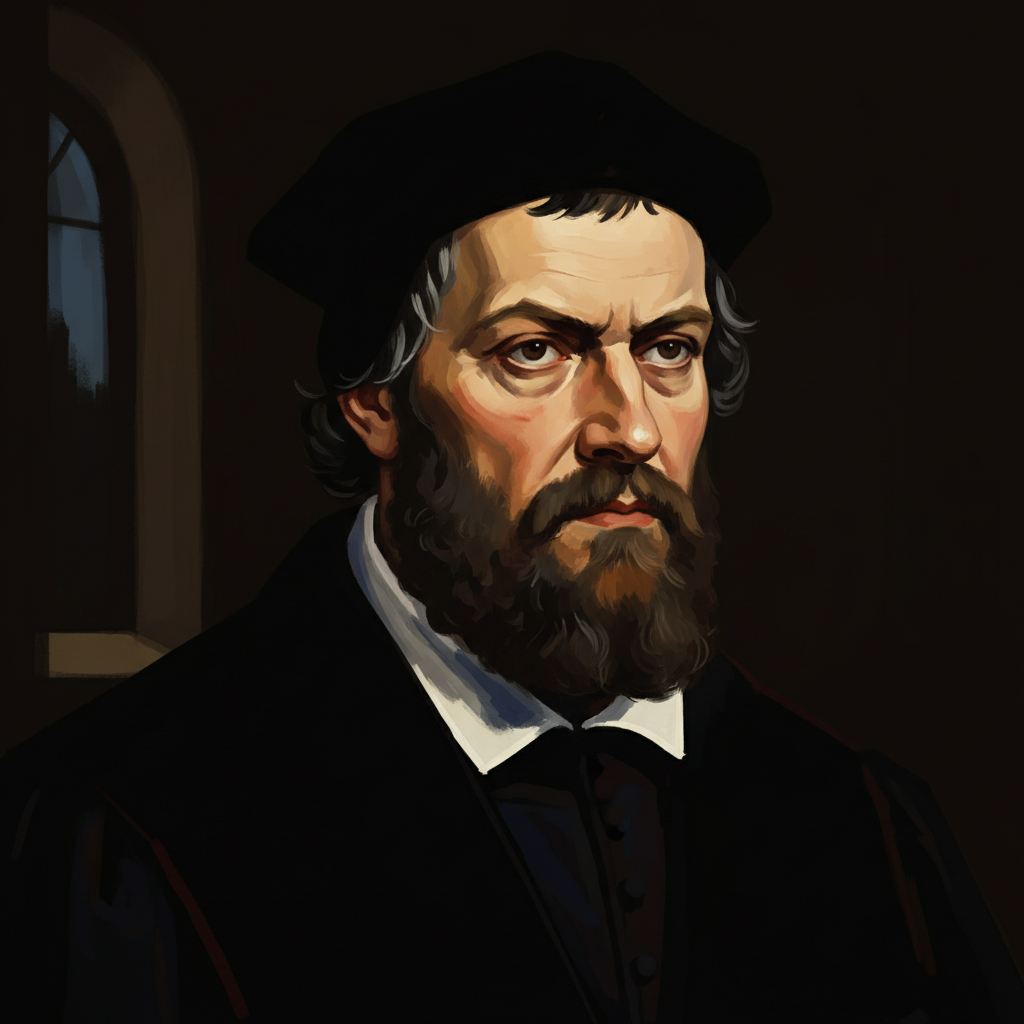
German theologian whose 95 Theses (1517) launched the Protestant Reformation and broke the Catholic Church's monopoly on Western Christianity. Closely associated with Philipp Melanchthon (Lutheran systematizer) and John Calvin (later Reformer who built on Luther's break). For an intellectual contrast, see Pope Leo X, Renaissance pope (1513-1521) — Leo X's indulgence sales triggered Luther's break and Leo excommunicated him in 1521 — Luther's entire Reformation is structured as a direct answer to the indulgence-funded Vatican Leo represented.
Found in 1 providers: gemini
1 source checked
Being Christian means living with a paradox: you genuinely sin, yet you train yourself to feel forgiven rather than guilty. The trick is not pretending you're sinless or fixing yourself first. Instead, you mentally transfer every failure onto Christ, who absorbs the blame. Faith becomes a daily practice of refusing to carry your own guilt, trusting that someone else already took the hit for it.
This captures Luther's core breakthrough. Tormented by scrupulous guilt as an Augustinian monk, he found relief in Romans' teaching that righteousness comes through faith, not works. He rejected confession, indulgences, and self-punishment as ways to earn acceptance. His doctrine of simul justus et peccator, simultaneously righteous and sinner, underpins this quote: the believer stays flawed but counts Christ's merit as their own.
In the early 1500s, the Catholic Church sold indulgences promising reduced purgatory time, terrifying ordinary Christians into paying for salvation. Luther's 1517 Ninety-Five Theses attacked this system, sparking the Reformation. Printing presses spread his pamphlets across Germany within weeks. Peasants, princes, and priests were urgently debating how sinners got right with God, making pronouncements like this theologically explosive and politically dangerous.
AI-generated insights based on extensive research and information for context. Factual errors? Email [email protected].
Your cart is empty