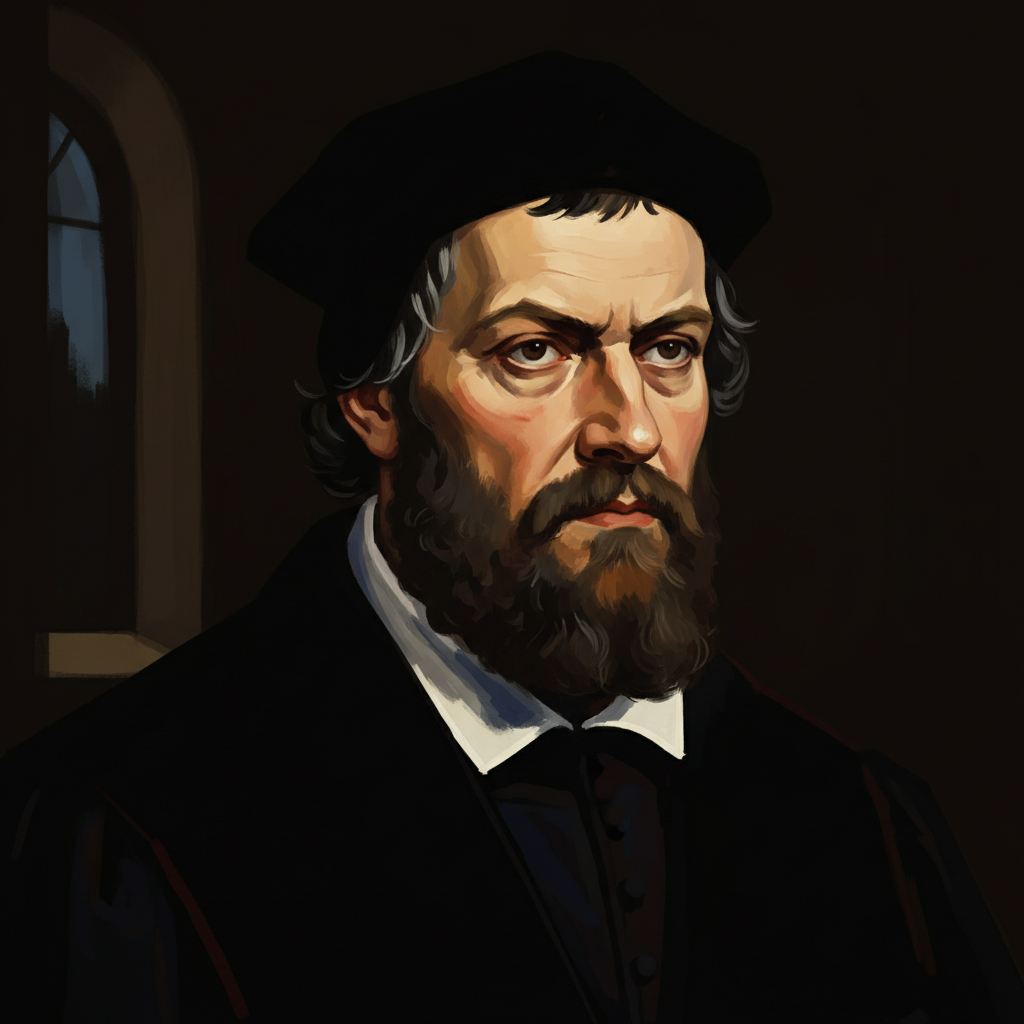
Martin Luther — "I have had many struggles with the devil, and I know him well."
I have had many struggles with the devil, and I know him well.
I have had many struggles with the devil, and I know him well.
Click any product to generate a realistic preview. Up to 3 at a time.
* Initial load can take up to 90 seconds — revising the preview in another color is nearly instant.
"Be a sinner and SIN BOLDLY, but believe more boldly still."
"A Jewish heart is as hard as a stick, a stone, as iron, as a devil."
"Whoever sticks his nose in every corner will get it stuck."
"Eating is a serious business. You must eat with delight and not as if you were doing penance."
"I'd rather be a pig in a sty than a friar in a monastery."
German theologian whose 95 Theses (1517) launched the Protestant Reformation and broke the Catholic Church's monopoly on Western Christianity. Closely associated with Philipp Melanchthon (Lutheran systematizer) and John Calvin (later Reformer who built on Luther's break). For an intellectual contrast, see Pope Leo X, Renaissance pope (1513-1521) — Leo X's indulgence sales triggered Luther's break and Leo excommunicated him in 1521 — Luther's entire Reformation is structured as a direct answer to the indulgence-funded Vatican Leo represented.
Found in 1 providers: grok
1 source checked
Luther claims deep, personal familiarity with evil through repeated inner battles. He isn't boasting about spiritual victory; he's stating that long experience with temptation, despair, and doubt has taught him how such forces operate. The message is that recognizing evil clearly comes not from theory but from having wrestled with it firsthand, surviving the encounter, and learning its tactics from the inside out.
Luther famously described intense spiritual torment he called Anfechtungen—crippling bouts of doubt, fear, and despair. As an Augustinian monk turned reformer, he interpreted these episodes as direct attacks by Satan, even reportedly throwing an inkwell at him at Wartburg Castle. His theology of grace grew from needing rescue from these battles, making personal struggle with evil central to his identity, preaching, and hymn writing.
In early modern Europe, the devil was a literal, active presence in everyday life. Plague, war, and religious upheaval fueled belief in demonic influence, witchcraft trials spread, and the Reformation itself was framed as cosmic combat. Luther's 1517 break with Rome unleashed decades of turmoil, and reformers and Catholics alike accused each other of Satanic inspiration, making claims of personal acquaintance with the devil theologically credible and rhetorically powerful.
AI-generated insights based on extensive research and information for context. Factual errors? Email [email protected].
Your cart is empty