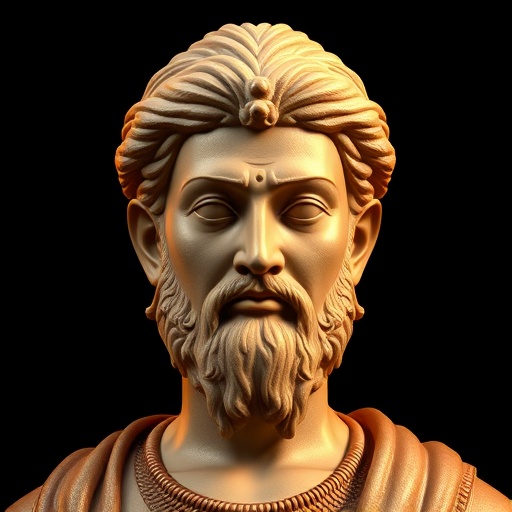
Mahavira — "Do not desire anything that is not yours."
Do not desire anything that is not yours.
Do not desire anything that is not yours.
Click any product to generate a realistic preview. Up to 3 at a time.
* Initial load can take up to 90 seconds — revising the preview in another color is nearly instant.
"All living beings desire to live."
"The universe is governed by immutable laws."
"All souls are alike in nature, and all souls are potentially alike in development."
"The soul is the perceiver, enjoyer, and doer of all actions."
"The greatest penance is to bear all sufferings cheerfully."
24th and last Tirthankara of Jainism, whose teachings of strict ahimsa (non-violence), aparigraha (non-attachment), and karma reshaped ancient Indian religion. Closely associated with The Buddha (near-contemporary moral revolutionary, also reacting against Vedic ritualism). For an intellectual contrast, see Vedic Brahmanical ritual sacrifice, the animal-sacrifice-centered Vedic religion of his era — Mahavira's ahimsa demanded total non-violence, including not eating root vegetables that kill the plant — a maximum-distance ethical move from the Vedic priestly tradition that ritually sacrificed cattle and horses. The two cleanest poles of ancient Indian religious ethics.
Found in 1 providers: grok
1 source checked
Stop coveting what belongs to others or what you have no right to claim. Desire itself is the trap — the moment you reach for what isn't yours, you invite suffering, conflict, and moral compromise. This isn't just about theft; it covers envy, ambition built on others' loss, and wanting outcomes beyond your earned reality. Contentment with what is genuinely yours is presented as the only honest and peaceful way to live.
Mahavira abandoned a prince's wealth at age 30 to live with nothing — literally. He wore no clothes, carried no possessions, and accepted only what was freely offered. Aparigraha, non-possessiveness, became one of Jainism's five core vows. He didn't theorize this quote; he embodied it across twelve years of wandering asceticism. His renunciation of royal inheritance — refusing to keep what birth and power had handed him — is its living demonstration.
Sixth-century BCE India was built on caste-enforced hierarchy, Vedic ritual wealth, and kingdoms sustained by territorial conquest. Kshatriya warriors accumulated land and cattle through war; Brahmins accumulated ritual authority through sacrifice. Against this backdrop, the Shramana movement — including Mahavira and the Buddha — challenged material accumulation as spiritually corrosive. In a society where desire-driven conquest was normalized and even sanctified by scripture, commanding people not to desire what wasn't theirs was genuinely radical.
AI-generated insights based on extensive research and information for context. Factual errors? Email [email protected].
Your cart is empty